







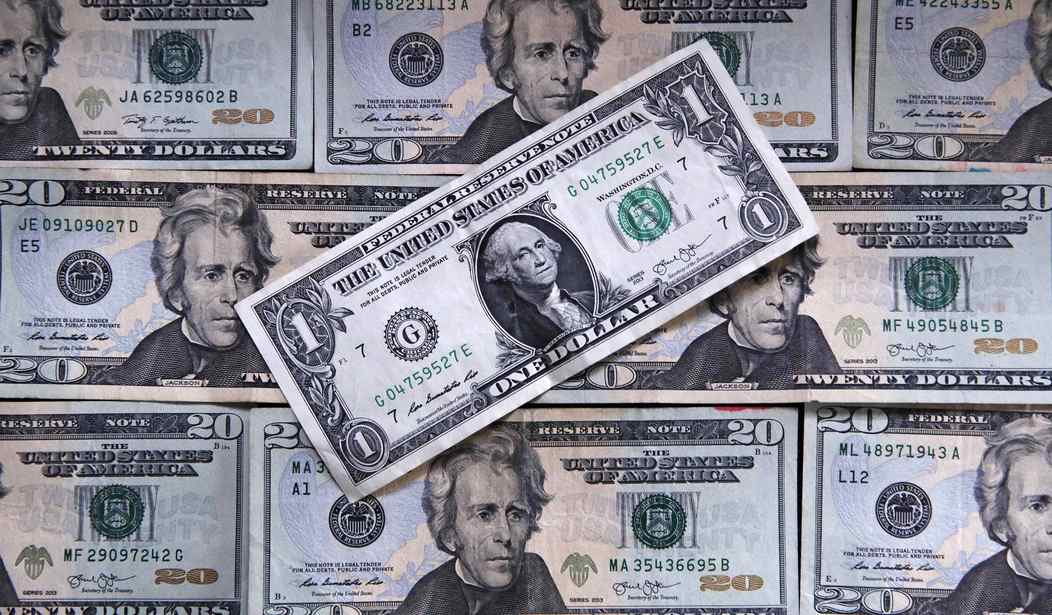
Did you know that in most of America, police can take your property, even if you did nothing wrong?
They don't have to charge you with a crime. They don't have to take you to court.
They can just say they suspect you of a crime.
Then they can grab your money, your car, and sometimes, even your house!
It's legal because of something called "civil asset forfeiture."
My new video shows how police abuse such laws to take things from innocent people.
Restaurant owner Mandrel Stuart was stopped by police in Virginia when driving. Stuart thought, at worst, he'd get a ticket. But in his car was $18,000, which he planned to use to buy equipment for his restaurant.
When the cops saw that, they said they didn't believe it was for his restaurant, and they confiscated it.
"They said that I was a drug dealer," he complains. "They had no proof!"
In most states, they don't need proof. The money alone gives police "probable cause" that a crime was committed. Still, the police let him go. But they kept his money.
Anthonia Nwaorie, a Texas nurse, worked years to save $40,000 so she could start a medical clinic in Nigeria.
At the airport, however, Border Patrol asked her about the money. No matter what she said, they didn't believe her.
"They poured everything, my clothes, my personal things, on the floor ... I didn't know they were going to take the money!"
They did, although they never charged her with a crime.
Fortunately, she turned out to be one of the rare victims who got the money back.
Libertarian law firm the Institute for Justice helped her sue the Border Patrol.
Her attorney, Dan Alban, says, "If we were drawing up a diagram of a criminal organization, you would call civil asset forfeiture money laundering!"
Today, even the technique's original proponents have second thoughts:
"We were proud of it. We were taking Colombian narcotics money," says Brad Cates, who helped write civil forfeiture laws as director of the Justice Department's Asset Forfeiture office.
Now, he says that his laws caused new problems but didn't reduce drug sales.
"We took billions and billions of dollars out of the system, but it didn't stop (drug trafficking), did it? ... We created a monster."
A slush fund for police agencies.
Musician Eh Wah was stopped because he had a broken brake light. In his car was $53,000 his band had raised for charity.
Oklahoma cops told him they'd let him go. But they would keep the cash.
The Institute for Justice took his case, too. Alban notes that the cops let Wah keep everything that was in the form of checks.
"Even though the $53,000 in cash they had seized was 'drug proceeds,' the money on the checks apparently wasn't. The reason ... was because they couldn't cash the checks."
Only after The Washington Post reported on Wah's loss, and how police took money meant for an orphanage, did the cops drop the case and return the money.
The good news: Maine, Nebraska, North Carolina and New Mexico have now banned civil asset forfeiture. Before government gets to grab your property, you must be found guilty of a crime.
About two dozen other states have changed their laws, so less money seized will stay with the cops.
That's a good thing. As Alban points out, "We have to eliminate the profit incentive."
I think another reason these abusive practices continued for so long is because lawyers use stupid lawyer language, calling the money grab "civil asset forfeiture" instead of something like "police theft!"
If they called it that, America might have gotten rid of it years ago.
You can watch the full documentary about this abuse at WhenCopsBecomeRobbers.com.
Every Tuesday at JohnStossel.com, Stossel posts a new video about the battle between government and freedom. He is the author of "Government Gone Wild: Exposing the Truth Behind the Headlines."
Editor’s Note: Do you enjoy Townhall’s conservative reporting that takes on the radical left and woke media? Support our work so that we can continue to bring you the truth.
Join Townhall VIP and use promo code FIGHT to receive 60% off your membership.


Join the Conversation
VIP members get the ability to comment on articles.