





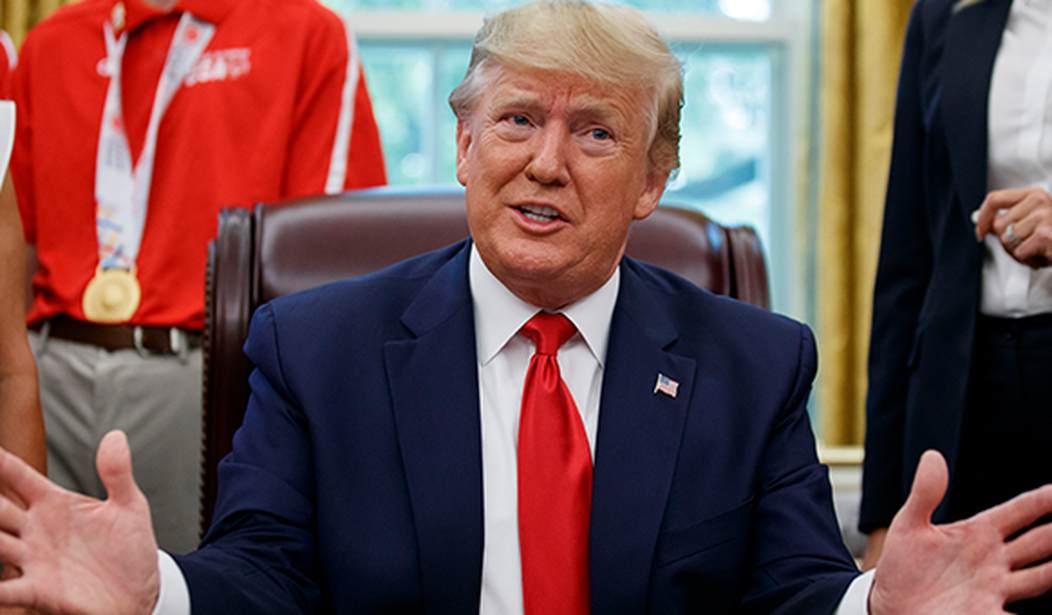
"Fake news!" shouts the president. His supporters cheer.
That drives my colleagues into a frenzy of self-absorbed handwringing: "Threats to press freedom ... press persecution!"
It's silly. American reporters are hardly less safe because of President Donald Trump's hyperbole.
(Trump is reckless when he uses the term in other countries. Authoritarians in Russia, China, the Philippines, Saudi Arabia, etc., now cite "fake news" while they jail or kill reporters. He should shut up about "fake news" when he's overseas.)
But I smiled when I first heard him use the phrase, not because news stories are "fake"-- they typically aren't (reporters who make things up are usually caught and fired) -- but because so much of what people call "news" is press releases and breathless exaggerations of isolated problems.
It's stupid news.
This spring, I attended my 50th college reunion. Alumni officials asked me to join a panel titled "Free Speech and Fake News."
It made me ask myself, "What were the biggest life-changing events in the 50 years since I graduated?"
My selections:
--Invention of the personal computer and cellphone.
--Google and Facebook.
--The fall of the Soviet Union.
--Pollution-control rules.
--The women's movement.
--Changing attitudes about sex and gender.
--A drastic reduction in poverty around the world.
Only one of those giant changes (the fall of the Soviet Union) led the news!
Instead, "big" headlines of my previous reunion years (five-year periods when I might show up for the celebration) were topics like:
--Patty Hearst robbing a bank.
--Serial killer Ted Bundy.
--The accident at the Three Mile Island nuclear plant.
--The "Band-Aid" concert for famine relief.
--The Exxon Valdez oil spill.
--The O.J. Simpson trial.
--Columbine.
--Michael Jackson's death.
--Ebola.
--And this year: the Ethiopian Airlines plane crash.
(I chose those stories from "biggest stories of the year!" reports in mainstream media like MSN and ABC News.)
Those events were worth covering, but why do media mostly ignore more important events like the creation of cellphones and Google or how millions have lifted themselves out of poverty?
One reason is because they happen gradually. When Facebook was being invented, few reporters noticed.
Another is because the big stories happen in more than one place. We reporters are good at covering plane crashes and murder. We can easily interview the official in charge.
But the biggest news, like changing attitudes about gender, happens all over the place.
When I graduated, 60% of the world's population lived in extreme poverty. Now, fewer than 9% do. Globally, that's probably the most life-changing event over the past 50 years -- a great victory, made possible by freer markets.
But most reporters don't like free markets, and politicians rarely talk about change they don't control.
The "Band-Aid" concert meant well, but journalists hardly covered the big cause of famine in Ethiopia. It wasn't African drought; it was Marxist governments that were happy to starve their enemies.
In 1989, the Berlin Wall coming down was too beautiful an image to ignore, but it would have been nice if journalists had spent time analyzing how wrong they'd been to call capitalism unjust and communism sustainable.
Instead, images of the Exxon Valdez oil spill dominated the news that year, helping spark a decade of exaggerated environmental fears.
In 1994, the Rwandan genocide did get news coverage, as it should have, but Americans heard much more about O.J. Simpson.
In 2004, coverage of the Iraq and Afghan wars was plentiful, which was good. But now that the Afghanistan War is America's longest war, it gets very little coverage. It's harder to report on long-term political problems that aren't solved by U.S. military intervention.
During my previous reunion, in 2014, one of the biggest stories was hysteria about an Ebola virus outbreak. But only one American died from Ebola that year.
My fellow Princeton panelists sneered at me when I said that. They said that thousands died in Africa. That was true, but if that's the measure of a news story, why aren't millions of deaths from malaria and diarrhea in Africa front-page news? Because "Ebola!" scares reporters and makes for better clickbait headlines.
The news is stupid and shallow.
John Stossel is author of "No They Can't! Why Government Fails -- But Individuals Succeed." For other Creators Syndicate writers and cartoonists, visit www.creators.com.
Join the Conversation
VIP members get the ability to comment on articles.