





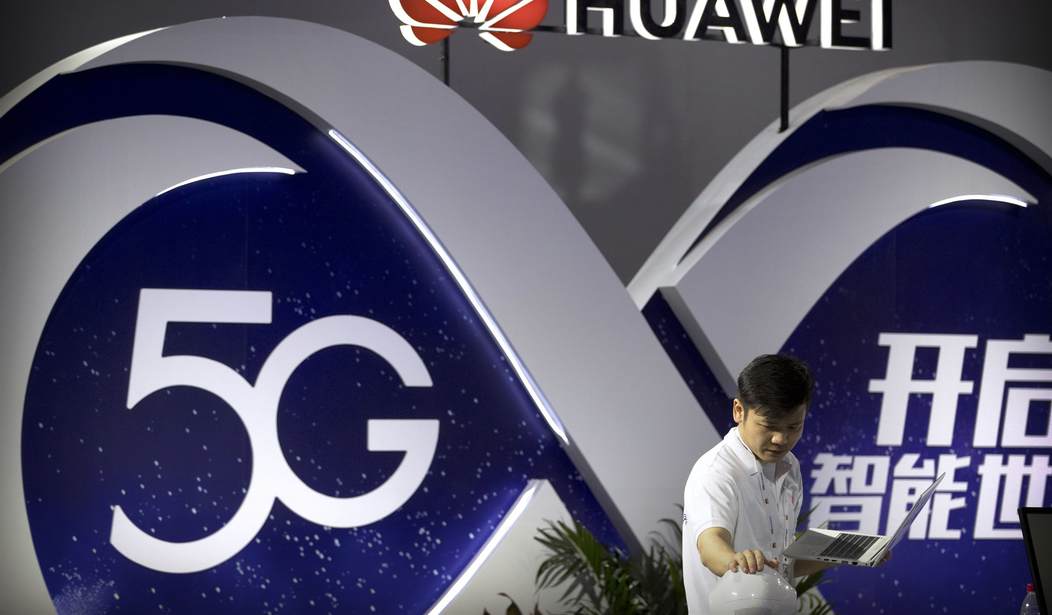
The Trump Administration should resist a renewed call for the nationalization of a 5G wireless network. The latest move by Trump is a purported effort to beat the Chinese in the next generation of wireless technology. Instead, the administration should continue to foster competition between providers and aid efforts by the Federal Communication Commission (FCC) to cut red tape to ensure that the U.S. continues to be the leader in 5G deployment.
Among the goals President Trump listed recently for a possible second term is “Win the Race to 5G and Establish a National High-Speed Wireless Internet Network.”
Republicans Newt Gingrich, Brad Parscale, Karl Rove and Peter Thiel have pitched a plan to use spectrum held by the Department of Defense to create an open-access wireless network under the banner of Rivada Networks. The concept first arose in 2019, with Trump expressing interest, but hasn’t been mentioned again by the administration until recently.
Gingrich calls the idea a “wireless moonshot” that would be carrier-neutral. A Daily Caller investigation earlier this year indicated that the former Speaker of the House may be closer to Rivada than he has indicated.
“By making the network wholesale and adhering to a principle of open access (rather than limited access for some companies) both existing industry players and new, entrepreneurial startups could get in the game,” Gingrich said. “This would ensure the new spectrum would not become the plaything of one industry giant to the detriment of all others.”
The Rivada proponents claim their plan would help promote the expansion of rural broadband, but skeptics doubt this.
Hal Singer, an economist and senior fellow at George Washington University’s Institute of Public Policy, argues the unbundling of retail services from wholesale doesn’t fix the primary reason those rural areas aren’t currently served.
“The entry barrier to serving rural areas is not spectrum, but rather high fixed costs that can't be amortized over a large base of customers, such as laying fiber or building towers,” Singer wrote in Forbes. “Rivada's plan doesn't address the relevant entry barrier.”
President Trump issued an executive order last year declaring a national emergency that prohibited American companies from using telecom services solely owned or controlled by a foreign adversary, effectively banning those companies from getting equipment from Chinese company Huawei. The administration feared that the Chinese government could order Huawei to spy on America’s 5G efforts or take over the wireless networks.
Since the three major national wireless carriers (Verizon, AT&T and T-Mobile-Sprint) in the U.S. are now building their networks free of Chinese equipment, the security concerns raised by the Rivada proponents are effectively rendered moot. The existence of multiple networks, too, would make the disruption of American 5G by foreign adversaries less likely.
Fierce Wireless reported that New Street Research analyst Blair Levin said the fact that the carriers are all deploying 5G makes the case for a national network weaker, not stronger.
Rather than push for a national, government-led network, the Trump Administration should continue the market-based approach as directed by the FCC under Chairman Ajit Pai. The FCC should continue to work to eliminate barriers to deployment while continuing its planned series of spectrum auctions to create more bandwidth for the future of 5G. This will better ensure America’s success in 5G growth than a plan that reeks of cronyism.
Johnny Kampis is a senior fellow and investigative reporter for the Taxpayers Protection Alliance.



Join the Conversation
VIP members get the ability to comment on articles.