





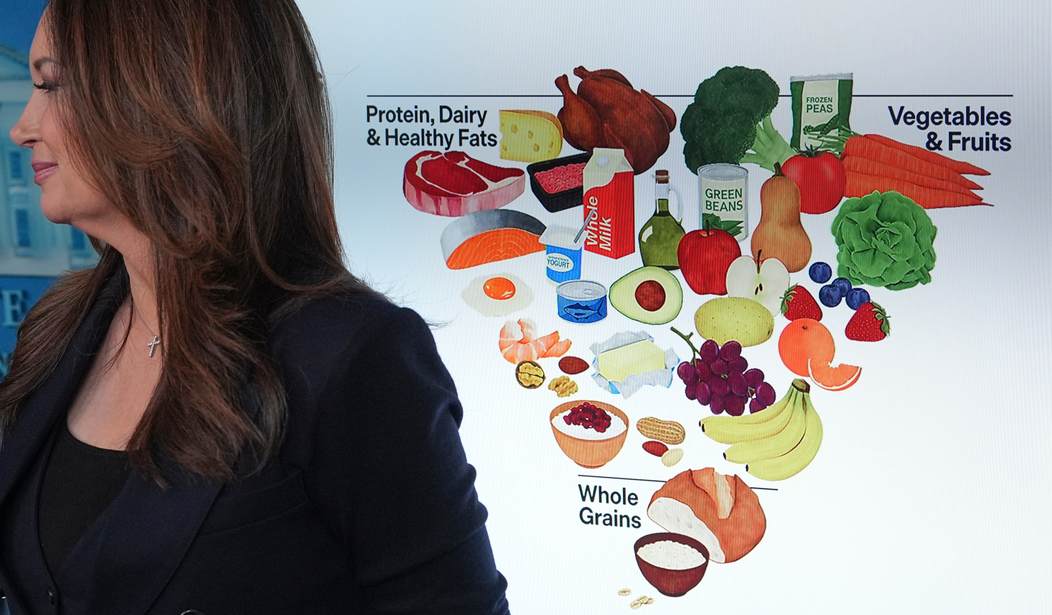
The federal government has been making recommendations on what we should eat since 1980. Since 1992, those recommendations have been visually summarized in the form of a pyramid.
The problem: Ever since the Food Pyramid was published, Americans have been getting progressively fatter. Trump administration officials think they know why: We have been getting bad advice. So, the administration has produced an “inverted pyramid,” making recommendations that in many cases are the exact opposite of the previous ones.
For example, instead of being told to limit the consumption of fat and eat carbs, we are now told to eat fat and limit our carbs.
Reporters and commentators have treated the new guidelines as a revolutionary challenge to previous expert opinion. “New guidance ignores some longstanding advice,” said the Associated Press. The “guidelines diverged from the view of public-health experts,” said The Wall Street Journal. “A striking reversal of past nutrition guidance,” said The New York Times.
What few people seem to know is that “experts” have been arguing about food for over a century and a half.
In 1863, London undertaker William Banting published a “Letter on Corpulence,” advising people on how to lose weight. Reduce your consumption of sugar, bread, potatoes, and beer, he said. In other words, avoid carbs.
Throughout the first half of the 20th century, European and U.S. doctors agreed. They recommended high-protein, low-carb regimens for obesity. Yet after World War II, low-fat calorie counting became the prevalent approach.
Then, in 1972, Dr. Robert Akins challenged the low-fat, high-carb consensus. Millions of people tried the Atkins diet, and it seemed to work. Yet for a long time, Atkins was considered a crank by mainstream experts.
In the 21st century, a number of studies, including federally funded research (e.g., NIH-associated clinical trials) showed that the Atkins diet leads to greater weight loss than other diets, at least in the short term. Yet, despite mounting evidence, it has taken two decades for the federal government to catch up to the findings of the researchers.
Another long-standing nutritional advice battle concerns cooking oils. The controversy pits saturated fats (e.g., lard, beef tallow, butter, ghee, etc.) against polyunsaturated fatty acids (often called vegetable oils or seed oils). For years, expert opinion favored the latter over the former. The American Heart Association, for example, called the former “bad” fats and the latter “good” fats.
This “expert opinion” has had a large impact on what Americans eat. McDonald’s for decades cooked its French fries in beef tallow. But under pressure, it switched to frying with vegetable or seed oils instead. A lot of customers think the older version tasted better.
Similarly, “expert opinion” is why margarine was promoted over butter. As a result, margarine from corn, cottonseed, safflower, soy, sunflower and other seed oils has become a staple for many families. Nonfat and low-fat milk were recommended, while whole milk and cream were discouraged.
A related line of thought is the hypothesis that red meat and saturated fat cause clogged arteries. This has led the public health establishment to promote reducing fat in foods. As a result, beef, pork, and chicken have been bred to have less saturated fat, and are fed soy and corn so they have more polyunsaturated fatty acids.
Cholesterol is part of the story, too, since higher levels were long considered markers of poor cardiovascular health. Even the Mayo Clinic claimed that consuming more saturated fat tends to raise levels of “bad” cholesterol in the blood.
The problem: There has never been good evidence of any of these claims. In his book, “Blind Spots: When Medicine Gets it Wrong and What it Means for Our Health,” FDA Commissioner Martin Makary writes, "Study after study has failed to demonstrate the connection between dietary cholesterol and heart disease, or between cholesterol in your diet and cholesterol in your blood. To the contrary, strong scientific research has revealed a stark reality: the cholesterol you eat is generally not absorbed by the body."
What is even more astonishing, Dr. Makary says these facts have been known since the 1950s!
How could so many highly credentialed people have been so wrong for so long? According to a study for the Goodman Institute by Greg Rehmke, they were not only wrong, they went out of their way to suppress contrary opinions.
On the plus side, the American Heart Association has now given lukewarm endorsement to the new guidelines. It has also rescinded its previous views on cholesterol and heart disease – but without any public contrition.
Kudos to the Trump administration for getting diet advice back on the right track.
Editor’s Note: Do you enjoy Townhall’s conservative reporting and opinion? Support our work by joining Townhall VIP! Use the promo code FIGHT to get 60% off your VIP membership!



Join the Conversation
VIP members get the ability to comment on articles.