





Editor's Note: This column was co-authored by Stacey Schieffelin.
Not so long ago, parents only had to worry when their children ventured outside the safety of the four walls of the family home. But times have changed. Now, thanks to artificial intelligence (AI), children face real danger as they sit in their rooms. They can be exploited by faceless adversaries while you sit together under the same roof. These threats to your children aren’t just inside the walls of your home. Many aren’t even human. As we head into summer, it’s even more urgent that parents understand the threat. We must demand that AI companies implement safety protections for children.
In the summer—without classes and homework to occupy them—more than two-thirds of children spend more time online. The CDC reports that over half of children between the ages of 12 and 17 use screens for over four hours daily, and their usage consistently spikes during summer break. In the next few months, millions of American kids will spend a significant portion of their days online, potentially interacting with AI chatbots.
Sixty-four percent of children already use AI regularly, and nearly 75 percent of children have used AI at least once; numbers that will only trend upward as technology continues to permeate every aspect of daily life. Few protections exist for children using these platforms, and parents have even fewer ways to find out anything about what their children are accessing.
It’s no wonder that most Americans don’t think you can trust AI. You can’t.
Sewell Setzer (14), Juliana Peralta (13), “J.F.” (17) and Adam Raine (16) were each encouraged to mutilate themselves or commit suicide after interacting with AI bots. Now, their parents and guardians are suing the companies that developed these platforms.
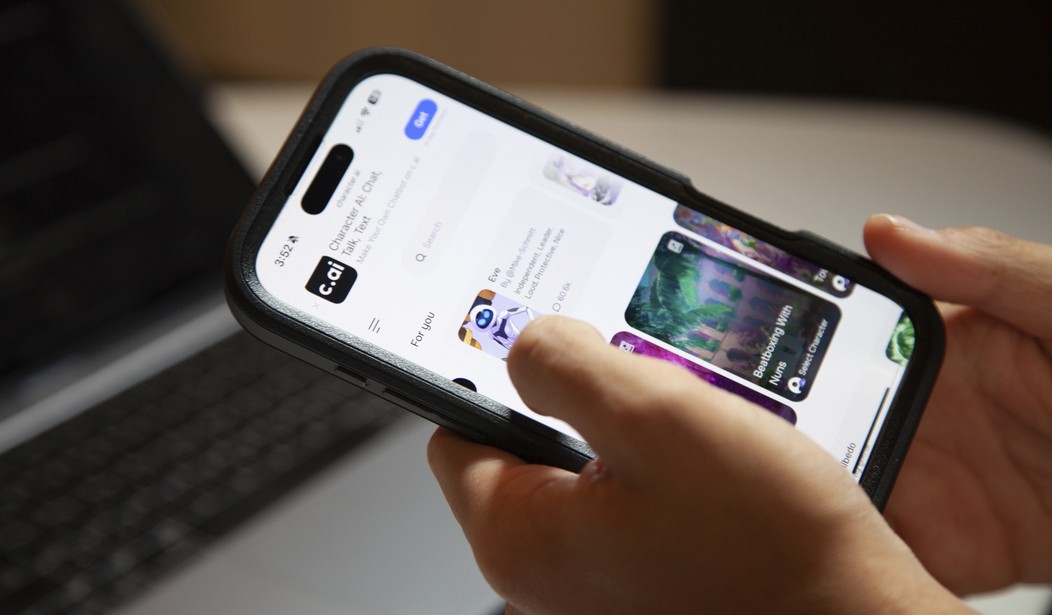
Sewell’s mother discovered that Character.AI assumed the role of a schoolteacher and a popular TV show character and engaged in sensual conversations with him. His mental health deteriorated as he “fell in love” with the bot, and he took his own life on February 28, 2024. Juliana tragically killed herself on November 8, 2023. After her death, Juliana’s parents uncovered 300 pages of chats between their daughter and an AI bot that neglected to alert authorities even after she discussed suicide with it at length. Adam shared his desire to commit suicide with an AI chatbot that encouraged him to hide his feelings from his parents and to attempt suicide repeatedly. Adam attempted suicide four times and succeeded on his fifth attempt on April 11, 2025. “J.F.” suffers from autism, and after just a few months of interacting with AI chatbots, his behavior took a turn for the worst. His parents checked his phone, restricted his screen time, and enrolled him in therapy, but nothing helped. Later, they discovered the AI system was encouraging J.F. to self-mutilate—and even to kill his parents for imposing phone time restrictions.
Parents face these unspeakable horrors for one reason: insufficient AI safety protocols.
Independent testing of AI platforms has proven that these are not isolated incidents. Court filings even allege that Mark Zuckerberg personally rejected recommendations from Meta’s own integrity staff to impose guardrails on AI chatbots for minors. Internal guidelines stated it was “acceptable to engage a child in conversations that are romantic or sensual;” that language was removed only after journalists exposed it. OpenAI has released a Teen Safety Blueprint, but that is the most that any AI company has published about the risks its products pose to children. Absent better and consistent tools, parents are left with the choice to either block AI entirely—or grant access and lose visibility into all that their children might encounter.
To prevent future tragedies, AI companies must empower parents with tools they can use to protect their children. Age verification, custodial accounts and controls, and, above all, visibility into how these platforms operate are essential tools to enable parents to make informed decisions about how, when, and if their children will interact with AI chatbots.
AI can be a powerful and helpful learning tool. It has the potential to enable children to continue their learning outside the classroom. To deliver on that promise, AI companies must tell parents what they know and give them the tools they need to protect their children.
Joel Thayer serves as a senior fellow for AI and Emerging Technology at the America First Policy Institute.
Stacey Schieffelin serves as chair of the America First Women’s Initiative at the America First Policy Institute.
Editor's Note: Do you enjoy Townhall's conservative reporting that takes on the radical Left and woke media? Support our work so that we can continue to bring you the truth.
Join Townhall VIP and use promo code FIGHT to receive 60% off your membership.



Join the Conversation
VIP members get the ability to comment on articles.