





Democracy depends on a simple bargain: citizens elect leaders, leaders make decisions, and voters can remove them when those decisions fail.
But what happens when people no longer believe that bargain exists?
For many Illinois residents, that question is becoming increasingly urgent.
As a lifelong Illinoisan and Cook County resident, I am not writing as an outside observer. Like millions of Illinois residents, I live with the consequences of the policies enacted in our name and have watched public confidence in government steadily erode.
The old saying to "vote early and vote often" was once treated as a joke. Today, many citizens no longer find it amusing.
When voters lose confidence that elections are transparent, competitive, and meaningful, elected officials become insulated from the consequences of their actions. Policies can fail. Communities can suffer. Families can be devastated. Yet those responsible often face little political risk.
My family understands that reality all too well.
My daughter, Katie Abraham, was killed on January 19, 2025, while visiting friends at the University of Illinois in Urbana. She was a passenger in a vehicle stopped at a red light when an intoxicated driver struck it at nearly 80 miles per hour.
According to court records, the driver had previously been deported, later re-entered the United States illegally, and used a false identity or alias while living in Illinois. Despite multiple apparent red flags—including questions surrounding his identity, significant language barriers, and a complex immigration history—he ultimately obtained an Illinois driver's license.
He has since been convicted for his role in the crash that killed Katie and another young woman.
Katie's death was not simply the result of one man's criminal actions. It exposed deeper cracks in how Illinois verifies identity, enforces immigration law, and coordinates between agencies.
The same gaps that allowed a previously deported individual with a complex immigration history, aliases, and significant language barriers to obtain an Illinois driver's license raise legitimate questions about how government systems verify identity and safeguard the integrity of public records.
Illinois has embraced sanctuary and "welcoming" policies that limit cooperation with federal immigration authorities while expanding programs and services for noncitizens. When identity verification appears inconsistent across government systems, public trust erodes across all of them.
When families ask how these policies were created, who approved them, and what safeguards existed, too often the response is indifference.
I once asked an Illinois state senator whether our state could provide greater transparency around election integrity and demonstrate that its sanctuary and "welcoming" policies included safeguards to ensure that only eligible citizens are registered to vote and cast ballots.
Her response was simple: "Show me the proof."
That answer revealed a troubling inversion of responsibility.
Citizens should not bear the burden of proving that government systems are trustworthy. Elected officials bear the responsibility of demonstrating that they are.
When citizens raise legitimate questions about election security and voter eligibility, the appropriate response is transparency—not dismissal.
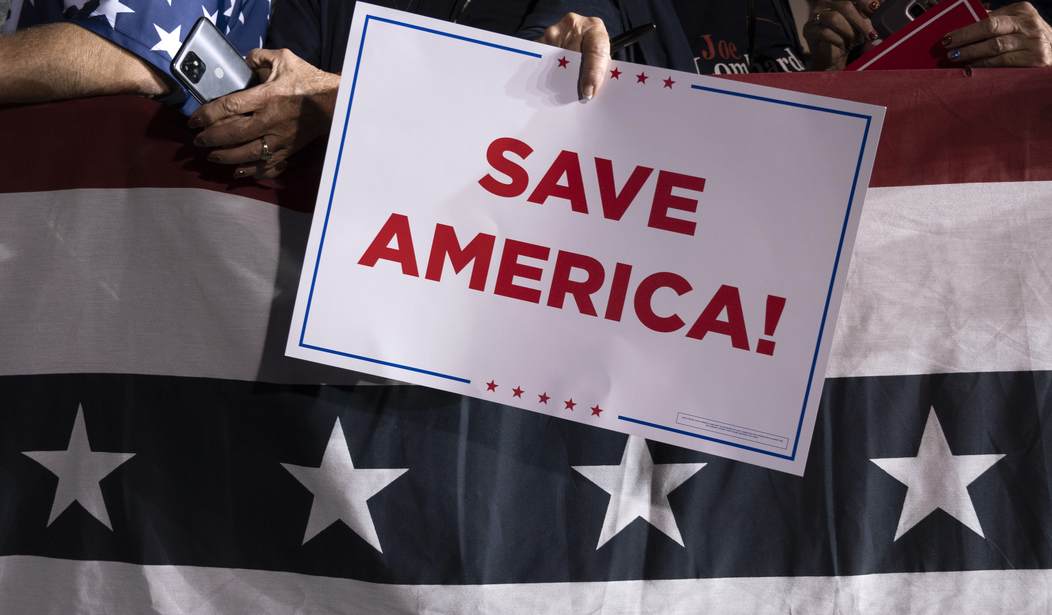
This is why the debate surrounding the SAVE Act matters.
The SAVE Act is about more than voter registration requirements. By requiring documentary proof of U.S. citizenship for federal voter registration, it seeks to strengthen voter eligibility verification and restore public confidence that only eligible citizens participate in federal elections.
Public officials should earn support through persuasion, consensus-building, and responsiveness to the people they represent. But when voters lose confidence in the transparency and meaningfulness of elections, accountability weakens.
Elected officials then have fewer incentives to explain their decisions, address legitimate concerns, or seek broad public support for controversial policies. Instead, policy can become driven by ideology, party loyalty, and political self-interest rather than the interests of the citizens those leaders were elected to serve.
That dynamic is especially dangerous when it comes to immigration policy.
The foundational act of democracy—choosing our representatives—belongs exclusively to citizens.
When voters see the same institutional weaknesses contributing to both preventable tragedies and questions about election integrity, confidence collapses. Officials become insulated from consequences. Policies fail. Families pay the price.
Eventually, the people most affected by policy failures become invisible.
Families like mine are told that our losses are unfortunate but unavoidable. The human cost is contextualized, explained away, or dismissed as collateral damage.
Democracy cannot function that way.
Public officials should welcome scrutiny, not resent it. They should demonstrate the integrity of our systems rather than demand blind faith in them.
Because in a republic, citizens are not accountable to politicians.
Politicians are accountable to citizens.
Editor's Note: Do you enjoy Townhall's conservative reporting that takes on the radical left and woke media? Support our work so that we can continue to bring you the truth.
Join Townhall VIP and use promo code FIGHT to receive 60% off your membership.


Join the Conversation
VIP members get the ability to comment on articles.