





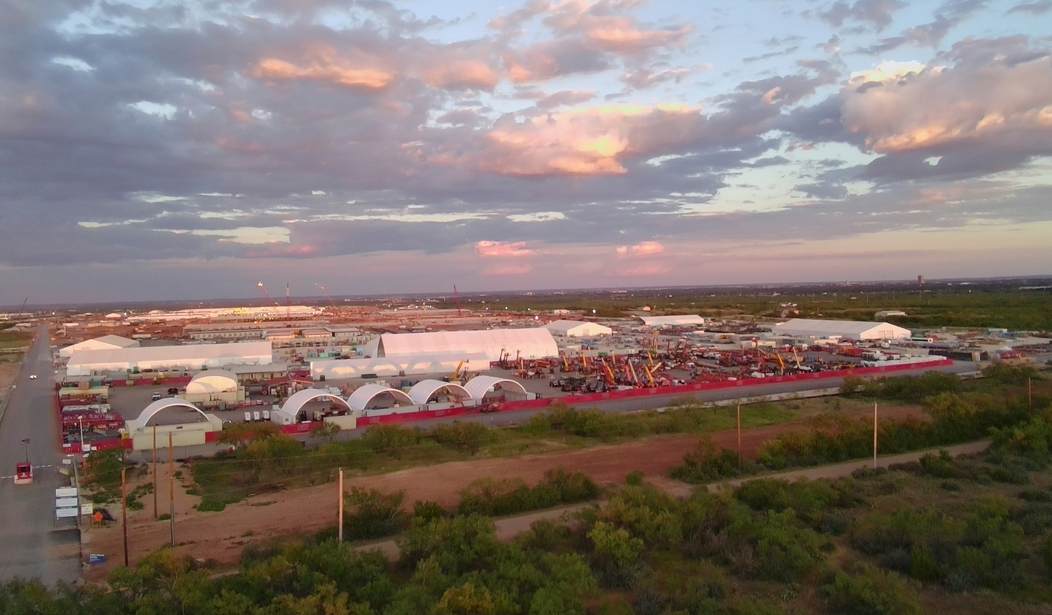
The future is arriving, and America is entering a new infrastructure age. Much of the political class is succumbing to a familiar temptation: slow it down by stoking fear of the unknown and imagining worst-case scenarios without acknowledging the benefits.
Nowhere is this clearer than with data centers. Across the country, local officials and community activists increasingly describe these facilities as threats to the electric grid, water supplies, and community character. In response, municipalities are turning to a usual toolkit of administrative resistance—emergency moratoriums, ad hoc zoning bans, and highly discretionary permitting loops designed to stop projects in their tracks rather than manage them.
This reactionary policymaking represents a fundamental misunderstanding about what a data center is and how it works.
Data centers are the railroads, power plants, and ports of the digital economy. They are the physical backbone of cloud computing, artificial intelligence, financial services, and nearly every modern enterprise. They do not merely serve “Big Tech,” but rather everyone who lives, works, learns, shops, banks, or communicates in the modern digital world.
The growth in demand is real. Artificial intelligence and advanced cloud computing require substantial power, land, cooling, and capital. Recognizing the physical constraints of this growth should not lead to the conclusion that data centers are villains.
We are choosing between two competing visions of the future: a scarcity agenda that starts by saying no, and a prosperity agenda that trusts price signals and property rights to expand capacity and solve problems.
As a recent series of papers published by the Goldwater Institute shows, the better question is whether public policy will allow America to expand capacity, price resources honestly, and build the infrastructure required for the next generation of prosperity.
On energy, the current panic has the problem backward. Data centers aren't creating an energy crisis; they are exposing the structural flaws in how we manage public utilities. Unlike other commodities, electricity must be balanced continuously. If demand rises and supply is constrained, the system must respond instantly. In most markets, scarcity is communicated through prices. Hotel rooms cost more during peak travel. Airline tickets rise when flights fill. Those prices tell consumers that capacity is limited.
Electricity markets often hide that signal. Wholesale prices spike when the grid is strained, but many retail customers continue paying fixed rates that conceal real-time scarcity. The result is predictable: consumers have little reason to shift demand, and large-load users may not face the right incentives to reduce strain when the system needs flexibility most.
The answer is not to punish data centers, but to fix the market signals that shape how they use power. Real-time pricing, peak charges, interruptible-service agreements, and clear large-load tariffs can push major users to manage demand, improve efficiency, generate their own power, or cut usage during periods of strain. At the same time, policymakers should remove the regulatory barriers blocking new reliable generation and transmission.
Water usage deserves the same thoughtful, evidence-based approach. While data centers do require cooling, portraying them as unchecked resource drains misses the rapid innovations taking place.
Because water is a direct operating cost, developers have a built-in financial incentive to conserve. Market forces are already driving a massive shift toward closed-loop recycling systems and dry-air cooling. Our policies should remain technology-neutral, focusing on objective environmental outcomes at the property line rather than mandating specific engineering methods that risk locking obsolete standards into law.
Beyond resources, the current trend of blanket moratoriums threatens fundamental property rights. A landowner who follows the rules should not see them changed retroactively because a project has become the target of a cynical political campaign. Discretionary permitting, emergency moratoriums, and ad hoc zoning restrictions undermine the development certainty that long-term infrastructure requires. They also send a clear message to investors: build somewhere else.
That does not mean communities should be powerless or passive observers of the changes happening around them. Governments can and should enforce objective standards for safety, environmental protection, noise, traffic, utility connections, and land use. But once those standards are met, approval should be predictable and timely. Permit-by-rule systems and firm shot clocks would prevent regulators from killing projects through delay while preserving legitimate oversight.
Large users should also pay their own way. A beneficiary-pays model would require data-center developers to fund the substations, transmission upgrades, and dedicated infrastructure their projects rely on, protecting residential ratepayers while allowing private capital to build and strengthen the grid America needs.
America has faced this choice before. Every major technological shift brings warnings that the future is arriving too fast. Sometimes those warnings identify real problems, but the answer to real problems is better policy—not retreat.
The digital economy and the future of AI will be built somewhere. By protecting property rights, pricing resources honestly, and holding developers accountable while still fostering innovation, we can ensure America leads this new era.
Jen Springman is the Coalitions Manager at the Goldwater Institute, where she works to build and strengthen strategic partnerships to assist in advancing Goldwater’s national policy initiatives.
Editor’s Note: Do you enjoy Townhall’s conservative reporting that takes on the radical Left and woke media? Support our work so that we can continue to bring you the truth.
Join Townhall VIP and use promo code FIGHT to receive 60% off your membership.



Join the Conversation
VIP members get the ability to comment on articles.