






FORTY YEARS AGO, the Supreme Court ruled that where a union represents public employees, even workers who don't join the union can be forced to pay "agency fees" as a condition of the job. While the First Amendment shields nonmembers from having to subsidize a union's ideological or political activities, the court held in Abood v. Detroit Board of Education, it allows them to be assessed their fair share for the neutral costs of collective bargaining.
As the ensuing decades made clear, however, when it comes to public-sector unions, there is no separation between collective bargaining and politics.
Virtually everything government unions do is political: They endorse candidates, undertake political campaigns, lobby legislators, and hold politics-drenched conventions. They make no secret of their partisan loyalties and clout. On its website, the American Federation of State, County, and Municipal Employees, a prominent government union, boasts: "All across the country, at every level of government, candidates for public office [have] learned . . . to pay attention to AFSCME's political muscle." And thanks to Abood, much of that muscle has been bought with fees collected from unwilling state employees.
For a long time it's been obvious that Abood got it wrong. In Janus v. AFSCME, a case the Supreme Court took up this week, the justices have a chance to overturn that precedent and get the issue right.
Banning agency fees wouldn't eliminate unions from government workplaces, but it would mean that unions could no longer compel nonmembers to pay the equivalent of union dues for representation they never asked for. It would also mean states could no longer trample employees' First Amendment rights in the name of "labor peace."
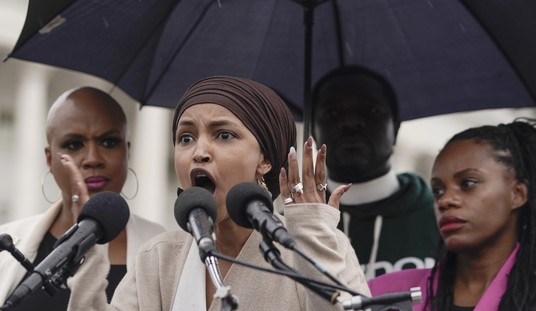
On Monday, as the high court heard arguments in the Janus case, union leaders and Democratic officials held political protest rallies around the country, wailing that the sky will fall if Abood is overturned. The lawyer for AFSCME, David Frederick, raised a similar alarm during his oral argument in Washington.
"If the other side succeeds in persuading a majority of you to overrule Abood," Frederick said, "it will affect thousands of contracts. More importantly, it is going to affect the work of state legislatures, city councils, school districts, who are going to have to go back to the drawing board. . . . In many collective bargaining agreements, the fees are the tradeoff. Union security is the tradeoff for no strikes. And so if you were to overrule Abood, you can raise an untold specter of labor unrest throughout the country."
It's a hollow threat. And there is empirical evidence to prove it.
Since 2012, six states have adopted right-to-work laws, bringing to 28 the number of states in which no employee (private or public) can be forced to join or support a labor union as a requirement of the job. Under the new rules, agency fees dried up and some (not all) unions lost members. But none of the states that moved into the right-to-work camp were paralyzed by the "untold specter of labor unrest" that AFSCME and its allies are now warning of.
"The record in Michigan, Indiana, Wisconsin, Kentucky, and elsewhere is that it is not a huge burden," says Daniel DiSalvo, a professor at City College of New York and expert on public-sector labor issues. Of course there have been some transitional wrinkles, "but you'd be hard pressed to find any evidence that the new laws were hard to implement or that they caused all kinds of problems."
Not only are agency fees already barred in the 28 right-to-work states, they are forbidden in the federal workplace too. None of the 2.7 million Americans who work for Uncle Sam can be coerced into paying tribute to a labor union against their will. Plainly, labor peace does not depend on compelled speech by reluctant government workers.
Abood should be overruled because it egregiously tramples government workers' rights — regardless of the impact on public-sector contract bargaining. But the justices can rest easy: The impact will be trivial. States, state workers, and the Bill of Rights will all be better off. And unions will be free to go on politicking. Just as long as they keep their paws out of nonmembers' paychecks.

Join the Conversation
VIP members get the ability to comment on articles.