





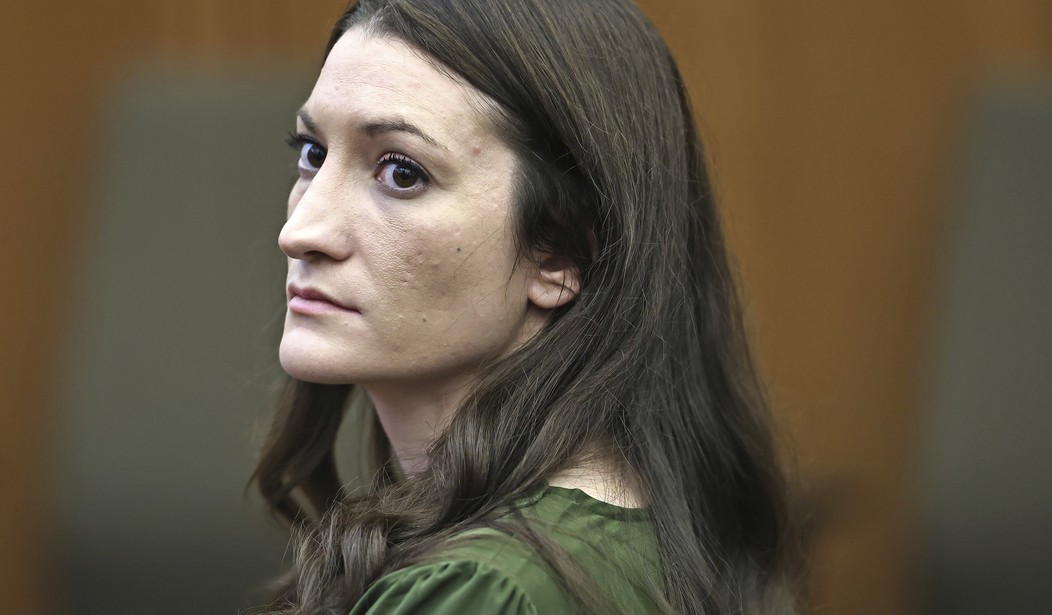
In a matter of days, the nation will find out if triple killer Lindsay Clancy is free from charges via the declared mistrial on September 4, or if she will be tried a second time. Either way, the American jury system has been taking some hard hits.
Decades ago, highly publicized court cases saw lawyers defending clients accused of murder by turning to a new line of defense, dubbed the “abuse excuse.” The argument was, “My client, otherwise a normal, rational, decent human being, was abused for years by his or her spouse, parents, sibling, coworker, or whomever.”
Kill or Be Killed
A noteworthy case was that of the Menendez brothers, Lyle and Erik, who feared and then murdered their parents in their Beverly Hills home in August 1989. They claimed to have suffered years of physical, psychological, and sexual abuse and that they believed their parents were about to kill them.
The first trial ended in January 1994, with the juries deadlocked between murder and lesser manslaughter charges. At the retrial, prosecutors restricted much of the abuse-related testimony and focused more directly on the killings. In March 1996, both brothers were convicted of two counts of first-degree murder and sentenced to life in prison without the possibility of parole.
Harvard Law professor and defense attorney Alan Dershowitz wrote about the subject in "The Abuse Excuse: And Other Cop-outs, Sob Stories, and Evasions of Responsibility," published in 1994.
Stay Focused on the Crime
The Menendez retrial demonstrated that prosecutors could challenge claims of abuse at the hands of the deceased by directing jurors to focus on the legal elements of the crime and on the defendant's conduct at the time of the killing.
Perhaps predictably, new explanations for murder and other heinous crimes were employed. Defense attorneys increasingly turned to mental illness, psychological disorders, trauma, and other conditions as the rationale for criminal behavior.
The “abuse excuse” as a primary defense eventually fell out of favor, but only for a while. It has recently been revived, as will be explained below.
The Devil Made Me Do It
The Lindsay Clancy trial in uber-liberal Massachusetts is significant because the defense claimed that postpartum psychosis rendered her incapable of being held criminally responsible for the pre-planned murder of her three children. Following the dictates of a “voice” inside her head, Clancy, a former labor and delivery nurse, sent her husband out to a store and then methodically strangled her three children, ages five, three, and seven months.
No one disputes her actions. The defense claimed that Clancy was suffering from postpartum psychosis, a rare psychiatric condition that can involve hallucinations, delusions, confusion, and wild mood changes. Her attorneys also pointed to her extensive mental-health treatment and the medications she had been prescribed after the birth of her third child. Prosecutors argued that she understood what she was doing and deliberately carried out the murders. The central legal question for the jury was whether or not she was criminally responsible for her actions at the time of the murders.
As we all know, 11 jurors, possibly each with a preconceived verdict in mind, found Clancy not criminally responsible. Apparently, for them, the defense succeeded in asserting that postpartum psychosis created reasonable doubt about Clancy's criminal responsibility. The 12th juror maintained that she was criminally responsible and that the evidence showed she knew what she was doing. We are now days away from learning if a second trial will be forthcoming. On September 29, a hearing will likely reveal if prosecutors seek to retry Clancy.
To the Larger Question
Should mental illness, postpartum psychosis, medication, trauma, or hormonal changes ever excuse a person from criminal responsibility for horrific acts? Unlike the Menendez brothers, Clancy did not fear her victims. Did her “condition” affect her perception of reality? Attempting to kill herself immediately thereafter suggests she knew exactly what she was doing.
A person's background, hormones, medications, trauma, childhood experiences, or psychological condition could all be relevant to understanding a crime, but does it excuse murder? Of innocents?
The Menendez brothers argued that years of abuse shaped their perception of danger and contributed to their decision to kill their parents. The Clancy case demands that we answer: At what point does an explanation, and an unverifiable explanation at that, become a legal defense?
Back in Play
Recently, Stacey Humphreys avoided a lethal injection, for now. Why? A new Georgia law might enable him to have a hearing to ascertain if his crimes were connected to abuse he suffered as a child. What did Humphreys do? He murdered two young women, strangers to him, after first humiliating them. Later, he emptied their bank accounts.
So, is the abuse excuse back on the table, along with postpartum psychosis, serving as the rationale for murder, or even a triple murder? Clancy copycat murders have already occurred. How many other children must die?
The insanity defense and other mental-health defenses need to be rethought entirely. No one can know the mind of another, months or years back. Compassion for genuine mental illness is desirable. Accountability for criminal conduct is crucial. Do we open the floodgates and dismiss other instances of infanticide and filicide?
I’d Like to Thank My Mom
A message on a T-shirt currently making the rounds says, “Shout out to my Mom for not strangling me when things got tough.”
May the next judge and jury in any murder case act with greater prudence, not with preconceived conclusions, and carefully weigh both the evidence and the law.
Editor’s Note: Do you enjoy Townhall’s conservative reporting that takes on the radical Left and woke media? Support our work so that we can continue to bring you the truth.
Join Townhall VIP and use promo code FIGHT to receive 60% off your membership.



Join the Conversation
VIP members get the ability to comment on articles.