






Been saying this for a long time.
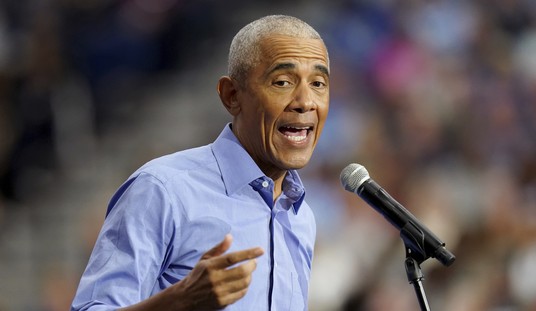
The reason I started blogging in the first place was the massive misinformation on economic policy coming out of the White House. We had been on the wrong path since the latter half of the Bush years (he was no spendthrift) and Obama took us right off a cliff.
Yesterday Ben Bernanke said,
The Fed has lowered interest rates effectively to zero and vowed to keep them there through the end of 2014 in response to those challenges, but Bernanke suggested there is little more the central bank can do.
“Monetary policy is not a panacea,” he said. “The long-term health of the economy depends mostly on decisions taken by Congress and the administration.”
I think he makes my point. It’s not tax cuts that are killing us. But no growth. The massive deficit and massive amount of regulation Obama has thrown at the economy has caused a vapor lock. We are stuck in the mud.
Get rid of Obama, change policy to pro growth, cut federal deficits and we will be okay.
In Senate testimony, Senator Corker from Tennessee asked a lot of questions of Fed Chair Ben Bernanke on the Volcker Rule.
In essence, Corker was asking broad questions about market making that have little or no relation to what I thought the Volcker Rule’s actual intent was. Corker was trying to build a case that the banks should be allowed to trade based on their market making capabilities.
I have a few perspectives on that to share. First, if the banks didn’t make markets, what would happen? If there was value to making those markets, someone would step into the void. I can recall in a trading pit when a big trader would retire, or a big trader would take a vacation people might ask, “Who will pick up the slack?” Without fail and immediately, someone would. Financial markets are highly competitive. If banks weren’t making markets someone would.
Another perspective is this. In the early 1990's, we did a survey of the largest volume traders in the Eurodollar pit at the CME($CME, $NYX, $NDAQ, $ICE). There was a lot of controversy between locals and order fillers because locals thought that order fillers were stealing trades from them. In fact, when the data poured in, it turned out that something like 15 of the top 20 traders in the pit were order fillers. Most of them were simply trading against their decks. Eventually we banned dual trading and volume actually increased. There were a lot of factors that increased volume, not just a ban on dual trading-however, the market didn’t skip a beat.
Think of everyone as a local, and the banks as order fillers in the above illustration. Banks use their market making function to trade against their customers and earn relatively risk free profits. That’s not what markets were designed for.
I maintain that if you took the prop trading function away from banks, the market wouldn’t miss a beat and we might actually see an increase, not decrease in liquidity.
The structure of the market place is wrong. Recall the financial melt down. It was shown that while Goldman was selling junk to their customers, their prop traders were taking the other side of that junk and reaping humongous profits. Nothing wrong with a profit, but they weren’t taking any risk.
When banks and hedge funds are allowed to pay for order flow, internalize order flow, it messes with the integrity of the marketplace.
I agree the Volcker Rule isn’t perfect. Actually, it’s been so defanged it won’t make much of a difference. What we ought to be doing is looking at the function someone is performing in the marketplace. If they are filling an order, they should be paid for that service-and not allowed to take the other side. If they want to trade and risk their capital, they shouldn’t be able to fill orders. It’s pretty simple.
Follow me on Twitter.


Join the Conversation
VIP members get the ability to comment on articles.