





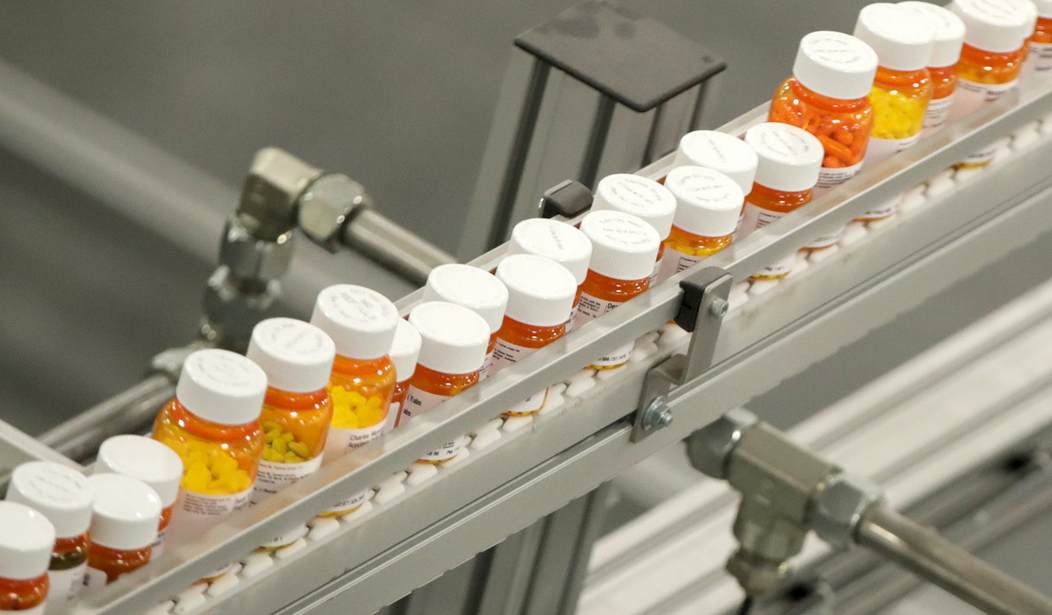
China could soon overtake America as the world's biotech powerhouse. Such a development would have dire implications for our economy and national security.
Congress's bipartisan National Security
In 2025, Chinese biotech companies inked over $135 billion worth of licensing deals with large pharmaceutical firms — about half the global total, and nearly twice the value of licensing deals inked by U.S. biotechs. China also now conducts more clinical trials than we do. Chinese firms originate 30 percent of all new drugs in the global development pipeline, barely trailing America's 36 percent share.
Simply put, China's current capabilities nearly rival ours. And they've been increasing at an exponential rate for the past decade, ever since Beijing designated biotech as a critical industry and decided to spare no expense to promote progress.
Fortunately, China's ascension isn't a foregone conclusion.
America still boasts dozens of top-ranked universities that churn out some of the globe's brightest researchers. Our venture capital firms — which sniff out and fund the most promising medical technologies — are second to none. And our largest pharmaceutical companies are some of the most sophisticated multinational organizations on earth, with decades of experience developing breakthrough treatments, shepherding them through the regulatory approval process, and quickly delivering them to patients.
The Trump administration is already working to boost the industry — both by streamlining the regulatory process and forcing trading partners to start paying market prices for American companies' drugs.
For instance, the administration recently pressured the United Kingdom to double its spending on new medicines as a share of GDP over the coming decade — a seismic change that could increase U.S. companies' revenues by billions of dollars. The administration's top trade negotiator, Ambassador Jamieson Greer, has promised that deals with other allies are in the works.
Yet some in Congress are contemplating a proposal that'd more than cancel out any gains that American biotechs reap from the Trump administration's reforms.
Lawmakers in both parties have sponsored legislation that'd tie U.S. drug prices to the lower prices that prevail in other developed nations, which for decades have used a variety of direct and indirect price controls and non-tariff trade barriers to artificially suppress drug spending.
These lawmakers believe that it's unfair that American patients, insurers, and taxpayers must fund an inordinate share of the cost of developing new medicines.
And they're right. It's deeply unfair.
But their proposal wouldn't end the freeloading by forcing other countries to pay fair market prices. It would only implode America's biotech
Automatically tying U.S. prices to the levels set by foreign bureaucracies would also undermine American sovereignty — and kneecap the Trump administration's ability to negotiate better trade deals, like the one it inked with the United Kingdom.
At a moment when Beijing is pouring resources into biotechnology, Congress should be working to keep America in the lead. That means strengthening the intellectual property protections that spur investment and working with the administration to cut red tape and make it easier for companies to research, develop, and manufacture medicines in America.
American capitalism made America's biotech sector the most powerful in the world. And while we face a very real threat from a rising China, there's every reason to remain optimistic. If we simply double down on our strengths -- and avoid the pitfalls of price controls -- we can beat back this challenge and protect our economy, our national security, and our collective health.
Ambassador Jeffrey Gerrish served as the Deputy U.S. Trade Representative for Asia, Europe, the Middle East, and Industrial Competitiveness from 2018 to 2020.
Editor’s Note: Do you enjoy Townhall’s conservative reporting that takes on the radical Left and woke media? Support our work so that we can continue to bring you the truth.
Join Townhall VIP and use promo code FIGHT to receive 60% off your membership.

Join the Conversation
VIP members get the ability to comment on articles.