





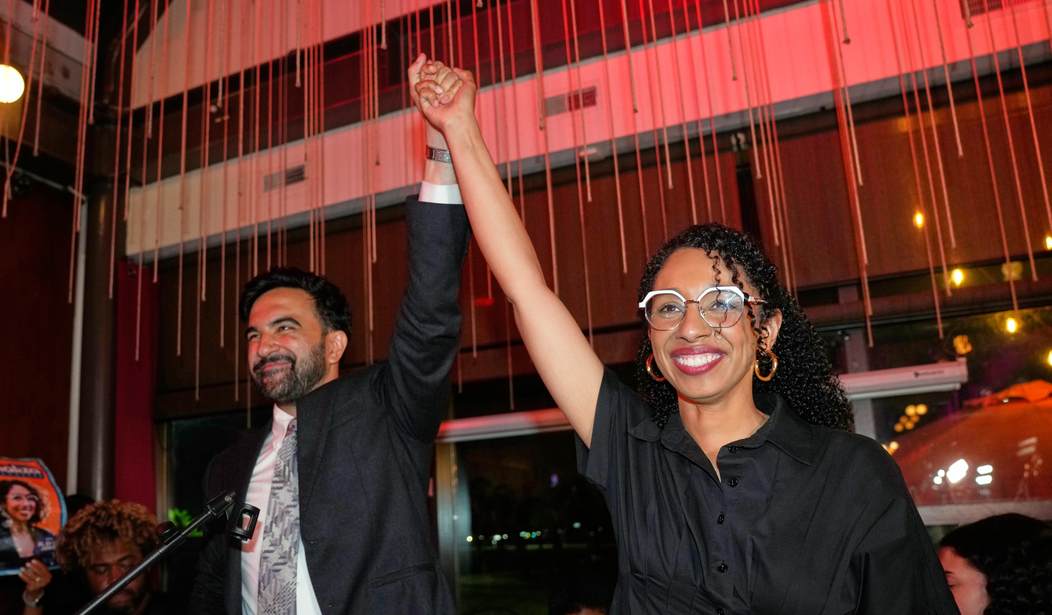
On July 4, 2026, the Democratic Socialists of America announced it had surpassed 120,000 members, the largest socialist organization in American history, larger than Eugene Debs's Socialist Party at its 1912 peak. Pick your irony: a group built around collective ownership of the economy chose Independence Day to claim the mantle of America's biggest-ever socialist movement. The Tea Party picked the same holiday to explain itself back in 2009, dumping metaphorical tea into the harbor to protest a government that had stopped listening to the people who paid for it. Both movements changed their parties. Both claim the mantle of the ordinary American against a distant establishment. That's where the resemblance ends.
I've spent thirty years underwriting risk for institutional investors and sitting as an expert witness on fiduciary duty in federal and state courts. My job in that chair is simple: separate what an institution says it stands for from what it actually does under pressure. Apply that same test to these two movements and you get two very different verdicts.
The Tea Party emerged from Rick Santelli's February 2009 rant on the floor of the Chicago Mercantile Exchange, aimed at a bailout that rewarded bad decisions with other people's money. Thomas Sowell and Milton Friedman had been making the same argument for decades: government spending crowds out private choice and someone always pays the bill. The movement's demand was almost quaint by today's standards. Follow the Constitution. Cut spending. Respect enumerated powers. Hold Congress accountable for the checkbook it controls. Reagan had made the case a generation earlier that government wasn't the solution to the problem; it was the problem, and the Tea Party simply cashed that check.
The DSA's stated program runs the opposite direction: Medicare for All, government-run grocery stores and bus lines, a wealth tax, a 32-hour workweek at the same pay, and what its own materials call collective ownership of the "key economic drivers" of American life. Zohran Mamdani didn't hide the ball when he ran for mayor of New York on free buses, frozen rents, and city-owned grocery stores, and he won. A member of DSA's National Political Committee put the quiet part on camera earlier this summer: "Our goal is communism." That's not a slur from a Fox News chyron. That's their own guy, in his own words.
Here's where the comparison really breaks down, and it's not about the platforms. It's about conduct. I've coached youth track and rugby for over a decade, and the first lesson you teach a 15-year-old is that character shows up in how you act when no official is watching. The Tea Party's rallies were almost eerily disciplined. Mark Meckler, one of the movement's founding organizers, told the Independence Institute the operation was "largely self-policing." Conservative writers point to the contrast with the 2011 Occupy Wall Street encampments, which left tons of litter for sanitation crews to haul away. There is no domestic terrorism prosecution anywhere in the country carrying the Tea Party's name.
The DSA doesn't get that same clean record, and this isn't a stray incident. On July 4, 2025, an armed cell attacked the Prairieland ICE detention facility in Alvarado, Texas, shooting a responding police officer in the neck. Federal prosecutors called it a planned ambush; the ringleader, a former Marine reservist, allegedly shouted "get to the rifles" before opening fire. Eight defendants were sentenced this June to a combined 450 years in federal prison, the first Antifa-linked domestic terrorism convictions in the country's history following Trump's September 2025 executive order designating it as a domestic terror group. The Department of Homeland Security reports a 1,300 percent increase in assaults on ICE officers and a 3,200 percent jump in vehicular attacks against them over the past year, attributed by DHS to sanctuary-politics rhetoric and the activist Left. DSA's own national convention didn't respond by dialing down the temperature. It passed a resolution directing its leadership to build a national "Abolish ICE" campaign, and one of its caucuses called a January shooting death involving ICE agents in Minneapolis "state violence" rather than condemning it outright.
I'll give the Tea Party's critics their due, because a fair fight requires it. The movement wasn't spotless. Some rallies drew signs and remarks that were flat-out ugly, and critics reasonably called out the astroturf funding from groups like FreedomWorks and Americans for Prosperity behind what was billed as purely grassroots. Those are legitimate marks against it. But there's a difference between individual bad actors a movement disowns and a pattern of organized violence a movement's own leadership responds to with statements that stop short of condemnation. That's not a "both sides" problem. That's a difference in kind.
Both movements reshaped their parties in ways that outlasted the initial burst of energy. The DSA has Mamdani in Gracie Mansion, a member on track to become mayor of Washington, D.C., and a 29-year-old who just knocked off a 15-term incumbent in a Colorado primary. A sympathetic academic study of the DSA published this year reached back to the Tea Party as the closest historical parallel for what political scientists call a "movement party." The scale of ambition is comparable. What each movement is willing to do to get there, and tolerate on its way there, is not.
I didn't sign up for the Marine Corps or spend three decades managing other people's money to learn that intentions matter more than results. They don't. A fiduciary gets judged by what happens to the client's money, not by the mission statement in the prospectus. A movement deserves the same standard, and so does a political party. One of these movements handed the government the Constitution and asked it to follow the document again. The other is watching its fringe get sentenced to centuries in federal prison while its national leadership calls for abolishing the agency those defendants attacked. Judge them by that, not by the T-shirts.
Jay Rogers is a financial professional with more than 30 years of experience in private equity, private credit, hedge funds, and wealth management. He has a BS from Northeastern University and has completed postgraduate studies at UCLA, UPENN, and Harvard. He writes about issues in finance, constitutional law, national security, human nature, and public policy.
Editor’s Note: Do you enjoy Townhall’s conservative reporting that takes on the radical Left and woke media? Support our work so that we can continue to bring you the truth.
Join Townhall VIP and use promo code FIGHT to receive 60% off your membership.



Join the Conversation
VIP members get the ability to comment on articles.