





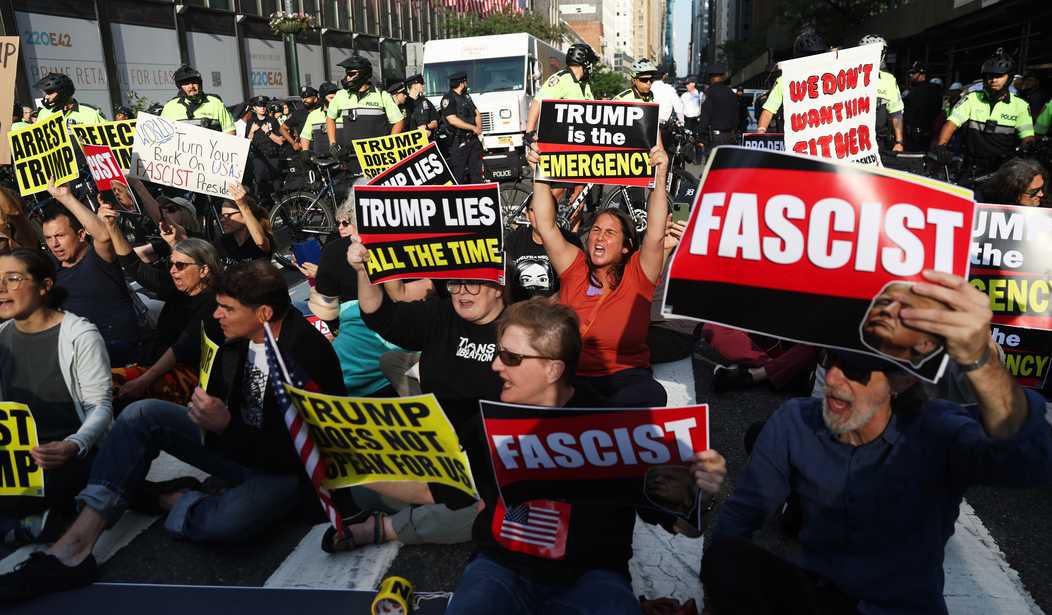
At Red Sox–Yankees games during my college years, I watched grown adults, otherwise rational professionals, scream themselves hoarse over a ball game as though civilization itself hung in the balance. Years later, during the 1992 Los Angeles riots, I watched tribalism operate at a far more consequential register. One experience was almost comically benign. The other destroyed the city. The instinct behind both was identical.
That instinct is tribalism. Not as a slur or a complaint, but as a biological fact. And until we treat it as one, we will keep misdiagnosing what is happening to this country.
For approximately 95 percent of human history, Homo sapiens lived in small bands of roughly 150 individuals, the number British anthropologist Robin Dunbar identified as the cognitive upper limit for stable social relationships. Within those bands, in-group loyalty was not a virtue; it was a prerequisite for survival. Natural selection built the tribal instinct into us over an enormous span of time. The amygdala flags outsiders as threats before conscious evaluation occurs. Oxytocin, the so-called bonding hormone, simultaneously promotes generosity toward insiders and suspicion of outsiders. Biology does not traffic in progressive idealism.
In the 1970s, Henri Tajfel demonstrated just how little it takes to trigger this machinery. He assigned subjects to arbitrary groups based on coin flips. Within minutes, they were discriminating in favor of their group and against the other. No shared history. No genuine conflict of interest. Just labels. Tajfel called this the minimal group paradigm. Its implication for contemporary politics should be obvious: if a coin flip is enough to activate tribal behavior, a cable anchor who tells you the other side is trying to destroy the country will do just fine.
James Madison understood this. Federalist No. 10 identified the "violence of faction" as the principal threat to republican government and designed a constitutional structure to check it — not by abolishing faction, because Madison knew that was impossible, but by building competing factions into a system that prevented any one from dominating the others permanently. He was right then. He is right now. The question is whether we still have the institutional architecture to make his solution work.
The identitarian left has answered that question in the most direct way possible: by systematically dismantling that architecture. Identity politics is tribalism converted from a natural human instinct into a political product. DEI programs institutionalize the division of Americans by demographic category, rewarding individuals not for achievement but for the grievance their group can claim. Critical race theory presents the hierarchy of oppressors and oppressed as permanent — which is to say, as politically useful. The practical effect is to create what might charitably be called permanent victim tribes whose political value to their handlers depends on the problems never being solved.
The logic is not subtle. A constituency that achieves self-sufficiency no longer needs the politicians who promise to deliver it. Grievance, carefully tended, is more politically durable than success.
California is the case study. Thirty years of single-party governance have transformed the world's most dynamic economy into a cautionary tale of regulatory capture, capital flight, and homelessness on a scale that would be incomprehensible anywhere else in the developed world. My three decades in financial services, running hedge funds and advising family offices in this environment, gave me a practitioner's view of how tribal dominance in government produces bad policy insulated from correction. One-party rule disables the feedback mechanism of electoral competition. Net domestic out-migration has become a structural feature of California's demography. The tribe governs itself.
The conservative answer is not to pretend human nature is different from what it is. It is to channel tribal instinct toward a worthy object. My experience in the United States Marine Corps confirmed that this is possible: shared mission and mutual accountability forged a unit that transcended race, region, and background — not by abolishing group loyalty but by directing it. The Corps does not ask Marines to pretend they have no tribe. It asks them to make the unit the tribe, and then it makes that ask credible by delivering genuine belonging and purpose.
E Pluribus Unum is not a slogan demanding the abolition of differences. It is a framework for making difference functional within a larger shared identity. That is the American project. The identitarian left's project is the opposite: it insists that the many cannot become one without first establishing a permanent hierarchy of grievance — an arrangement that benefits the political operators who maintain it and no one else.
The practical program is not complicated: invest in local community across ideological lines; demand term limits to break the self-perpetuating tribe of professional politicians; support school choice to introduce corrective competition into an educational system captured by an ideological tribe with its own agenda. None of this requires pretending that tribalism doesn't exist. It requires giving it a better object than the one currently available.
Tribalism is not going away. It was here before the republic, and it will be here as long as human beings retain the neural architecture that evolution built into us. The only question that matters is whether we direct it wisely or allow it to direct us. The republic, as the founders were fond of noting, is yours — if you can keep it.
Jay Rogers is President of Alpha Strategies and a financial professional with more than 30 years of experience in private equity, private credit, hedge funds, and wealth management. He has a BS from Northeastern University and has completed postgraduate studies at UCLA, UPENN, and Harvard. He writes about issues in finance, constitutional law, national security, human nature, and public policy.
Editor’s Note: Do you enjoy Townhall’s conservative reporting that takes on the radical Left and woke media? Support our work so that we can continue to bring you the truth.
Join Townhall VIP and use promo code FIGHT to receive 60% off your membership.


Join the Conversation
VIP members get the ability to comment on articles.