





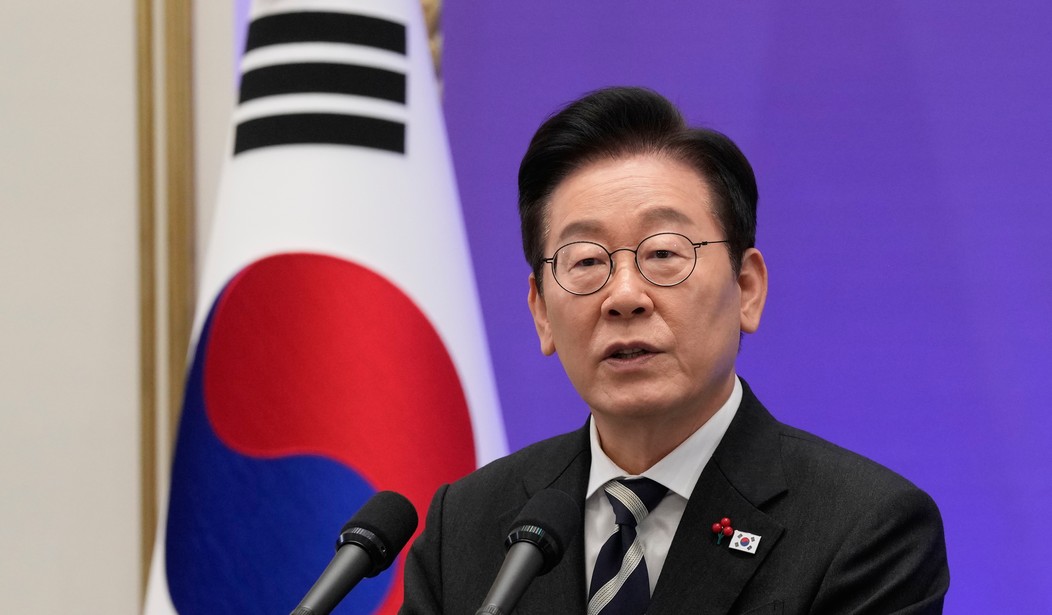
The burgeoning U.S.-South Korea trade agreement is suddenly facing a breakdown due to a series of misguided actions by the Korean government, and the Trump Administration is on alert.
Why? President Lee Jae Myung and Korean lawmakers can't hide their disdain for American tech companies and the success they're having in Korea. Agencies across the Korean government system – tax authorities, financial regulators, intelligence services – even the local police – are increasingly attacking American firms that compete with Korean companies. It's sadly become a regular occurrence for political leaders and regulators in Seoul to harass and discriminate against successful U.S. firms that are capturing market share from entrenched conglomerates like Samsung, Hyundai, SK Group, LG, Lotte, and others. Now, it seems, President Lee and his anti-American government are willing to risk compromising the recently announced trade deal, and potentially even their relationship with President Trump, through their latest attempt to take down U.S. tech company Coupang.
Headquartered in Seattle, Coupang is a cornerstone example of the U.S.-Korea economic relationship. The company is the second-largest employer in Korea, and has been the largest source of U.S. foreign direct investment in Korea. Coupang works with over 10,000 U.S. brands to export billions of dollars in American goods to Korea, supports small and medium-sized American businesses, and facilitates the creation of thousands of U.S. jobs. In other words, a company that is enhancing U.S. trade and economic ties in a critical region for American security.
Despite these contributions, Korean lawmakers increasingly view Coupang's success – and other American tech leaders like Amazon, Google, Meta, and Netflix – as a threat to established domestic competitors. To "level the playing field," regulators at the Korea Fair Trade Commission (KFTC) and other Korean government agencies have implemented a steady stream of discriminatory policies specifically targeting U.S. firms, aimed at hindering their ability to do business.
For example, the KFTC recently ordered Coupang to stop showing customers how its food delivery prices are more favorable than those of the local market-dominant favored company, Baemin. Google Maps is currently not allowed to operate in Korea because there is a viable Korean competitor that wants to keep the market share.
Korean companies like Samsung and Hyundai enjoy support from policymakers in the U.S. and have made significant strides in the U.S. economy, and with U.S. consumers, which helped grow the domestic Korean economy. U.S. companies should receive the same treatment in Korea.
To enforce these policies, the National Bureau of Asian Research (NBR) reports that Korean officials have gone to extremes to create a "climate of fear" for American companies to help dissuade normal business operations. Tactics include Korean regulators conducting "dawn raids" on U.S. company offices, confiscating sensitive data, and subjecting American workers to "screaming interrogations."
The U.S.-Korea trade agreement specifically states this behavior cannot continue. But Korean officials are instead ramping up these attacks.
Korea Takes Aim at Coupang
Following reports last month that Coupang's Korean subsidiary had suffered a low-sensitivity data breach, the Korean government quickly seized the opportunity to further ramp up its regulatory attacks on American companies.
The Korean National Assembly voted last week to issue a criminal referral against Coupang's American founder and Chairman Bom Kim, which could result in his arrest if he tries to re-enter the country. President Lee issued a directive to Korean lawmakers to "bankrupt" Coupang. The Korean National Assembly held a 13-hour hearing with Coupang's interim CEO, where members lobbed personal insults and denied Coupang witnesses legal counsel. Coupang's offices were also raided by the Korean police and Financial Supervisory Service (FSS).
Additionally, the National Assembly has quickly moved to introduce a new piece of legislation – dubbed the "Fairness Act" – that would further regulate U.S. companies like Coupang. Experts are already warning that this bill directly contradicts the trade agreement.
Washington Fallout
The mounting tensions around the treatment of Coupang and other U.S. tech companies, combined with Korea's perceived refusal to honor the trade agreement, are helping drive a series of escalations in Washington.
On Dec. 16, the U.S. House Judiciary Committee held a hearing on Korea's continued harassment of companies like Coupang, with Rep. Darrell Issa and House Judiciary Committee leaders warning Korean lawmakers to stop. Media reported that the U.S. Trade Representative abruptly cancelled a meeting with Korean officials to begin implementing the trade agreement, in part because the administration became aware of the Fairness Act introduction and the treatment of Coupang. But that's not the first time Washington has issued warnings to Korea.
Earlier this fall, just hours after President Lee's meeting at the White House, President Trump posted a warning on Truth Social declaring that countries that "harm or discriminate against American technology…will face substantial additional tariffs." National security expert and former Trump National Security Advisor Robert O'Brien has also begun voicing concerns. Republican House Judiciary Chairman Jim Jordan (OH-4) and Republican Rep. Scott Fitzgerald (WI-5) sent a letter directly to Korean officials warning them to stop attacking U.S. companies.
Only months ago, Trump and Lee celebrated the trade deal, and a key piece of that agreement was a commitment by Seoul to stop discriminating against American tech firms.
While Coupang may currently be a convenient political target for President Lee and Korean lawmakers, the extreme steps Korea is willing to take to shutter an American company are a strange – and dangerous – contrast against the country's status as a U.S. ally. Not only do Korea's escalating actions create an uphill battle for the trade deal – they also present real questions about why an American ally is being allowed to discriminate against U.S. firms while continuing to benefit from America's protection and investment.
Editor’s Note: Do you enjoy Townhall’s conservative reporting and opinion? Support our work by joining Townhall VIP! Use the promo code MERRY74 to get 74% off your VIP membership!


Join the Conversation
VIP members get the ability to comment on articles.