


Is deceptively claiming to be a lawyer worse than deceptively claiming to be a doctor?
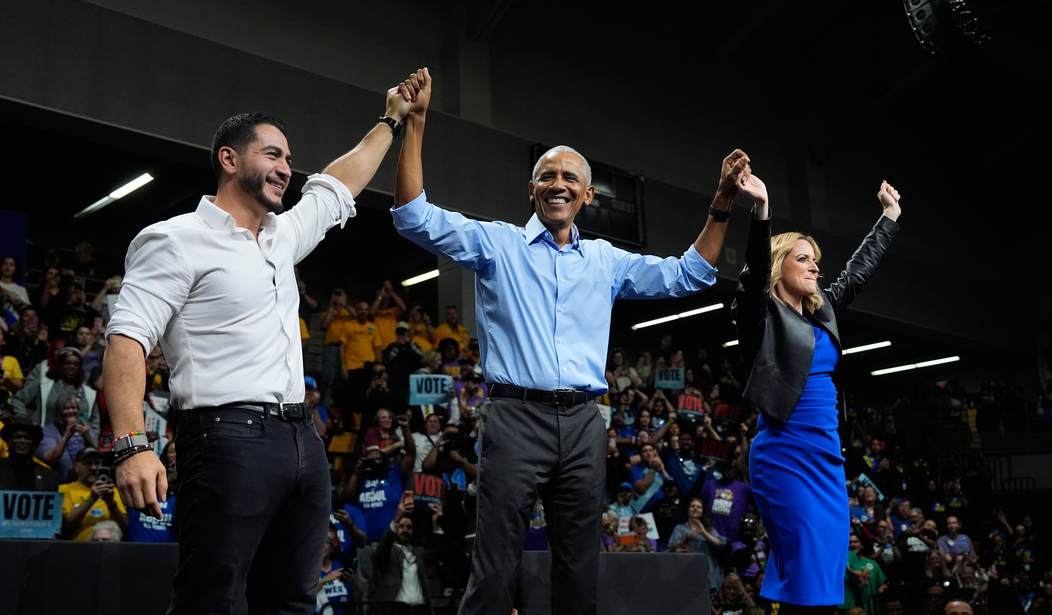
If there’s one word to describe Michigan Senate candidate Abdul El-Sayed’s most recent campaign ad, it’s (ironically) “chutzpah.” It takes a lot of chutzpah for a man who has never been a licensed physician and never treated a patient to claim, “As a doctor, I know a politician should never come between a woman and her medical care [i.e. abortion].”
Of course, chutzpah comes easier with long experience. El-Sayed’s been calling himself a doctor for a long time and hasn’t faced any consequences. If you know the state government run by your party isn’t interested in enforcing Michigan’s clear prohibition on claiming medical expertise without a license, claim away. My organization, the Center to Advance Security in America (CASA), filed a complaint with the Michigan Bureau of Professional Licensing earlier this year citing research showing El-Sayed had never received a medical license in New York or Michigan, the two states where he studied medicine. The complaint went nowhere.
And if you know the national media won’t hold you to the same standard they hold, say, the White House press secretary, you can pretty much claim to be Albert Schweitzer with impunity.
Just a few weeks ago, President Trump’s brand-new press secretary was forced to step down after just four days in office in part because she had in the past portrayed herself as a lawyer despite never passing a bar exam. Katie Zacharia excused herself by citing the technical difference between being an “attorney” and being a “lawyer.” The news media, of course, did yeoman’s work covering the story and pointing out to the American public repeatedly, across local and national outlets, that falsely representing oneself as a licensed legal professional may be unlawful.
And in Michigan you’re not allowed “to induce the belief” that you can practice medicine when you don’t have a license. Surely, inducing the belief that you’re a physician is as bad – if not worse – than inducing the belief that you’re an attorney. And veracity doesn’t matter any less for a United States Senator than for an administration spokeswoman.
But for some reason, El-Sayed’s equally dubious “doctor” claim has been met mostly by the sound of crickets. Politico published a lonely story on the issue back in May. It even quoted one Democrat strategist musing that “It’s a weird thing to hang your hat on in terms of a biographical detail if you never actually practiced medicine,” and it described an instance in which an interviewer indirectly referred to El-Sayed as a physician and the candidate made no effort to correct him.
The subsequent incuriosity is doubly unfortunate given El-Sayed’s flirtation with anti-American radicalism and ties to Islamist groups. Every candidate should receive close but fair scrutiny of his or her biography, but one who signed an open letter supporting a bloody Islamist crackdown in Egypt in 2012 and shared a campaign stage with a man who said “America deserved 9/11” should have a proper vetting. He’s not getting it from the U.S. news media.
U.S. senators write and vote on legislation. They serve on important committees. If elected, El-Sayed will probably make healthcare a signature issue, and he can claim legitimate expertise in administering a bureaucratic healthcare program, as he’s done in Michigan. But he’s no more a doctor than Katie Zacharia is an attorney. He hasn’t passed the requisite exams and he does not have the necessary license. But he sure has chutzpah.
James Fitzpatrick is a U.S. Army veteran, a former appointee in the Trump 45 administration, and Director of the Center to Advance Security in America.
Editor’s Note: Do you enjoy Townhall’s conservative reporting that takes on the radical Left and woke media? Support our work so that we can continue to bring you the truth.
Join Townhall VIP and use promo code FIGHT to receive 60% off your membership.



Join the Conversation
VIP members get the ability to comment on articles.