





As Donald Trump tells it, all of the civil and criminal cases against him are part of a Democratic conspiracy to keep him from returning to the White House. Although some of the many charges against him involve credible allegations of serious crimes, they have been overshadowed recently by two New York cases that are much weaker.
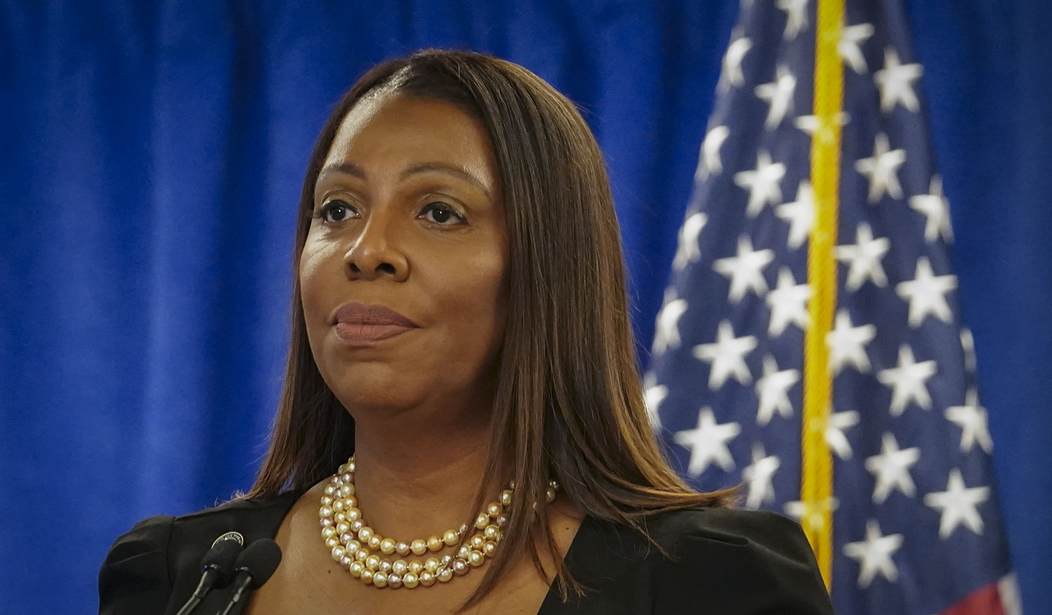
In 2016, Manhattan District Attorney Alvin Bragg says, Trump "corrupt[ed] a presidential election" by concealing embarrassing information from voters. And according to New York Attorney General Letitia James, whose lawsuit resulted in a staggering "disgorgement" order against Trump last week, he defrauded lenders and insurers by habitually inflating the value of his assets.
Bragg and James, both Democrats, argue that Trump was dishonest, which will not come as news to anyone who has been paying attention to the persistent gap between reality and his public statements on matters large and small. But neither Bragg nor James has been able to explain exactly who was victimized by the misrepresentations they cite.
Bragg's criminal case, which is now scheduled for trial on March 25, charges Trump with 34 counts of falsifying business records. Each of those is based on an invoice, check or ledger entry that allegedly was designed to disguise Trump's reimbursement of a $130,000 payment that Michael Cohen, his former lawyer, gave porn star Stormy Daniels shortly before the 2016 election to keep her from talking about her alleged affair with Trump.
Falsifying business records -- in this case, mischaracterizing the payments to Cohen as compensation for legal services -- is ordinarily a misdemeanor. But Bragg is charging Trump with 34 felonies, each punishable by up to four years in prison, because he allegedly was trying to cover up "another crime."
Bragg says the "criminal activity" that Trump sought to "conceal" included "attempts to violate state and federal election laws." That claim is based on legal interpretations so iffy that Bragg's predecessor, Cyrus R. Vance Jr., rejected them after lengthy consideration.
Explaining why he nevertheless is trying to convert one hush payment into 34 felonies, Bragg complains that Trump "hid damaging information from the voting public during the 2016 presidential election." Although Bragg says that offense is "the heart of the case," it is not a crime: If Daniels had simply agreed not to talk about the alleged affair after Trump asked her nicely, the result would have been the same.
James' case likewise lacks any measurable injury to a specific victim, which is not required by the New York law she used to sue Trump. Although she presented plenty of evidence that Trump overvalued his properties and exaggerated his wealth, she did not show that lenders or insurers suffered any losses as a result.
Most notoriously, Trump claimed his apartment in Manhattan's Trump Tower was 30,000 square feet, nearly three times its actual size. He valued Mar-a-Lago, his golf resort in Palm Beach, Florida, based on the assumption that it could be sold for residential purposes, which the deed precluded.
New York County Supreme Court Justice Arthur Engoron also found that the Trump Organization had treated rent-stabilized apartments as if they were not subject to that restriction, assumed regulatory permission for construction that had not in fact been approved, failed to discount expected streams of revenue, dramatically departed from estimates by professional appraisers, and counted Trump's limited partnership interest in a real estate company as cash even though he could not access the money without the company's consent. But the sum that Engoron ordered Trump to pay, which totals nearly half a billion dollars with interest, was styled as "disgorgement" of "ill-gotten gains," not as compensation for damages.
That's because James was not able to identify any damages to lenders or insurers, which she was not legally obliged to do. As in Bragg's case, the striking absence of any injury commensurate with the punishment lends credibility to Trump's reflexive complaint that he is the victim of a partisan vendetta.
Join the Conversation
VIP members get the ability to comment on articles.