





Police later spotted the same car in McDonough's neighborhood, driven by a man who matched her description of the purse snatcher, and used the license plate number to identify the owner as Michael Lee Smith. Based on this information, the police asked the phone company to install a "pen register," which recorded the numbers dialed by Smith for a couple of days. One of those numbers was McDonough's.
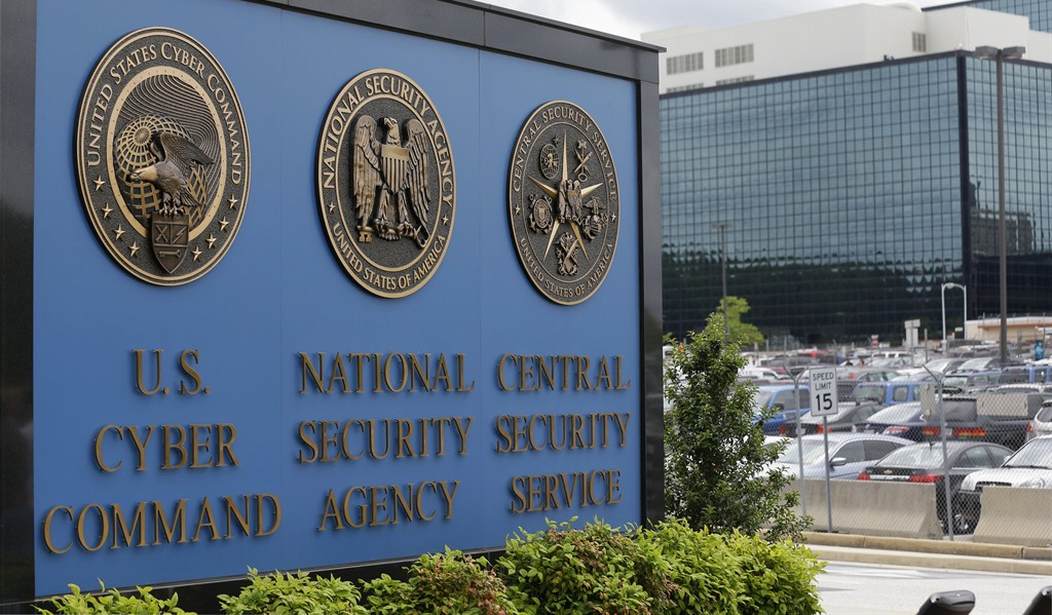
As a federal judge pointed out on Monday, this brief monitoring of a specific criminal suspect bears little resemblance to the National Security Agency's comprehensive database of phone records, which includes information about every call placed in the United States during the past five years. Yet the Obama administration argues that Smith v. Maryland, the 1979 decision in which the Supreme Court approved the warrantless surveillance that incriminated Smith, means there is no constitutional problem with treating every American as a potential terrorist. Amazingly, the government's interpretation may be right.
U.S. District Judge Richard Leon, who issued a preliminary injunction against the NSA's database, rejected the government's reliance on Smith. Not only is the NSA casting a vastly wider net than the cops in Baltimore, he said, but the ubiquity of cellphones makes telephone "metadata" -- information about who called whom, when and for how long -- much more revealing than it used to be.
"Records that once would have revealed a few scattered tiles of information about a person now reveal an entire mosaic -- a vibrant and constantly updating picture of the person's life," Leon wrote. "The Smith pen register and the ongoing NSA Bulk Telephony Metadata Program have so many significant distinctions between them that I cannot possibly navigate these uncharted Fourth Amendment waters using as my North Star a case that predates the rise of cellphones."
Leon's argument would be compelling if Smith did not include sweeping language that seems to rule out Fourth Amendment challenges to government collection of information about you, no matter how sensitive, if you have divulged it to someone else. "This Court consistently has held," the justices said, "that a person has no legitimate expectation of privacy in information he voluntarily turns over to third parties."
The implications of this misbegotten "third party doctrine" are chilling at a time when so much of our personal information, including email, photos, Web browsing histories, cellphone locations and private files of every description, is stored on computers outside of our homes. According to the Supreme Court, remotely stored information receives only as much protection as legislators decide to give it. Unless a statute says otherwise, government snoops may peruse our electronic lives at will.
The NSA's phone record database is just one example of where this logic can lead. Leon likened the program to the "general warrants" loathed by the Framers, because it involves the collection of unspecified evidence without any basis for suspicion.
"I cannot imagine a more 'indiscriminate' and 'arbitrary invasion' than this systematic and high-tech collection and retention of personal data on virtually every single citizen for purposes of querying and analyzing it without prior judicial approval," Leon wrote. "Surely, such a program infringes on 'that degree of privacy' that the Founders enshrined in the Fourth Amendment."
Surely it does, but it is hard to see how the Supreme Court can reach that conclusion without reconsidering the third party doctrine, as Justice Sonia Sotomayor has recommended. "This approach," Sotomayor observed last year, "is ill-suited to the digital age, in which people reveal a great deal of information about themselves to third parties in the course of carrying out mundane tasks." Privacy cannot survive if information shared with anyone is automatically exposed to the government.
Jacob Sullum is a senior editor at Reason magazine. Follow him on Twitter: @jacobsullum. To find out more about Jacob Sullum and read features by other Creators Syndicate writers and cartoonists, visit the Creators Syndicate Web page at www.creators.com.
COPYRIGHT 2013 CREATORS.COM



Join the Conversation
VIP members get the ability to comment on articles.