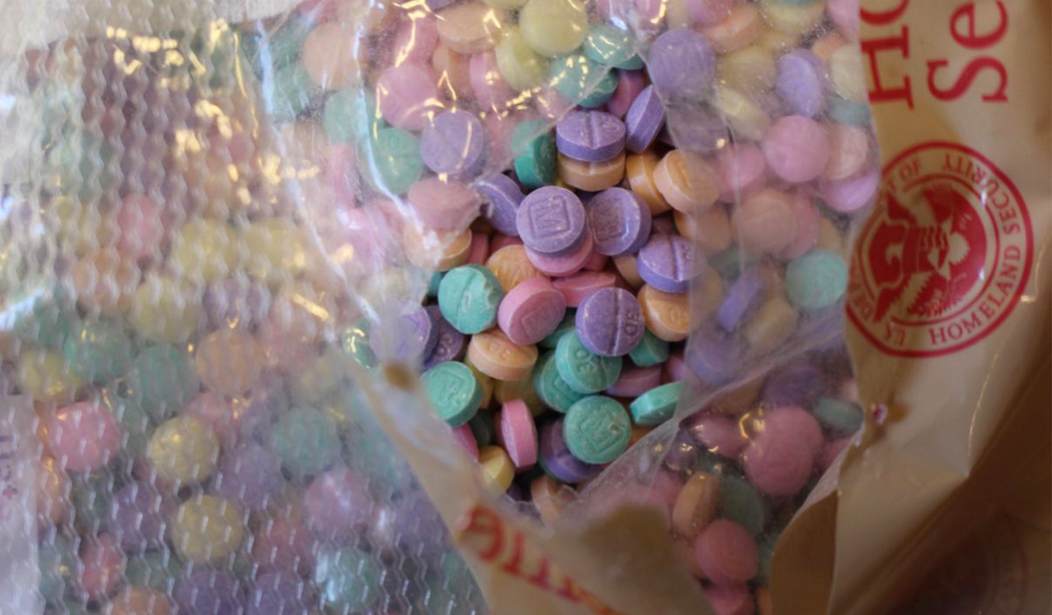
The Trump administration has taken a strong stance against the illegal flow of drugs into the U.S. In the latest wave of trade policy actions, a 25% tariff was imposed on all goods coming from Mexico in response to what President Donald Trump said was the unacceptable flow of illegal drugs into the country. A synthetic and highly-addictive opioid, fentanyl, has raised particular concern at the White House where senior officials have vowed to “wage war” on global drug cartels. Yet, while defeating the fentanyl trade and securing U.S. borders remains atop the administration’s agenda, EU officials seem to be turning a blind eye to illicit narcotics trafficked throughout the continent – therein fueling Latin America’sdrug empires.
While drug trafficking is a well-known issue in many European countries, the Balkan country of Albania has recently come under fire with a new investigation that has raised the specter of the presence of Albanian mafia in Ecuador. Discouragingly, Albanian organized crime now controls much of the cocaine flow from South America to Europe. Though Ecuador does not produce the drug, 70% of the world’s cocaine now flows through its ports, most of it from Colombia and Peru. Those caught up in the supply chain – as well as those affected by the drug trade’s violent sequelae – believe that fault lies with the consuming countries since increased demand stimulates smuggling. What is certain is that without Europe combatting narco-trafficking at home, U.S. efforts to counter prohibited substances in North America will become ever more difficult.
In addition to the need to decrease the demand for drug consumption, European countries must additionally take responsibility for their borders since Europe’s ports are uniquely vulnerable to the illegal drug trade. Consider that the world witnessed a significant increase in the use of container shipping to transport drugs to the continent over the past decade. The matter is further complicated by the security liabilities associated with Chinese ownership of many European ports, including those in Spain, Germany, Belgium, Poland, Sweden, Netherlands, and the UK. Europol is constantly battling criminal organizations eagerly transporting large quantities of cocaine in containers from South America to the EU via major harbors, including those in Hamburg, Antwerp, and Rotterdam. In last year’s investigation, Europol seized 35 metric tonnes (approximately 38 tons) of cocaine at these ports – all of it sourced in Ecuador and shipped from Colombia, Suriname, Guyana, and Paraguay.
The Albanian ports are no exception. In addition to the recent BBC investigation, local Albanian politicians have expressed concerns with regard to the Balkan country’s alleged involvement in illicit activities. As but one illustration, Albania’s former Minister of Justice has specifically emphasized corruption surrounding the management of ports in his country by suggesting that the strategic Port of Durrës appeared at the center of international controversy when it was sold to a Croatian entity (Schapha d.o.o.) with the aim of controlling the port. His claims that the transaction involved the Albanian Minister of Energy, Infrastructure, and Transport, Ms. Belinda Balluku, who he alleges instructed the former port management to work with multinational company MAERSK, are deserving of investigation. If true, MAERSK’s regional managers may have effectively delivered the port’s 45-year operating rights to an Albanian oligarch under the guise of the Croatian company. To be certain, individuals, companies, and nations are deserving of the presumption of innocence until such time as facts are gathered and evidence is furnished. Without justification, smoke does not equal fire. Nevertheless, if the company has links to Ecuador and Colombia, as has been asserted, Albania’ drug trafficking and corresponding security environment may be more complicated, and more compromised, than some realize.
The Trump administration’s strong stance against the illegal drug trade reflects a clear intention to disrupt drug cartels and the illicit flow of drugs into the U.S. Yet, the administration’s efforts are hindered by a lack of cooperation and action from Europe, which continues to serve as a significant transit point for narcotics coming from Latin America. The Albanian mafia’s dominance over cocaine trafficking routes from South America to Europe underscores the severity of the issue. The shared responsibility of combatting the drug trade should not be taken lightly. Europe’s contribution can no longer be passive – EU authorities must take bold steps to secure its borders, fight corruption, and reduce drug consumption. It is time for the continent to act decisively, ensuring that it becomes a partner, not an obstacle, in the global effort to combat the devastating effects of the drug trade.








Join the Conversation
VIP members get the ability to comment on articles.