





The United State had two objectives when President George W. Bush launched Operation Enduring Freedom after the attacks of 9/11. The first was to defeat the Taliban, which had provided a base and support for al-Qaeda. The second, as the name of the operation suggests, was to liberate the Afghan people from the repressive medieval regime that controlled the country and their lives.
Twenty years and three presidential administrations later, President Joe Biden determined that a continued military presence in Afghanistan was unsustainable and pulled American troops out of the country. Before the last Americans lifted off from Kabul Airport, the Taliban had retaken control of the country and reimposed strict Sharia law on the Afghan people.
History will determine whether the decision to cut our losses after the expending $2.3 trillion and suffering the loss of 2,465 American lives was a wise one. President Biden’s next decision, however, requires less time to assess. Within days of terminating Operation Enduring Freedom, the Biden administration announced Operation Allies Welcome – a program that has allowed nearly 200,000 Afghans to settle in the United States.
President Biden’s Homeland Security Secretary, Alejandro Mayorkas, described Operation Allies Welcome as a “historic effort to resettle in the United States tens of thousands of Afghan nationals, many of whom assisted the United States and many of whom are vulnerable women and girls.” Mayorkas framed the program as “a moral imperative to protect…those who supported” American operations in their country.
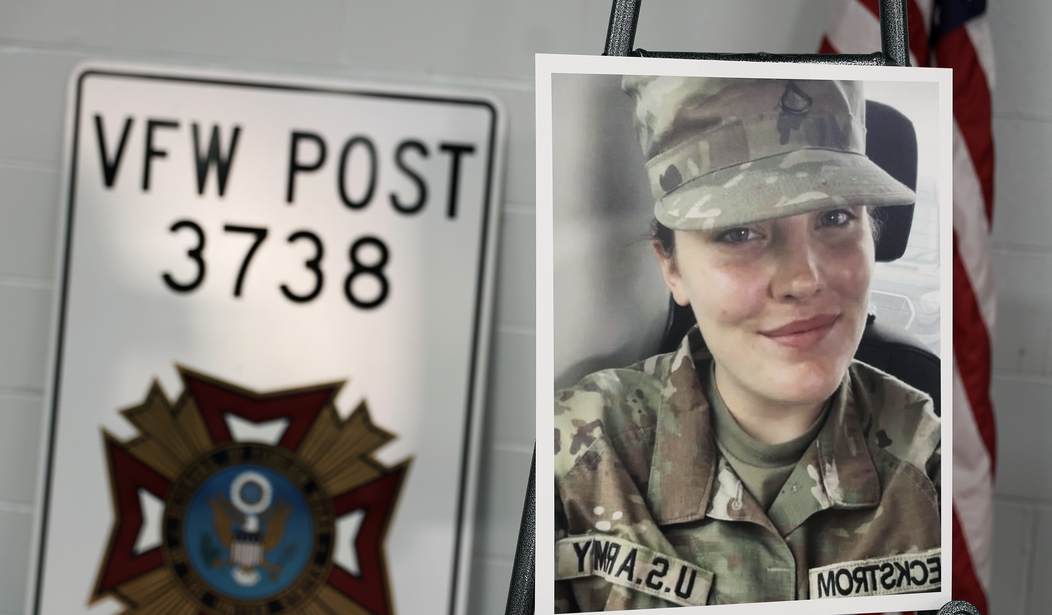
About 76,000 Afghan nationals arrived in the first wave and were followed by another 120,000 who were issued Special Immigrant Visas or were allowed to enter as parolees. The sheer volume, coupled with the lack of any real access to records, made meaningful vetting of Afghans settling in our country all but impossible. The obvious danger of this sort of haphazard population transfer became glaringly evident on the eve of Thanksgiving when Rahmanullah Lakanwal ambushed two National Guard troopers on the streets of Washington, D.C.
The lack of adequate vetting and the difficulty of assimilating people with cultural values vastly different from our own is only part of the reason why 20-year-old Sarah Beckstrom lost her life and Andew Wolfe is clinging to his. Perhaps more important is the mindset that led President Biden and Secretary Mayorkas to believe that mass resettlement of Afghan nationals was a moral imperative.
The Afghan nationals who work for and alongside American military personnel and contractors between 2001 and 2021 did so of their own volition. Their motivation for providing their services likely included earning a paycheck in a destitute country where paychecks were hard to come by. Others may have worked with Americans out of a sincere desire to secure a better life for themselves and their families by preventing the brutal Taliban regime from returning to power. Or, perhaps, both.
Sadly, the Taliban has returned to power, but that was as much the fault of the Afghan people who failed to seize the opportunity to establish a viable alternative to the Taliban as it was America’s inability to achieve our strategic aims in Afghanistan. Like any other transactional relationship, America’s debt to virtually all of the Afghans who rendered service to our military and civilian contractors was fulfilled when they cashed their paychecks and it ended when those services were no longer required.
In the wake of the ambush of the two National Guard troops, the Trump administration has properly taken steps to suspend the entry of people from Afghanistan and 18 other countries and review the status of many who are already here, until there are mechanisms in place to ensure the safety of the American people. The authority to block such entries was upheld by the Supreme Court in 2018, in Trump v. Hawaii, which affirmed the president’s “broad discretion granted to him under section 1182(f) of the Immigration and Nationality Act (INA), 8 U.S.C. 1182(f)” to suspend the entry of aliens whose presence is detrimental to the interests of the United States.
Regardless of who is in the Oval Office, an enduring responsibility to protect the safety and security of the American people must always be the first consideration. Carrying out foreign policies will inevitably require engaging with or employing foreign nationals. However, those mutually beneficial temporary relationships do not implicitly entail an enduring obligation to resettle them in the United States when things do not work out as hoped.
Editor’s Note: Do you enjoy Townhall’s conservative reporting and opinion? Support our work by joining Townhall VIP! Use the promo code FIGHT to get 60% off your VIP membership!


Join the Conversation
VIP members get the ability to comment on articles.