





December is usually a slow month for any significant policy changes: politicians as well as ordinary folks are getting into a jolly mode. They are probably more concerned about what gifts to get than matters of national security or the economy.
This December should be different. Back in June, Canada's liberal Prime Minster Justin Trudeau announced that Canada will lift the visa requirement for Mexican visitors as of December 1st, 2016. Currently, Mexicans need to apply for a visa to visit, study or work in Canada. On and after December 1st, Mexicans who want to fly or transit through Canada only need to obtain an Electronic Travel Authorization online, which costs only seven Canadian dollars and takes only a few minutes to complete. It's good news for law-abiding Mexican citizens, but could present a security challenge to our northern border.
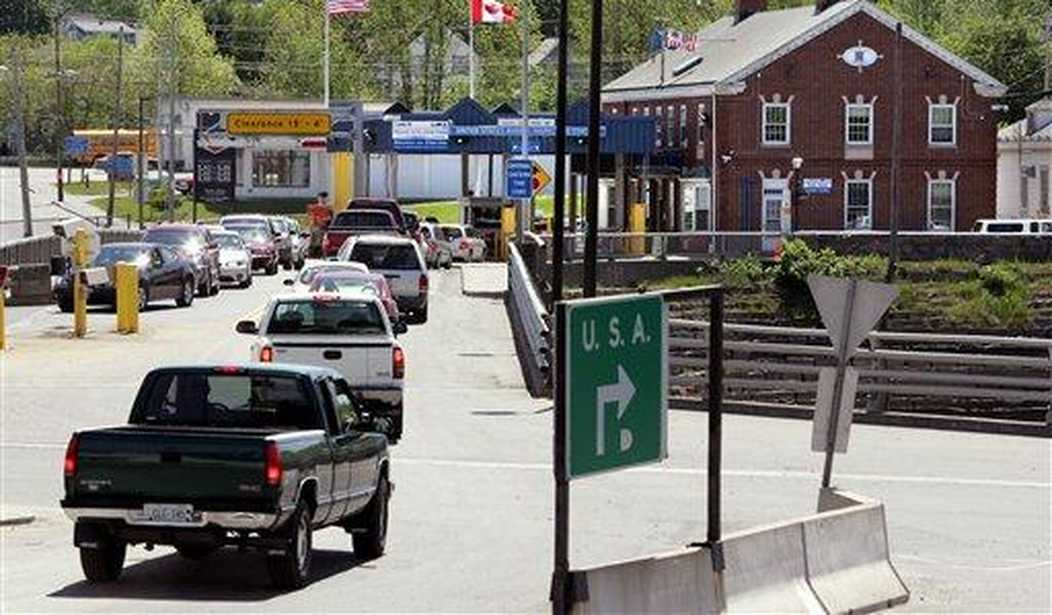
The U.S. and Canada shares the world's longest border, about 5,500 miles (including Alaska). This long border crosses many sparsely populated terrains and wilderness areas, including mountains and the great lakes. Many sections of the border are unmarked and our current resources for border patrolling are grossly inadequate. Prior to 9/11, only about 340 federal agents patrolled our northern border with Canada. Since then, the Department of Homeland Security increased the number of agents dedicated to our northern border to about 2,200, which still pales in comparison to the 18,600 agents along the U.S. and Mexico border. Technologies such as radar, ground sensors and thermal radiation detectors are also deployed. They are helpful, but insufficient. The sheer span and the remoteness of many parts of the border means scores of sections are not covered by any type of surveillance at all, which makes them havens for illegal crossing from Canada into the U.S.
According to a recent New York Times report, "In 2007, people from the Government Accountability Office managed to cross from Canada into the United States carrying a duffel bag with contents that looked like radioactive material, and they never encountered a law enforcement officer." Federal border patrol agents admitted to the same Times reporter that they simply have no idea how many people illegally enter into U.S. through the northern borders every day.
Under the leadership of previous conservative government, Canada has increased its resources devoted to border security. Canadian custom officers participated in joint patrols with their U.S. counterparts along the Great Lakes. It's estimated that Canada spent an additional C$92 billion ($77 billion) on security in the ten years after 9/11.
But now with a liberal Prime Minster in Ottawa, Canada would lift visa requirement for visitors from Mexico on December 1st. While it is welcome news to law-abiding Mexicans, this unfortunately will make it easier for criminals such as drug dealers and human traffickers to enter into Canada and in turn illicitly enter into the U.S.
In addition, due to Mexico's weak passport control and considerable corruption, nationals from outside of Mexico, such as Guatemalans, could obtain Mexican passports without difficulty, and then hop on a plane first to Canada and then cross over to the U.S.
Trump, the president-elect, has made securing our southern border with Mexico a signature campaign issue, while saying very little about securing our northern border with Canada. His campaign rhetoric, as well as Canada's upcoming visa policy change, may push more people to illegally enter the U.S. through our northern border.
As Trump is formulating his immigration policy, he can't afford to pay little attention to our northern border security. He also needs to be aware that any security measure he takes shouldn't punish legal commercial activities across the borders. The bilateral trade between Canada and the U.S. is worth at least $2 billion a day, and both countries benefit from it: it has provided many people from both nations with abundance of employment opportunities and increased their living standards. Therefore, a sensible border security policy should make legitimate commercial activities and legal entry as smooth as possible on the one hand; but enhance surveillance and be tough on criminals on the other.

Join the Conversation
VIP members get the ability to comment on articles.