





The spectacular rise of digital shopping for everything from shoes to couches has created a very analog problem. The individual boxes that each of our online orders require means that the space inside of the trucks that transport our goods from warehouse to our doorsteps are much harder to pack efficiently.
That’s because the trucks that crisscross the country every day with our orders are limited to 80,000 pounds, fully loaded. As our online shopping habits have shifted and we order more and more bulky, but not necessarily heavy, items to be delivered (e.g., paper towels) these trucks are running out of room long before they become too heavy.
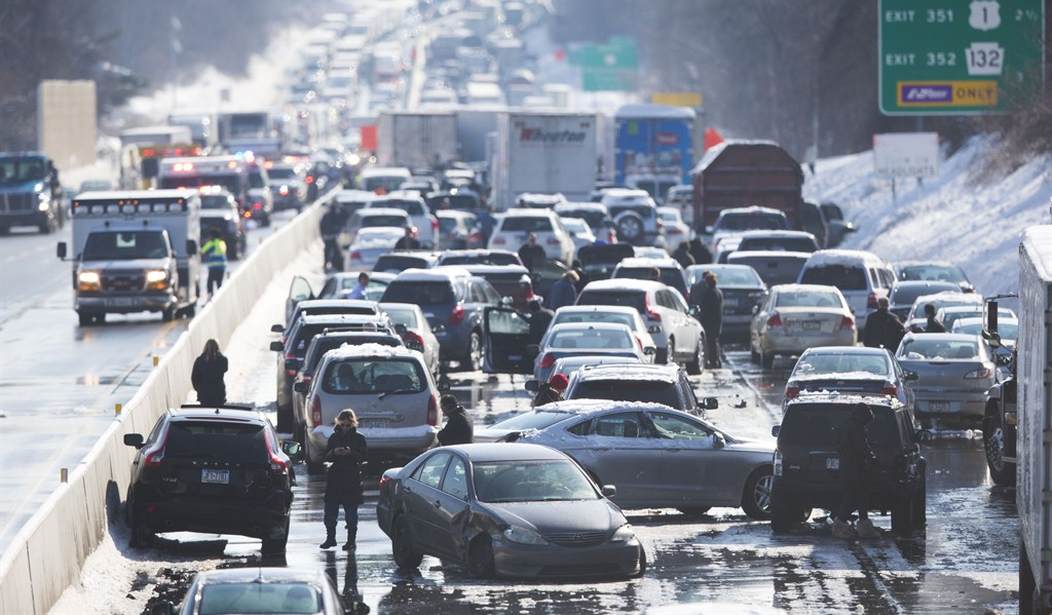
That means that multiple trucks are required to haul the same amount of goods (by weight) that could be safely handled by a single truck. That’s not just a problem for shipping companies. It means that there are more trucks sharing our highways during the peak holiday travel season, causing more wear-and-tear on our roads, and using more diesel fuel than is necessary.
This year, Cyber Monday was the largest single day of online sales in U.S. history, with $7.9 billion dollars in sales, up over $1 billion from 2017. The billions of dollars’ worth of goods that will be shipped between now and Christmas means that these problems will be magnified. The solution, however, is relatively simple: increase the volume that a single truck can carry. But a regulation implemented 12 years before Amazon.com sold its first book stands in the way.
That regulation requires that these trucks that carry “less than a truckload” – e.g., online shopping orders rather than bulk palletized shipments – are limited to two trailers in tandem, each of which can be no more than 28 feet in length and weigh no more than 80,000 pounds. The weight isn’t the problem, but the length is.
Modernizing that regulation by increasing the length of trailers to 33 feet while keeping the weight limit the same would decrease the number of trucks on the road, use less CO2-producing diesel fuel, and increase efficiency throughout the shipping network on which our economy depends.
The first objection that comes to mind is that bigger trucks would be less safe than the smaller trucks on the road today. While that is not an unreasonable question to ask, the facts do not bear it out. In recent Congressional testimony, the Chairman of FedEx noted that twin 33s actually perform better than the current trucks in key safety tests. Moreover, 1.3 billion fewer miles would be driven due to increased efficiency. Fewer miles driven mean fewer accidents.
Others have raised arguments about the effect of longer trucks on our aging highway infrastructure. That argument, however, ignores the fact that “longer” does not mean “heavier,” as the same 80,000 pound weight limit would still apply. The problem is not that trucks need to carry heavier loads, but that they need more room for the lightweight, but relatively bulky, shipments of iPhone chargers, lightbulbs, and all of the other household goods that we order every day.
Modernizing federal trucking regulations to fit the needs of today’s economy is a commonsense solution that will have far-reaching, positive effects. Even if you are not an inveterate online shopper, we all benefit from fewer trucks on the road as we’re driving to our relatives’ homes for the holidays, to say nothing of the long-term benefits of decreased fuel consumption and the CO2 that it produces.
No matter how advanced online shopping becomes, anything that we buy will still need to be transported from one place to another, and trucks will be a key link in that delivery chain. We’re not going to stop buying things online anytime soon, so we ought to make sure that we’re doing all we can to ensure this is as efficient as possible. Updating decades-old federal regulations to allow for more efficient, more cost-effective, and safer twin 33s should be a priority for the new Congress.


Join the Conversation
VIP members get the ability to comment on articles.