





One of the most destructive tactics in American politics is the use of race as a weapon to avoid serious debate. Race has become powerful in public life not because every dispute is actually about discrimination, but because the accusation itself carries enormous moral weight. Once a person, policy, court ruling, or political movement is labeled racist, the debate often ends before the facts are examined. The public is pushed to stop asking whether the argument is true and start asking whether disagreement places them on the side of Jim Crow, segregation, or white supremacy.
Most decent Americans do not want to be associated with racism. They understand that racism is evil, that the country’s history includes serious injustices, and that those injustices should not be dismissed. But that very instinct is now being exploited.
When Democrats and progressive activists cannot win an argument on the merits, they often attach race to the disagreement and turn a policy dispute into a moral accusation. Calling someone wrong requires facts. Calling someone racist requires only a label powerful enough to make people afraid to respond.
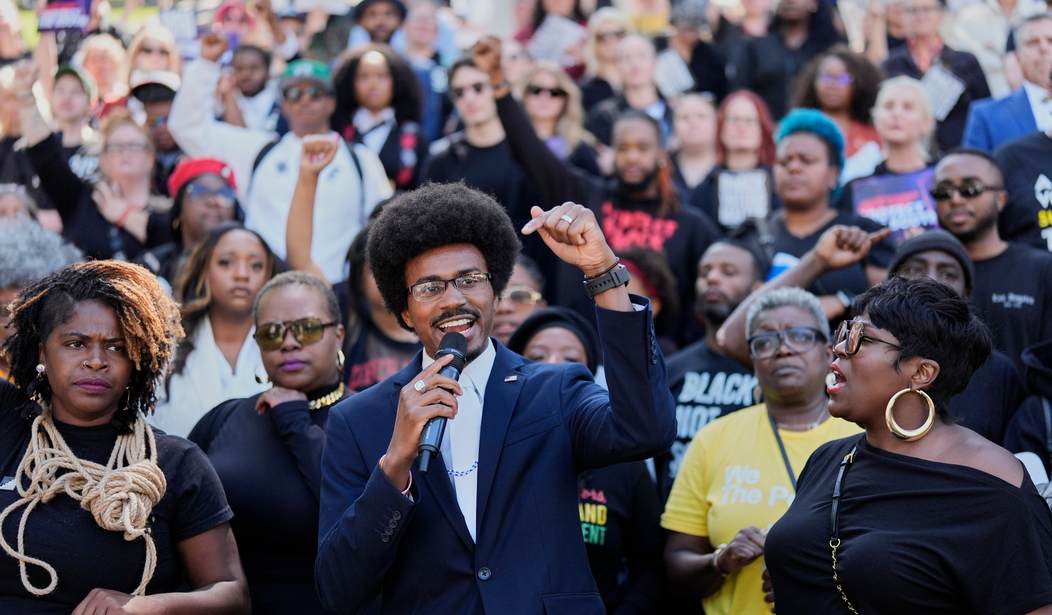
This strategy has become especially clear in the debate over redistricting. In Tennessee, Democrat lawmakers and commentators have attempted to present a redistricting fight as a civil rights crisis rather than a political battle over district lines. State Rep. Justin Jones compared Republican lawmakers to the “children of Jim Crow,” Bull Connor, and George Wallace. He also suggested that a Republican leader had “taken off the white hood” while keeping the same intentions.
State Rep. Justin Pearson called the redistricting push a “political lynching” and accused President Donald Trump of being “the biggest white supremacist in the United States of America.”
This language is a deliberate attempt to place a modern partisan dispute inside the darkest parts of American history. Once a redistricting debate is connected to Jim Crow, lynching, white hoods, and white supremacy, Republicans are no longer being criticized as partisan actors. They are being portrayed as the modern successors of segregationists and racial terrorists.
The comparison is historically unserious. Jim Crow was a system of state-enforced segregation. It involved poll taxes, literacy tests, racial intimidation, violence, and the exclusion of black Americans from public life. Comparing a modern redistricting dispute to Jim Crow cheapens the suffering of people who actually lived under that system. It also makes honest debate nearly impossible because one side is no longer arguing over the details of a map, but declaring that disagreement is morally corrupt.
If Democrats believed aggressive partisan redistricting was inherently immoral, they would condemn Democrat maps with the same intensity. They do not. Instead, the most inflammatory language is reserved for Republican maps because racial accusations are politically useful.
This pattern extends far beyond redistricting. Education debates become racial attacks. Policing debates become racial attacks. Court rulings become racial attacks. Election laws become racial attacks. Immigration enforcement becomes racial attacks.
The formula rarely changes. Take a policy disagreement, attach race to it, and pressure the public into believing opposition is immoral. The facts become secondary because the accusation is designed to end the debate, not improve it.
Real racism should be confronted seriously. No society can remain healthy if it ignores actual discrimination or treats racial injustice as unimportant. But the seriousness of racism is exactly why the accusation should not be thrown into every political dispute. When every policy disagreement becomes racism, the word loses meaning.
If changing a district with a majority of black voters is automatically racist because those voters tend to support Democrats, then every demographic change in a district could be turned into a discrimination claim. If a district with a large share of Jewish voters is divided, would that be antisemitic? If a district with many older voters is changed, would that be ageism? If a district with a majority of women is altered, would that be sexism?
Americans belong to countless groups, but not every political loss is proof of discrimination. Citizens are not racial property owned by one political party.
Race-baiting may help politicians raise money, excite activists, and dominate cable news, but the damage to the country is severe. It divides Americans into permanent identity groups. It teaches voters to assume bad motives before hearing arguments. It weakens the meaning of real racism by attaching the word to ordinary political fights.
Redistricting can be criticized, and political maps can be debated. But serious debate requires honest language. Turning every political defeat into racism cheapens real discrimination and weakens public trust.
Editor's Note: Do you enjoy Townhall's conservative reporting that takes on the radical Left and woke media? Support our work so that we can continue to bring you the truth.
Join Townhall VIP and use promo code FIGHT to receive 60% off your membership.


Join the Conversation
VIP members get the ability to comment on articles.