





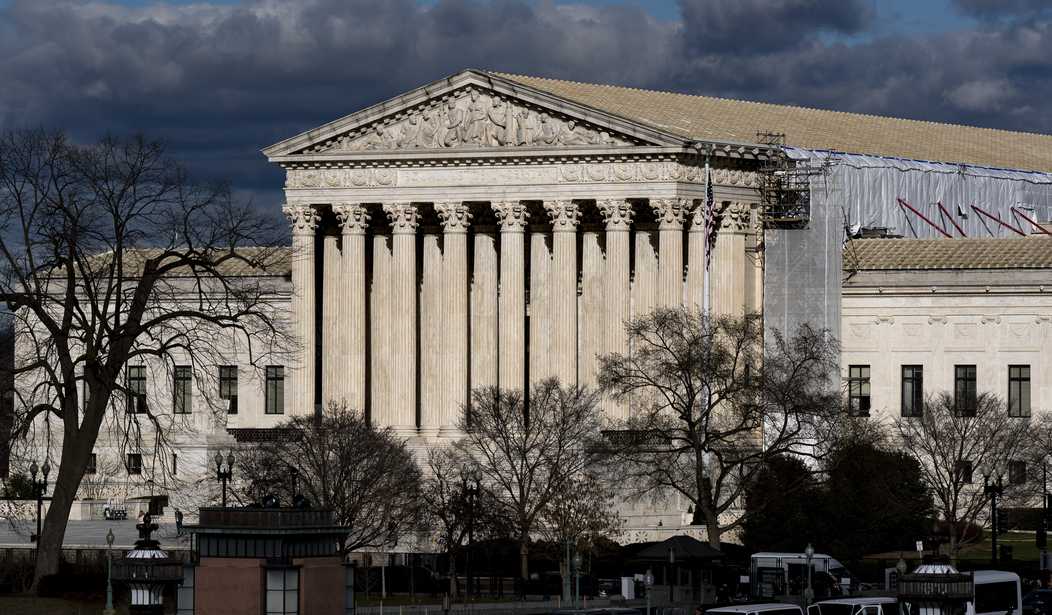
Few constitutional rights generate more debate in American politics than the right to free speech. The First Amendment protects both freedom of speech and freedom of the press, principles often described as absolute pillars of a democratic society.
In reality, the Supreme Court has consistently recognized that these freedoms have limits. Courts have long permitted restrictions based on time, place, and manner, and American law has also recognized boundaries when speech collides with competing interests such as national security, defamation, or public safety.
The same principle applies to freedom of the press. Newspapers and journalists enjoy broad constitutional protections, but those protections were never intended to create a system in which the press operates without legal accountability. From the earliest days of the republic, American law recognized that publishers could be held responsible for false statements that damage a person’s reputation.
One of the most famous Supreme Court cases involving press freedom came in 1971 with New York Times v. United States, commonly known as the Pentagon Papers case. The federal government attempted to prevent several newspapers from publishing classified documents about the Vietnam War. In a 6–3 decision, the Supreme Court ruled that the government lacked the authority to impose prior restraint on the press in that situation.
The ruling represented a major victory for press freedom. The Court concluded that the government had failed to demonstrate the type of direct, immediate threat to national security necessary to block publication. As a result, the newspapers were allowed to publish the documents despite the government’s objections.
However, the Pentagon Papers case also illustrates an important distinction between legal permission and journalistic responsibility. Even when the press has the legal right to publish sensitive information, news organizations sometimes exercise restraint when publication could endanger lives.
Earlier this year, during Operation Absolute Resolve, which resulted in the capture of narco-terrorist and former Venezuelan dictator Nicolás Maduro, several reports indicated that major newspapers such as The Washington Post and The New York Times learned about the operation shortly before it occurred.
According to those reports, the information was leaked by a Pentagon insider or contractor. Although the newspapers were legally able to publish the story immediately, they reportedly delayed publication to avoid jeopardizing American military personnel involved in the operation.
The First Amendment protects the ability to publish information, but responsible journalism still depends on judgment and discretion.
While the Constitution protects broad press freedom, the Supreme Court has also created legal doctrines that go far beyond the historical understanding of the First Amendment. One of the most significant examples is the Court’s 1964 decision in New York Times v. Sullivan.
In that case, the Court established the “actual malice” standard for defamation lawsuits involving public officials and public figures. Under the ruling, a public figure can only win a libel case by proving that a false statement was published either with knowledge that it was false or with reckless disregard for whether it was true.
The goal of the ruling was to protect robust political debate. The Court sought to ensure that journalists and political commentators could criticize public officials without constantly fearing lawsuits.
In practice, however, the “actual malice” standard has made it extremely difficult for public figures to defend their reputations—even when they are the targets of demonstrably false reporting.
Justice Antonin Scalia later expressed serious doubts about the constitutional foundation of the decision. From an originalist perspective, Scalia argued that the First Amendment does not contain language suggesting that defamation laws should operate differently for public figures.
When the Constitution was adopted, libel laws already existed in both English and American legal traditions. The framers clearly believed that the press could be held accountable for false statements.
Scalia once remarked that the modern interpretation of Sullivan effectively created a system in which the press is “the only business that is not held responsible for its negligence.”
The phrase “actual malice,” as used in the ruling, also bears little resemblance to the ordinary meaning of those words, creating confusion for readers unfamiliar with decades of subsequent case law.
Under the doctrine developed after Sullivan, a plaintiff must prove not only that a statement was false but also that the publisher either knew it was false or recklessly ignored the truth. Demonstrating a journalist’s state of mind is extraordinarily difficult, which means most defamation lawsuits involving public figures fail before they ever reach trial.
The implications extend far beyond politicians and celebrities. In today’s media environment, the definition of a “public figure” has expanded dramatically. Commentators, journalists, activists, and individuals with relatively modest public visibility can all fall under this legal category.
As someone who writes columns for multiple publications and regularly appears in media discussions, the question of whether I qualify as a public figure is not hypothetical. Even though my audience is small compared with major national figures, the legal definition would almost certainly place me within that category.
That designation carries significant legal consequences. If a newspaper were to publish a false claim—imagine, for example, an accusation that a journalist or commentator is secretly working as a foreign agent—the path to legal recourse would be extremely limited. If the publication later claimed that it believed the information to be accurate, even if that belief resulted from negligent reporting, the “actual malice” standard would make a successful defamation claim highly unlikely.
This situation raises a serious constitutional question: should the press be protected from negligence in ways that no other profession is?
Strong protections for the press remain essential in a free society. Investigative journalism, political criticism, and controversial reporting must remain protected from government censorship. Without those protections, powerful officials could silence critics by weaponizing the legal system.
At the same time, constitutional interpretation must remain anchored in the text and historical understanding of the Constitution. The Supreme Court is not infallible, and its decisions are not beyond reconsideration.
American legal history contains numerous examples of precedents that were later revisited when the Court concluded that earlier rulings lacked a solid constitutional foundation. The debate surrounding New York Times v. Sullivan increasingly reflects that possibility. Even legal scholars who strongly support press freedom have suggested that the decision deserves renewed scrutiny.
A higher standard for defamation claims involving public officials may have merit. However, constitutional protections cannot be created through judicial invention. The Constitution must guide legal interpretation, not the other way around.
Protecting free speech remains one of the most important responsibilities of American law. Yet defending the First Amendment does not require insulating the press from ordinary standards of accountability.
If constitutional interpretation drifts too far from the text and historical meaning of the Constitution, the document itself loses authority. A free press remains essential to democracy, but a press that operates without meaningful accountability risks undermining the very freedoms the First Amendment was designed to protect.
Editor’s Note: Do you enjoy Townhall’s conservative reporting that takes on the radical Left and woke media? Support our work so that we can continue to bring you the truth.
Join Townhall VIP and use promo code FIGHT to receive 60% off your membership.

Join the Conversation
VIP members get the ability to comment on articles.