





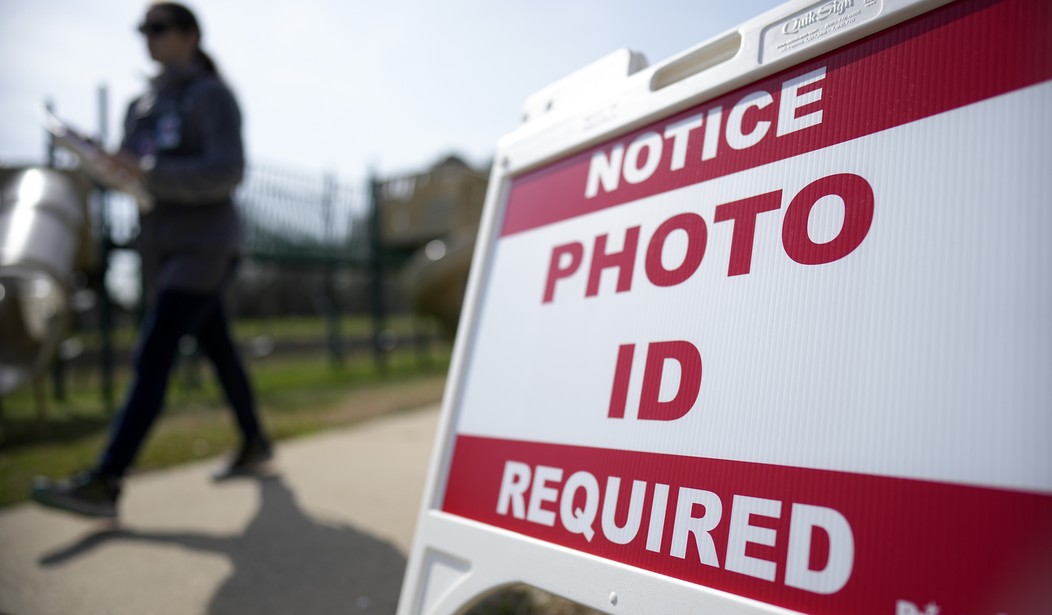
For months, the SAVE Act has been debated as though it represents a constitutional crisis. Democratic leaders, including Senate Majority Leader Chuck Schumer, have labeled the proposal “Jim Crow 2.0,” arguing that requiring documentary proof of citizenship and identification for federal elections risks disenfranchisement. Such a charge requires evidence—evidence contradicted by nearly every available statistic on the U.S. voting population.
The SAVE Act requires documentary proof of U.S. citizenship when registering to vote in federal elections. Its premise is straightforward: American citizens should determine the outcome of American elections. That principle is neither novel nor radical. Federal law already prohibits non-citizens from voting in federal contests. The SAVE Act formalizes a verification mechanism to ensure that statutory prohibition is meaningfully enforced.
Democrats frequently cite raw identification statistics to suggest that the SAVE Act would lead to large-scale voter exclusion. Approximately 29 million voting-age Americans lack a valid driver’s license. That figure, while accurate, is analytically incomplete. A driver’s license is not the legal standard. The relevant question is whether an individual lacks any non-expired, government-issued photo identification. That number is closer to 7 million—roughly 3 percent of the voting-eligible population.
Even that figure requires context. Voter participation varies significantly by education and income. Recent election data show that approximately 82 percent of Americans with advanced degrees vote, compared to about 52 percent of those with only a high school diploma. Turnout among white voters approaches 70 percent. Among Black voters, participation has hovered near 59 percent. Hispanic turnout has often been lower, around 47 percent.
The demographic groups cited as most affected by identification requirements are also statistically less likely to vote, irrespective of voter ID laws. That reality does not minimize disparities. It does, however, complicate the claim that identification requirements alone produce systemic exclusion.
Empirical evidence from the states further weakens the “Jim Crow 2.0” narrative. Thirty-four states already maintain some form of voter identification requirement. Texas, Georgia, Florida, and North Carolina—four of the eight states in which over half of Black voters reside—enforce ID laws. Minority turnout in those states has not collapsed. In several election cycles, participation has increased.
If voter identification functioned as a modern analogue to literacy tests, turnout data would reflect dramatic suppression. It does not.
The constitutional objection raised most often centers on the 24th Amendment, which prohibits poll taxes in federal elections. This is the most credible argument against the SAVE Act, though it is rarely the primary one advanced in public debate. Because obtaining documents such as birth certificates, passports, or REAL ID–compliant identification may involve fees, requiring documentation could attach a financial condition to voting.
That concern is resolvable through statutory design.
The 24th Amendment bars financial preconditions to ballot access. It does not prohibit verification standards. If Congress ensures that documentary proof of citizenship can be obtained at no cost for voter registration purposes—whether through fee waivers, free certified birth certificates, or cost-free identification issued specifically for federal elections—the constitutional concern substantially weakens. Once documentation is accessible without financial burden, the poll tax analogy loses force.
Most Democratic constitutional arguments rely on an evolving or “living” interpretive framework rather than strict originalism. Under that framework, constitutional analysis adapts to contemporary societal conditions. In modern American life, identification is routinely required to access government programs such as Medicare, Medicaid, and SNAP, to travel domestically, to open bank accounts, and to engage in countless civic transactions. Within that interpretive framework, an identification requirement would be difficult to classify as an unconstitutional poll tax when identification functions as a baseline administrative standard across society.
As an originalist, however, the 24th Amendment question should be addressed directly and carefully. The SAVE Act can resolve the concern through clear statutory safeguards, ensuring that no financial barrier exists.
The comparison to Jim Crow laws reflects a fundamental misunderstanding of American history. Literacy tests and poll taxes were crafted explicitly to exclude lawful Black voters through discretionary enforcement and racial targeting. The SAVE Act applies uniformly, without racial classification, and reinforces an existing statutory requirement that only citizens vote in federal elections. Universal application distinguishes administrative verification from discriminatory exclusion.
National polling over nearly two decades consistently shows strong bipartisan support for voter identification. Surveys have repeatedly recorded overall approval levels exceeding 75 percent, including majorities of Democratic voters. Few election policies demonstrate that level of cross-party agreement.
The debate ultimately concerns implementation, not legitimacy. The SAVE Act would make it more difficult for a non-citizen living in the United States to vote. Since immigrants, including those who are not citizens, are twice as likely to support Democrats than Republicans, it is understandable why some Democrats would be apprehensive about the SAVE Act. Citizenship verification reflects the structural premise of representative government.
Labeling the SAVE Act “Jim Crow 2.0” conflates race-based exclusion with race-neutral verification. Applying that term to broadly supported identification standards dilutes its historical meaning.
The SAVE Act does not resurrect the past. Properly implemented, it reinforces a basic premise of democratic self-government: citizens choose their representatives, and the law confirms who those citizens are.
Find similar commentary by subscribing to my Substack newsletter.
Editor's Note: The Democrats are doing everything in their power to undermine the integrity of our elections.
Help us tell the truth about the SAVE America Act and how it will prevent voter fraud. Join Townhall VIP and use promo code FIGHT to get 60% off your VIP membership.

Join the Conversation
VIP members get the ability to comment on articles.