





For decades, Washington treated diplomacy as a closed system managed by career officials, insulated from markets, and disconnected from the engine that actually powers American influence: capitalism.
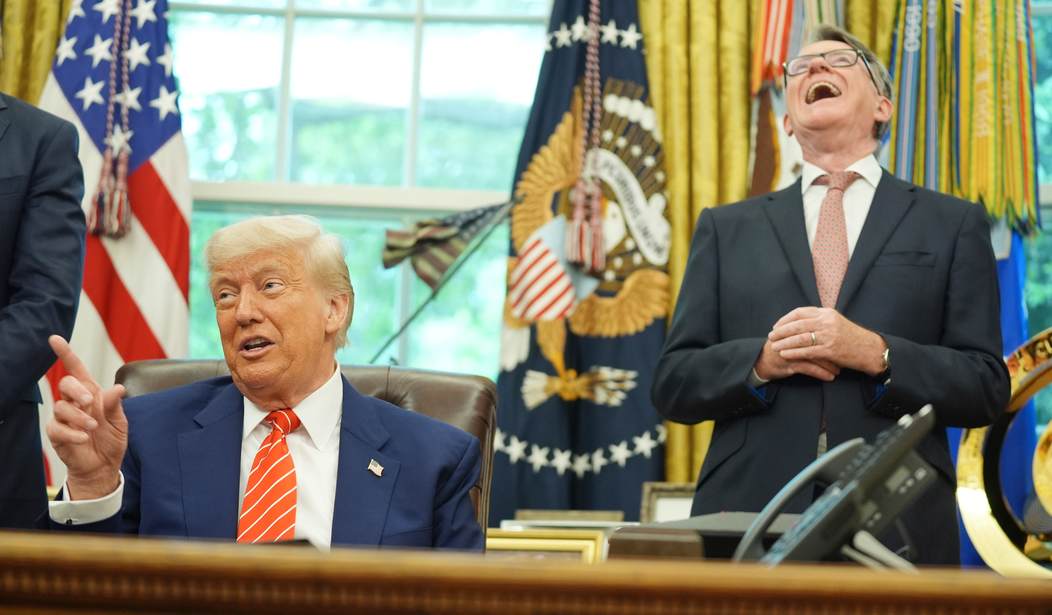
President Trump rejected that model outright. His strategy is different, and it is working. American prosperity and global leverage are no longer driven primarily by communiqués and conferences, but by deals, investment, and economic power. That is the core of economic diplomacy, and it is the future of America First foreign policy.
The old approach assumed that stability came from dialogue alone. Endless meetings. Carefully worded statements. Agreements with no enforcement. What it delivered instead was stagnation and dependency. Our adversaries learned to exploit American goodwill without changing their behavior. They took advantage of the Pax Americana without contributing to it.
But Trump understood a foundational principle that many in Washington forgot: nations, like people, respond to incentives. And no incentive is more powerful than access to American capital, markets, and technology. This is why, although there are still some challenges, peace in Ukraine is within sight.
This administration has elevated American businessmen as our sharpest diplomats — not as a replacement for traditional diplomacy, but to reinforce it boldly. Business leaders understand leverage. They understand risk. They understand how to structure relationships so that walking away is more costly than staying in line. Capitalism, after all, has been the single greatest force for prosperity in world history. It defeated communism. It has lifted billions out of poverty. And it continues to peel countries away from socialism, rogue-state dependency, and authoritarian stagnation.
Economic diplomacy starts with a clear premise: access to the American economy is a privilege, not a right. Under Trump’s leadership, that access is conditioned on behavior. Trade deals are no longer abstract exercises in global harmony but actual deals where money moves. They are transactional by design, structured to reward cooperation, punish exploitation, and increase U.S. leverage globally.
This is where our work fits into a broader strategy. Across regions and sectors, we have focused on promoting America First deals that bind foreign governments and industries to U.S. interests through commerce, not charity. These arrangements are not about exporting ideology. They are about aligning interests and exporting incentives. When countries tie their growth, employment, and infrastructure to American firms and financing, their strategic calculus changes. They become stakeholders in stability, not disruptors of it.
History supports this approach. Capitalism hollowed out the Soviet system long before it collapsed politically. China’s opening, however imperfect and now in need of recalibration, demonstrated how incentivizing markets can reshape societies faster than punitive sanctions. Venezuela, by contrast, shows what happens when socialist regimes are cut off from productive engagement and turn instead to illicit networks and hostile patrons. Economic isolation entrenches bad actors; economic leverage reshapes them.
Trump’s approach recognizes this distinction. Pressure where necessary. Engagement where useful. Always on American terms.
This strategy also bypasses one of the great weaknesses of traditional diplomacy: time. Career diplomatic processes move slowly, often lagging behind events on the ground. Markets move faster. Deals move faster. Business relationships create facts that bureaucracies then have to adapt to. That speed matters in a world where competitors like China use state-directed capital aggressively and without apology.
Economic diplomacy also strengthens allies without polarizing and belittling them. Rather than permanent aid dependency, it encourages self-sustaining growth tied to U.S. supply chains, standards, and security interests. It aligns incentives rather than imposing lectures. It teaches them how to fish. Democracies benefit because transparent markets reward the rule of law. Authoritarian regimes face a choice: reform enough to participate, or isolate themselves into irrelevance.
Critics often claim this approach is cynical. It is not. It is realistic, and it is effective. Moral outcomes are more likely when systems reward good behavior and penalize bad behavior automatically. Capitalism does this better than any policy memo ever written. When prosperity depends on stability, extremism loses oxygen. When elites profit from integration with the West, alignment with rogue states becomes less attractive.
This is especially important in an era where traditional alliances are under strain. Economic diplomacy creates overlapping interests that outlast political cycles. Contracts survive elections. Investments create constituencies for peace. Jobs depend on continuity. These are stabilizing forces that no summit communiqué can replicate.
America First does not mean America alone. It means America leading from a position of mutual strength. It means using what we do best: innovate, build, trade, and invest. To shape a world that is more prosperous and therefore more stable. It means recognizing that businessmen, operating under a clear national strategy, can often accomplish what diplomats cannot.
The goal is not to replace diplomacy. The goal is to make it better.
Economic diplomacy is not a theory. It is a practice. And it is already redefining how American power is exercised in the 21st century. When the United States leads with capital, confidence, and clarity of purpose, the world adjusts. That is not arrogance. It is reality.
And gravity, when harnessed correctly, pulls others toward us, not away.
Gentry Beach is the founder of America First Global, a global investment platform.
Editor’s Note: Thanks to President Trump’s leadership and bold policies, America’s economy is back on track.
Help us continue to report on the president’s economic successes and combat the lies of the Democrats. Join Townhall VIP and use promo code FIGHT to receive 60% off your membership.
Editor’s Note: Every single day, here at Townhall, we will stand up and FIGHT, FIGHT, FIGHT against the radical left and deliver the conservative reporting our readers deserve.
Help us continue to tell the truth about the Trump administration and its successes. Join Townhall VIP and use promo code FIGHT to receive 60% off your membership.

Join the Conversation
VIP members get the ability to comment on articles.