





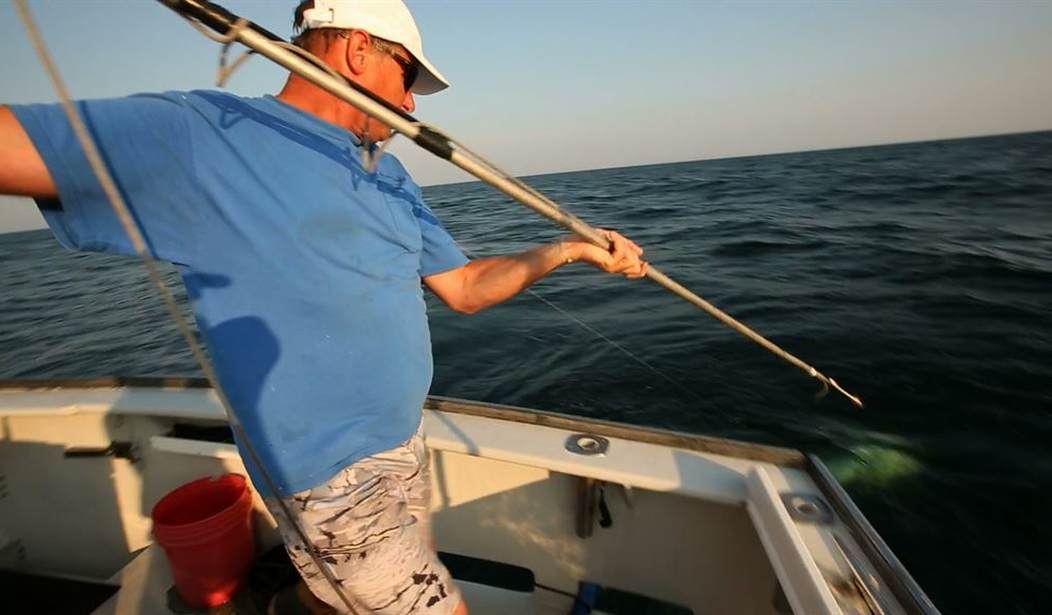
The 68th annual International Convention of Allied Sportfishing Trades (ICAST), recently held in Orlando, Florida, was humming with activity. Nearly 12,000 attendees representing 74 countries descended to the Orange County Convention Center to scout the latest fishing and boating gear, gadgets, and policy updates.
Ahead of ICAST, Senator Lindsey Graham (R-SC) tragically passed away. Back in May, the late Senator Graham applauded the reopening of the Atlantic Ocean red snapper season slated to commence on May 22nd, 2026. A federal judge issued an injunction blocking the season the day before.
Several ICAST attendees I spoke with praised Senator Graham and his contributions to the outdoor industry.
“Lindsey Graham was a giant…He loved the outdoors and the outdoor industry,” said Jeff Angers, president of the Center for Sportfishing Policy, in an interview with Townhall.com. “His home state of South Carolina is one of the centers of activity in recreational fishing and boating. The three largest tackle companies in the world are based in South Carolina, and 28 different boat builders are based in South Carolina.”
The American Sportfishing Association (ASA), host of ICAST and the sportfishing trade association, similarly praised Senator Graham as a “staunch advocate for the Palmetto State’s recreational fishing industry, particularly on issues like access to South Atlantic red snapper and stopping the proposed 2022 vessel speed restrictions.”
South Carolina is frequently listed as a top U.S. fishing destination, and is home to at least 27 boat manufacturers.
“The rest of the country knew Senator Lindsey Graham for the major role he played in shaping national and international issues that dominated the headlines. We knew him as someone who never believed South Carolina's outdoors was too small to matter,” said South Carolina Boating and Fishing Alliance CEO Gettys Brannon.
Public water access was equally top of mind for many ICAST attendees. The Trump administration recently released its Make America Beautiful Again report detailing their conservation efforts. Policymakers in recreational fishing and boating, including CSP’s Jeff Angers, commented on the report’s findings.
"The administration, top to bottom, knows that two things drive a successful recreational fishery: access and opportunity,” Angers added. “Our tradition in America is for the public to have access to America's public waters. There are people who don't think that we should have access to America's public waters, and that has always been a tension, but thank goodness our tradition is to ensure access to public waters.”
Recreational fishing and boating are the biggest drivers of the $1.3 trillion outdoor recreation economy. The sportfishing industry, alone, supports 1.1 million jobs and $230 billion in annual economic activity.
Like hunting, fishing expenditures fund conservation initiatives through the
Dingell-Johnson Act of 1950. Since D-J’s inception, over $12 billion has been generated and delivered to all 50 states to support fishing stocking programs, habitat restoration, and more through a “user pay, public benefit” system. More specifically, the Sport Fish Restoration Fund derived from Dingell-Johnson Act funds collects a 10% excise tax on most fishing equipment and motorboat fuel to fund conservation efforts. The Tax Foundation refers to both Pittman-Robertson and Dingell-Johnson as good excise taxes.
Another issue that dominated ICAST was the growing concern of shark depredation. I couldn’t escape conversations about people’s frustrations with predatory sharks targeting boats and stealing fish catches.
NOAA Fisheries defines shark depredation as the “partial or complete removal of a hooked fish by a shark directly from an angler’s line before the line can be retrieved.” This is increasingly affecting, albeit negatively, offshore fishing trips. Contrary to what environmentalists claim, sharks are thriving and plentiful–not endangered and imperiled–due to laws like the Magnuson Stevens Act. This tension parallels onshore conflicts with overabundant grizzly bears and gray wolves - two apex predators that have recovered and require some management today, as well.
With it being Shark Week this week, this topic couldn’t be more timely. There is a legislative remedy in Congress called the SHARKED Act (Supporting the Health of Aquatic systems through Research Knowledge and Enhanced Dialogue Act) to help address this issue. The House passed it by voice vote in January 2025, and now it awaits movement in the U.S. Senate. Alas, it’s summer recess and Congress is back home. As with most energy and conservation priorities awaiting movement in the Senate, shark depredation, sadly, isn’t expected to be tackled soon.
Post-ICAST, where do recreational fishing and boating stand? The state of recreational fishing, unsurprisingly, remains strong in America. Per the ASA’s 2026 Special Report on Fishing, 57 million Americans - or 18 percent of the U.S. population - took a fishing trip in 2025. This is a 25 percent increase from 2015. But future challenges to this cherished American pastime could arise.
Fishing in Oregon was in jeopardy–until last week. The controversial Initiative Petition 28 - a radical measure aimed at banning fishing, hunting, farming, ranching, and other practices on so-called animal cruelty grounds - failed to garner enough valid signatures to appear on the November 3rd ballot.
Fishing plays a practical role in nature, politics, and our daily lives. As a passionate lifelong angler, I hope fellow Americans will channel the spirit of 1776 and cast a line this year.
Editor's Note: Do you enjoy Townhall's conservative reporting that takes on the radical left and woke media? Support our work so that we can continue to bring you the truth.
Join Townhall VIP and use promo code FIGHT to receive 60% off your membership.


Join the Conversation
VIP members get the ability to comment on articles.