
Whether you support bitcoin or not, chances are you know someone who owns some or trades it.
In November 2021, Pew Research Center found 16 percent of Americans have “invested in, traded, or used” cryptocurrencies. And that number is expected to grow in 2022. As a result, the most popular type of cryptocurrency has taken the U.S. (and globe) by storm.
What explains bitcoin’s rise in popularity? Is it too volatile to replace fiat money? Is it worth defending?
This column will explore these facets.
Cryptocurrency Defined
To understand digital currency, one must define it.
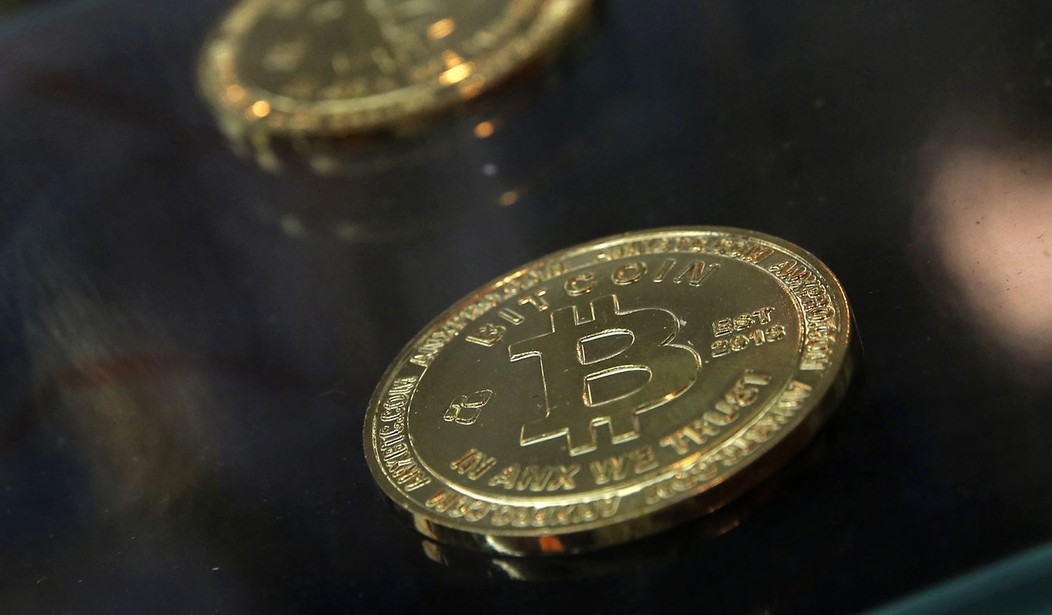
Investopedia describes cryptocurrency as “digital or virtual currency that is secured by cryptography.” As a result, crypto is reportedly difficult to “counterfeit or double-spend.” There are reportedly 10,000 cryptocurrencies in circulation today.
Moreover, bitcoin mining has a low carbon footprint. Mandy Gunasekara, former chief-of-staff to Trump EPA Administrator Andrew Wheeler, noted the practice “uses only a third of the energy” compared to traditional extraction methods.
What’s the draw? Compared to traditional currencies, it’s decentralized and largely devoid of fees and transaction times.
Fiat money’s value is “tied to a government-issued currency” like the U.S. dollar and as such, is dictated by central banks. In contrast, cryptocurrency is governed by “blockchain protocols, code, and communities govern cryptocurrency.”
Blockchain “underpins” Bitcoin. Gemini explains:
"Blockchain networks are driven by systems of aligned incentives. A well-functioning public blockchain requires a community of users, node operators, developers, and miners, who all play roles in a mutually beneficial network ecosystem. For example: In many blockchain networks, rewards like newly minted cryptocurrency or transaction fees motivate network participants to compete to validate transactions and create new blocks. This incentive and validation structure also secures the network from criminal or fraudulent activity."
Critics, however, believe it’s a speculative asset. Are they correct?
The Allure of Bitcoin
From Elon Musk to politicians, prominent individuals spanning different industries have caught the bitcoin bug.
Former reporter Natalie Brunell, host of the Coin Stories podcast, explained what drew her to this space.
“Government money fuels crony and phony capitalism,” she wrote in Bitcoin Magazine. “That’s the term for when bureaucrats and even pundits and journalists blame capitalism for a situation in which they artificially suppress interest rates (opposite of capitalism), encourage debt (opposite of capitalism), debase the dollar (opposite of capitalism), create bubbles (opposite of capitalism) and ultimately bail out the big banks and companies from the very problems easy government money created in the first place (you get my point).”
Senator Lummis of Wyoming believes the Federal Reserve should buy bitcoin because it is “freedom money.”
“It’s ‘freedom from poverty’ money,” she told a publication. “It’s ‘freedom from Venezuela’s totalitarian regime’ money. It’s ‘freedom from runaway inflation’ money. It’s ‘freedom from the Chinese Communist Party’ money.”
The Coming Crypto Crackdown in the U.S.
With Canada blocking cryptocurrency payments for the Freedom Convoy, the U.S. may carry out a crackdown of its own under the guise of cybersecurity concerns.
Last week Yahoo! News revealed the Federal Bureau of Investigation (FBI) formed a digital currency unit, while the Department of Justice (DOJ) will unveil a new crypto czar role. Why the FBI unit? It explains:
"The creation of the FBI's "virtual asset exploitation" unit comes after the Justice Department's largest-ever financial seizure earlier this month. It charged a married New York couple with allegedly laundering bitcoins now valued at over $4.5 billion that were stolen in the 2016 hack of the digital currency exchange Bitfinex."
On January 27th, Barrons reported the Biden administration will soon debut a “national security memorandum” on digital currencies to “task parts of the government with analyzing digital assets and assembling a regulatory framework that covers cryptos, stablecoins, and NFTs, or non-fungible tokens…”
In her timely book The War on Small Business, “recovering” investment banker Carol Roth warned how central planners will target cryptocurrency.
“The reason why they hate crypto is the same reason why they hate gig work. It's the same reason why they hate small business: because it's too hard to control,” she remarked during our June 2021 interview.
Is Bitcoin a National Security Threat?
In response to El Salvador adopting Bitcoin as legal tender, a bipartisan group of U.S. Senators introduced the Accountability for Cryptocurrency in El Salvador (ACES) Act to require “a State Department report on El Salvador’s adoption of Bitcoin, a cryptocurrency, as legal tender and a plan to mitigate potential risks to the U.S. financial system.”
This echoes the International Monetary Fund (IMF), the entity also urging the Latin American country to ditch it. Why? IMF directors claim Bitcoin use incurs risk on “financial stability, financial integrity, and consumer protection, as well as the associated fiscal contingent liabilities.”
Salvadoran President Bukele disagreed and rebuked “boomer” U.S. lawmakers for trying to meddle in his country.
He tweeted, “You have 0 jurisdiction on a sovereign and independent nation. We are not your colony, your back yard or your front yard. Stay out of our internal affairs.”
Conclusion
While I’m personally ambivalent about Bitcoin, I’m inclined to support it, and cryptocurrency, on principle. Decentralization far outweighs central planning.
Absolutely, there are concerns about dictatorships like Cuba getting into the game. The tyrannical island will likely undermine digital currency through central planning.
But the U.S. can counter it by legitimizing Bitcoin, not treating it with disdain, and upholding it as an alternative that can withstand vulnerabilities from big government policies and crony capitalism.