





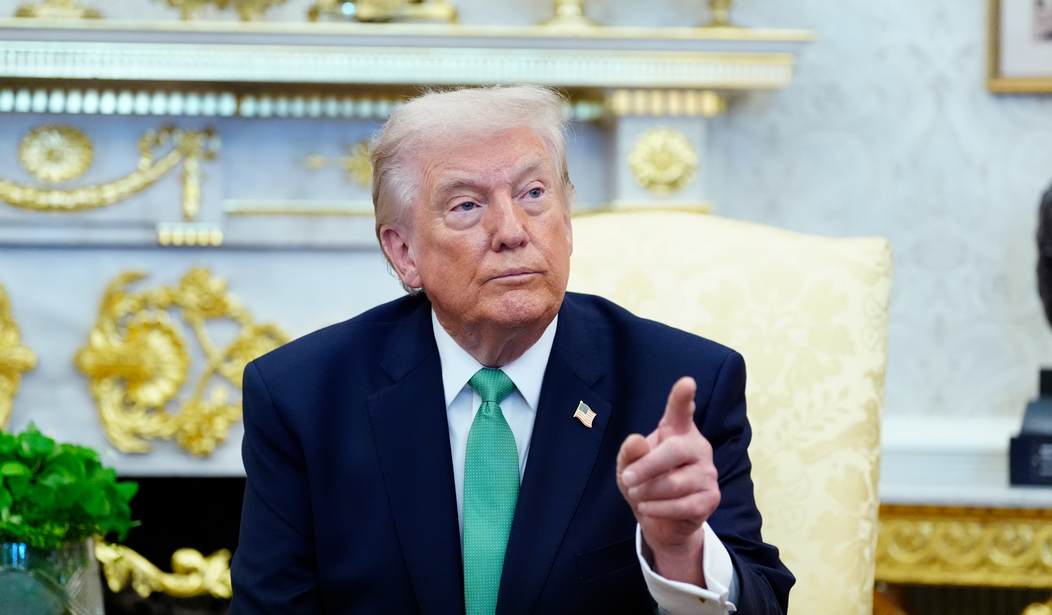
President Trump has demonstrated masterful pragmatism in managing volatile global energy markets during a dangerous time. While critics denounced any flexibility, Trump understood a fundamental truth: oil is a global commodity driven by supply and demand, not by political slogans.
The United States imports almost none of the roughly 20 million barrels per day that normally flow through the Strait of Hormuz. Less than 500,000 barrels daily from the entire Persian Gulf in recent years.
Yet every American driver feels the consequences when risk disrupts that chokepoint, because prices everywhere respond to worldwide fundamentals. When oil anywhere in the world is in short supply, prices climb everywhere, including your gas station.
Trump’s approach was smart realpolitik. He allowed limited Iranian oil to continue reaching China and other Asian buyers while Russian non-sanctioned crude found markets and generated cash for Moscow at elevated prices. This balancing act prevented an immediate global supply crunch.
It kept the market from tipping into panic and protected the U.S. economy, which benefits from record domestic production of 13.6 million barrels per day and strong exports of refined products. By avoiding an artificial shortage, Trump shielded American families from the kind of price shock that could derail the prosperity he worked so hard to restore.
Economists warn that a sustained closure or severe risk in the Strait of Hormuz could easily push Brent crude to $150 per barrel or higher. Such a spike would almost certainly trigger a recession. Higher energy costs would hammer consumer spending, raise inflation across the board, and force painful adjustments in businesses and households.
Trump’s temporary tolerance of certain oil flows bought critical time and drew criticism, but kept prices from exploding prematurely. Yet tolerance has limits.
Iran has harassed commercial shipping and deployed proxies in the region off and on for nearly five decades. These actions have imposed a permanent risk premium on every barrel of oil, inflating insurance costs, slowing tanker traffic, and adding unnecessary expense to global energy supplies. We have all been paying more for gas at the pump because of Iran’s belligerence for decades. Enough is enough.
The stakes extend far beyond oil prices. Iran has demonstrated ballistic missiles with a 4,000-kilometer range, which they said they did not have, putting major European capitals, such as Berlin, Paris, London, and Rome, within striking distance. Even more alarming, Tehran had assembled the components for at least 12 nuclear bombs before recent setbacks.
To understand the devastation Iran could unleash, consider the Soviet Union’s 1961 “half-strength” Tsar Bomba test in the Arctic. Detonated at 50 megatons — roughly 3,300 times more powerful than the 13-kiloton Hiroshima bomb — it produced a fireball nearly 5 miles wide, a mushroom cloud rising over 40 miles high, and was visible from almost 600 miles away. If one were dropped on Denver, the people in Phoenix would see the fireball, or detonation in Chicago, which could be seen in Atlanta.
A single weapon of that scale would vaporize everything within a 36-mile radius, level or severely damage structures out to 30–35 miles in all directions, ignite firestorms across hundreds of square miles, and spread radioactive fallout far beyond. Think of the devastation this would cause in American or European cities.
A full-strength 100-megaton version (the bomb’s original design) would extend the destructive radii by another 25–30 percent, vaporizing a 47-mile radius, enough to threaten entire metropolitan regions and inflict catastrophic damage on a vastly larger scale. Twelve such devices in hostile Iranian religious extremists’ hands would not only threaten the Middle East or Europe; they would endanger civilization itself.
Trump is absolutely right to confront this threat decisively. Decades of diplomatic half-measures only emboldened Iran. By ending Tehran’s ability to harass vital shipping lanes, threaten nuclear escalation, and hold global energy markets hostage, the president is removing the single greatest risk to both affordable oil and international peace.
Strong American leadership first managed supply to protect the economy, then moved to eliminate the source of instability, the belligerent Iranian Theocracy. Critics may call it aggressive, but history will record it as necessary realism. Americans want neither endless wars nor endless vulnerability at the gas pump or from nuclear bombs in the hands of radicals.
Completing the mission in the Strait of Hormuz will restore true security, stabilize energy markets, and allow the world to return to the peace and prosperity that decisive leadership has always delivered.
It is time to finish the job and Make Persia Great Again.
Editor's Note: For decades, former presidents have been all talk and no action. Now, Donald Trump is eliminating the threat from Iran once and for all.
Help us report the truth about the Trump administration’s decisive actions to keep Americans safe and bring peace to the world. Join Townhall VIP and use promo code FIGHT to get 60% off your VIP membership.


Join the Conversation
VIP members get the ability to comment on articles.