






On Christmas Day 1863, Henry Wadsworth Longfellow wrote the poem we now know as the song "I Heard the Bells on Christmas Day." Earlier in the year, Longfellow had unsuccessfully pressured his son, Charles, not to join the Union Army. On Christmas Day, Longfellow learned his beloved son had been critically wounded at the Battle of New Hope Church.
"I heard the bells on Christmas Day / Their old, familiar carols play, / and wild and sweet / The words repeat / Of peace on earth, good-will to men!
"And thought how, as the day had come, / The belfries of all Christendom / Had rolled along / The unbroken song / Of peace on earth, good-will to men!"
Longfellow's life had been one of tragedy. His first wife died in childbirth. His second wife, Frances, whom he adored, burned to death in an accident. Someone dropped a lit candle on the dress she was wearing. It went up in flames, killing her. Now, Longfellow's son's fate was unknown on a battlefield.
In a letter dated March 14, 1863, Charles informed his father that he had joined the Union Army, where he would quickly get promoted to lieutenant. "I have tried hard to resist the temptation of going without your leave but I cannot any longer," Charles wrote. "I feel it to be my first duty to do what I can for my country and I would willingly lay down my life for it if it would be of any good."
As Longfellow wrote on Christmas morning, feeling overwhelmed, worrying about his son and the Confederacy seemingly on the verge of winning the war, his poem turned dark.
"Then from each black, accursed mouth / The cannon thundered in the South, / And with the sound / The carols drowned / Of peace on earth, good-will to men!
"It was as if an earthquake rent / The hearth-stones of a continent, / And made forlorn / The households born / Of peace on earth, good-will to men!
"And in despair I bowed my head; / 'There is no peace on earth,' I said; /'"For hate is strong, And mocks the song / Of peace on earth, good-will to men!'"
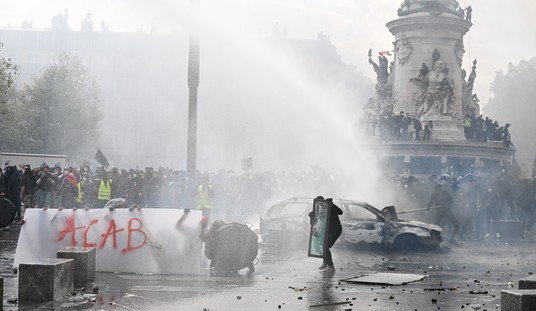
This year seems genuinely insane. We have an armada surrounding Venezuela. Jews fear for their lives even in the United States. Violence seems to be everywhere. People are hating their neighbors instead of loving them. Some Americans worry about Washington. Others worry about making ends meet. Everyone seems to be filled with anxiety. Despair comes easily at Christmas as we all idolize a perfect Christmas memory we live perpetually to duplicate and never quite can.
This Christmas, as I write this, my wife, with stage four lung cancer, is battling the flu. My kids are sick. Bills are due. Presents must be ordered, even still, and wrapped. Balancing work and family and travel is wearing me out.
Two thousand years ago, a couple had to travel from their home in Nazareth to the town of Bethlehem. With no rooms available due to local crowding, the very pregnant wife gave birth in a food trough in a barn to the King of all creation. God, who wandered the desert with the Israelites, came to the planet fully man, born in a barn. He wants a relationship so badly with us; he did that, lived a perfect life, died as if he were a criminal, then conquered death for us. We do not get to escape the troubles of the world. But God came into the world, experienced those troubles as we do, and conquered death. This world is the worst we will ever have it. Eternity calls. We just have to have the courage to make it through this world, as he did.
Longfellow knew that. On Christmas Day 1863, under the weight of worry and grief, he concluded his poem thusly, "Then pealed the bells more loud and deep: / 'God is not dead, nor doth He sleep; / The Wrong shall fail, / The Right prevail, / With peace on earth, good-will to men.'"
Merry Christmas.
To find out more about Erick Erickson and read features by other Creators Syndicate writers and cartoonists, visit the Creators Syndicate Web page at www.creators.com. COPYRIGHT 2025 CREATORS.COM
Editor’s Note: Do you enjoy Townhall’s conservative reporting that takes on the radical left and woke media? Support our work so that we can continue to bring you the truth.
Join Townhall VIP and use the promo code FIGHT to get 60% off your VIP membership!

Join the Conversation
VIP members get the ability to comment on articles.