





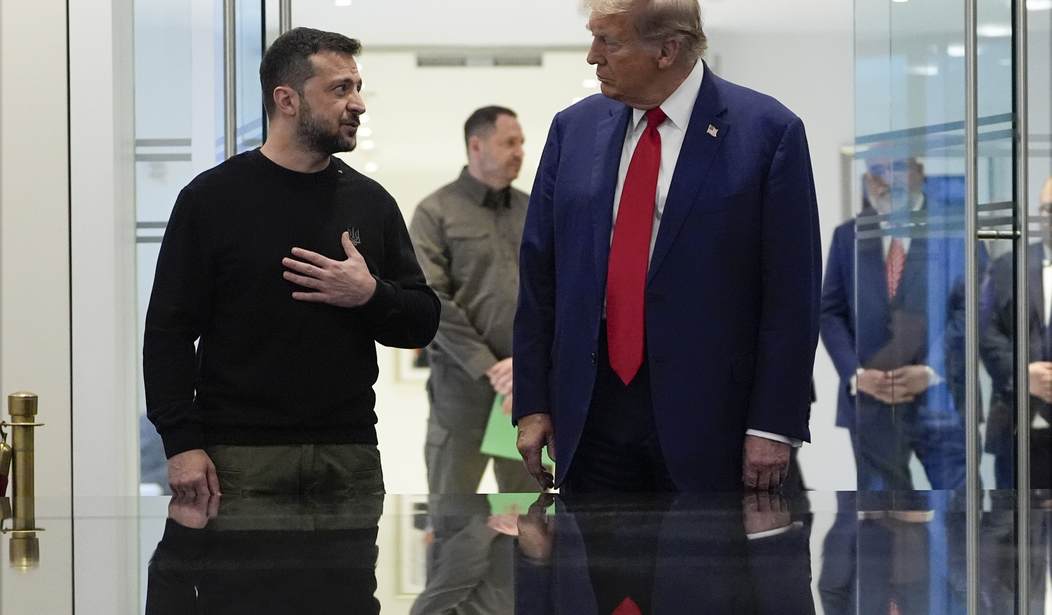
In the United Nations, the United States sided with Russia, Belarus and North Korea -- three authoritarian regimes currently rampaging through parts of Ukraine -- against a General Assembly resolution that noted Russia as the aggressor in the Ukrainian invasion. China and Iran would not side with Russia on that resolution. It is a bad look for the United States.
Ukraine is not the instigator or aggressor in the invasion. President Donald Trump's statements suggesting as much play into Russia's hands. Under international law, an aggressor who loses territory in a war forfeits a legitimate claim to that territory. If Ukraine were the aggressor, the Russians have a lawful right to the territory it has captured.
Notably, the United States and Russia voted together again in the United Nations for a Security Council resolution that calls for an end to the war without asserting who started the war. Contrary to Russian claims, it did not invade Ukraine over a possible entry into NATO. Vladimir Putin wants a renewed Russian sphere of influence, contrary to U.S. Vice President J.D. Vance's claims on social media that this is an ethnic rivalry. It is a Russian dictator's desire to expand his nation's territory and consume the resources of another.
The Trump administration's public statements on Ukraine cater to an increasingly hyper-online right. The sentiments are not only not aligned with most Republican voters but are misaligned with most Americans who understand that Russia's dictator is not our friend.
Notwithstanding all of that, the view from inside the Trump administration offers a reasonable explanation for their recent behavior and votes. Understanding their point of view is useful, even for those who disagree.
First, Trump wants to make it clear to Ukraine, which pushed the General Assembly resolution, that it is not in a public relations fight but a real war. Some in the Trump administration think that Ukraine's President Volodymyr Zelenskyy has spent more energy on publicity than winning.
Second, Trump wanted to illustrate to European powers that the United States is done throwing money at Ukraine. If Europe wants to continue, it can. But it needs to stop relying on the United States, its funds and its weapons.
Third, Trump wanted to explain to Russia that Trump is not Biden. The Russians can sit with Trump to find a way to wind down the war, an effort that he understands will require them to give up territory. With an American-Ukrainian mineral deal done, Russia must understand the United States will continue to help Ukraine if the Russians are not prepared to end the war.
A caveat is how little private trust there is for Putin. The Trump administration wants peace in Ukraine but is not convinced that Putin does. Some of them calculate Putin thinks he can draw out Trump's frustrations with Zelenskyy in such a way that the United States slows down aid to Ukraine. Putin also fears the repatriation of a massive number of battle-hardened criminals suddenly roaming Russian cities. If Putin drags out talks and fails to express interest in ending the war, the Trump administration will redouble American efforts to help Ukraine.
Whether one agrees with the Trump administration's actions or not, understanding their rationale -- particularly making it clear there is a new President with new views who is unhappy with the status quo -- is important. Understanding their presupposition for everything is even more important.
The presupposition for Trump is that China is the greatest threat and that Biden left us too weak to effectively deal with them. China has infiltrated our telecom networks, power grid and more. They are preparing to challenge us globally. Barack Obama made a choice in 2014 to end the military's long doctrine of being able to win two global wars at once. We are not ready and must be. But to be ready for China, we must wind down matters in Ukraine.
There is a problem with all of this. China, Russia, Iran and North Korea are already working together, and Ukraine is part of that, not separate from it.



Join the Conversation
VIP members get the ability to comment on articles.