







We live in a test tube of democracy right now where the age-old adage “deficits don’t matter” is being examined. Back in 2004, Vice President Dick Cheney was reported to have said that phrase to Bush Treasury Secretary Paul O’Neill when he worried that budget deficits posted a threat to the economy. Cheney shot back, according to a Chicago Tribune story from 2004, "You know, Paul, Reagan proved deficits don't matter. We won the midterms [congressional elections]. This is our due."
Debt has become a threat to democracy, because elected politicians are spending us into a potential debt crisis.
We are seeing record spending and neither party has searched for cuts to offset the new spending. The vote on the $2 trillion CARES Act was unanimous in the Senate, and the House approved it by a voice vote. There was no debate to offset one cent of the trillions in new spending.
When you put the ‘deficits don’t matter’ mantra in context, the Reagan years were a time of much smaller deficits and a smaller government footprint on the economy. For reference, the government’s spending was far less during the Reagan years and the largest deficit was $221 billion in 1986 using White House figures. In 2009, President Obama’s administration ran a $1.4 trillion deficit. By 2017, President Donald J. Trump’s administration had a $665 billion deficit. Today’s figures make those deficits look small.
According to the Congressional Budget Office (CBO), “the federal budget deficit was $2.7 trillion in the first nine months of fiscal year 2020, CBO estimates, $2.0 trillion more than the deficit recorded during the same period last year.” The CBO estimates that the debt this year will hit $3.7 trillion, when it was originally projected to be at about $1 trillion before the coronavirus pandemic. In other words, the deficit for this one-year FY2020 will be more than the whole federal government spent in FY2017.
Politicians of both parties need to find ways to offset new spending.
Entitlements is where some large reforms can be made. James Capretta of the American Enterprise Institute (AEI) wrote in Real Clear Policy in 2018, “making adjustments to Social Security and Medicare is a complex undertaking that will take many years to complete.” He makes the case that you can’t change benefits for these programs currently, therefore the “big changes will have to be applied prospectively, and the budgetary payoff will come in 15, 20, and 30 years.” The goal is to strengthen the programs while reducing cost. Capretta recognizes that these changes are politically difficult because Democrats resist any changes to entitlement programs.
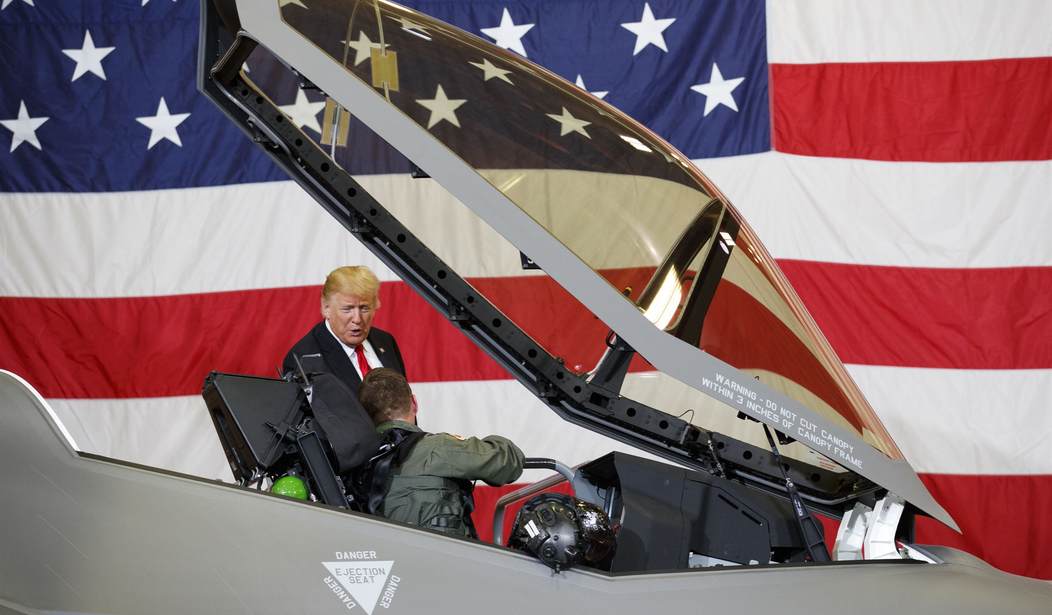
On the discretionary side, there are programs that are big ticket items that could be reformed and cut. One is the Pentagon’s trillion-dollar F-35 Joint Strike Fighter program. The House Oversight and Reform Committee is having a hearing this week titled “F-35 Joint Strike Fighter: Ensuring Safety and Accountability in the Government’s Trillion Dollar Investment.” That will be an opportunity to study the “DOD’s largest and most costly acquisition program, with sustainment contracts that require delivery of spare parts, and costs estimated at more than $1 trillion over a 60-year life cycle.” This is a program that can be reformed and cut in a way that reduces the number of F-35s and pivots to other less costly and just-as-capable aircraft.
Although the Democrats are probably attacking this program for the wrong reasons, the F-35 program has had some serious issues that should get the attention of Republicans. First, the program costs well over $1 trillion over its lifetime at a Pentagon that has a difficult time auditing programs. Also, there are F-35 design flaws. The F-35 can’t sustain supersonic flight for long periods of time for fear of damage to the aircraft and can’t fly when lightning is near. To put this in perspective, the annual budget of the Department of Defense is about $700 billion, yet, over the lifetime of the program, the F-35 will cost well over, by hundreds of billions, all yearly operating expenses for the Pentagon.
Congress needs to start looking at reforms and cuts to spending to pay for all the money they threw at the economy to fight the coronavirus pandemic. Republicans and Democrats need to find some big savings in entitlement programs and in Pentagon spending. If they don’t, they may be putting democracy in danger.
Erica Rogers is a freelance writer and the editorial director at Capitol Allies.


Join the Conversation
VIP members get the ability to comment on articles.