







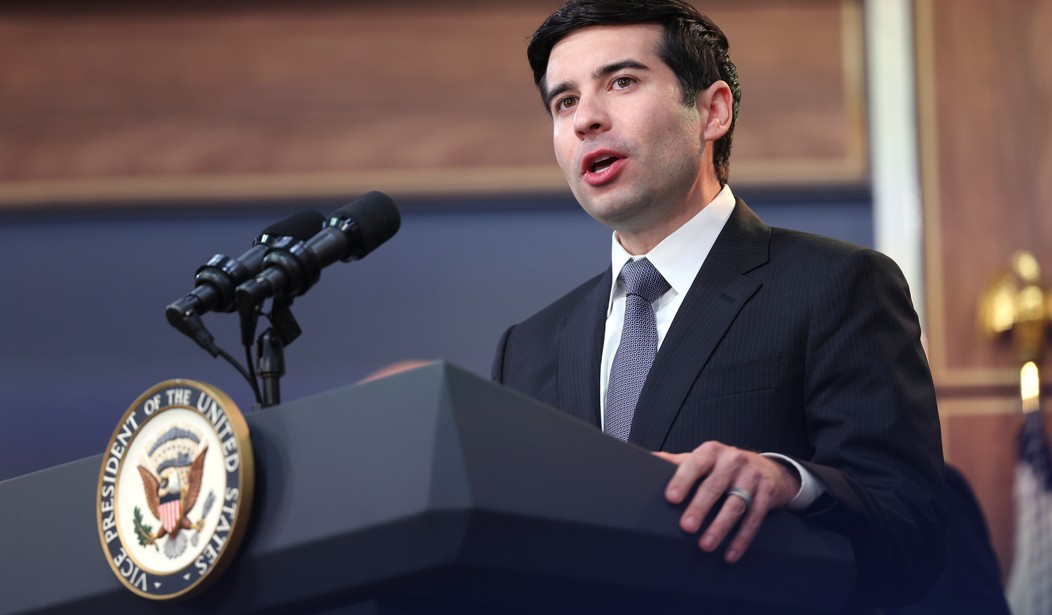
If you hired a financial adviser to grow your nest egg, you’d want him to maximize your rate of return, not use your money to lecture oil companies about their carbon footprint. For years, though, Washington told the people managing Americans' 401(k)s that this was perfectly fine. Fortunately, Labor Secretary Keith Sonderling is putting a stop to it.
On Monday, the Department of Labor proposed a rule restoring what federal law has required since 1974: retirement plan fiduciaries must act for the exclusive purpose of providing benefits to workers and retirees. The pet projects and politics of those fiduciaries must be set aside.
Their goal in managing clients’ money cannot be a far-left crusade like supposedly saving the planet or hitting diversity targets. In Sonderling's words, investment decisions must be made "solely in the financial interests of workers and retirees."
That shouldn't be controversial. Most people have been under the false impression it’s what their fiduciaries were doing all along anyway. But a Biden administration's 2022 rule turned the loyalty duty of the Employee Retirement Income Security Act (ERISA) into a suggestion.
It singled out climate change and other ESG priorities as things fiduciaries could weigh. It created a "tiebreaker" that let them pick a fund for its collateral benefits whenever two options supposedly served participants equally. And it blessed building investment menus around participants' stated preferences. These each functioned as loopholes.
Take the tiebreaker which never made sense since no two investments are ever identical; they differ on fees, risk, liquidity, and more. The department rightly notes that fiduciaries can settle any supposed tie on strictly financial grounds. The tiebreaker's real job was to let managers manufacture ties as cover for steering money toward their favorite causes.
Daniel Aronowitz, who runs the department's Employee Benefits Security Administration, put it bluntly: "Supposed ties are used as a pretext."
The participant-preference provision was no better. A worker's opinion of a fund's politics can't tell you whether it will deliver the retirement he was promised. The proposed rule rightly calls it a "trap for the unwary."
The biggest prize, though, was never the funds themselves. According to the Plan Sponsor Council of America, only about 5 percent of 401(k) plans offered an ESG fund in 2025, and those funds held less than 1 percent of plan assets on average. The real action is in proxy voting and so-called shareholder engagement.
That's where trillions of dollars of workers' savings get used as leverage to push corporate boards toward political goals the workers themselves may oppose, and thereby turning any fund into a quasi-ESG one. And just two firms control more than 90 percent of the proxy advisory market.
Sonderling’s proposed rule addresses not merely a principle but a real practice. Early last year, in Spence v. American Airlines, a federal judge found the airline breached its duty of loyalty to its own 401(k) participants. The breach was letting its business ties to BlackRock, an asset manager known for ESG activism, influence how the plan was run. The new rule applies the exclusive-purpose standard to proxy voting and shareholder engagement too.
Critics will point to a Morgan Stanley analysis showing sustainable funds beat traditional funds in the first half of 2026, but that’s merely cherry-picking, purposely excluding other periods when such politically motivated funds badly lagged the market.
Furthermore, the rule doesn't ban ESG funds and, as the department explains, ERISA neither favors nor disfavors any investment strategy. If an ESG fund truly offers the best risk-adjusted return at a competitive fee, a fiduciary can still choose it, but on the numbers.
That neutrality is exactly what Washington has failed to provide. Congress voted in 2023 to overturn the Biden administration’s rule, and President Biden vetoed it. Plan sponsors have been whipsawed ever since.
After years of inflation eating away at their paychecks, American families can't afford to have their retirement savings treated as someone else's political slush fund. Now more than ever, America’s workers need the best rate of return possible on their savings and Sonderling is helping make that possible.
E.J. Antoni is chief economist and the Richard Aster fellow at the Heritage Foundation and a senior fellow at Unleash Prosperity.
Editor's Note: Do you enjoy Townhall's conservative reporting exposing the radical left and woke media? Support our work so we can keep bringing you the truth.
Join Townhall VIP and use promo code FIGHT to receive 60% off your membership.

Join the Conversation
VIP members get the ability to comment on articles.