
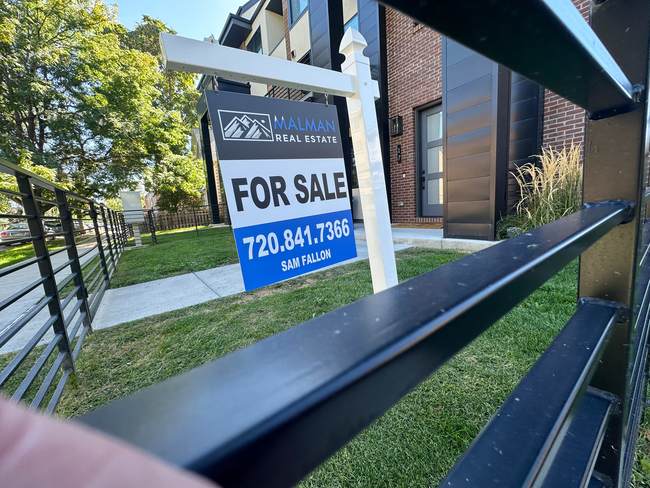
Today’s housing market is painful for just about everyone involved, from builders to buyers to sellers. Government failures over the last seven years froze the industry and made homeownership less affordable, but the problem could be solved if Congress would act.
To understand the solution, though, we first must know how we got here.
Beginning in 2020, Congress increased annual spending by trillions of dollars, and the Federal Reserve simply created the money to cover the massive deficits. The Fed also pushed interest rates to near zero and bought mortgage-backed securities (MBS).
The low interest rates made it cheaper for the government to borrow, but also for everyone else to borrow, including would-be homebuyers. Lower mortgage rates allowed people to take on much larger mortgages without making monthly mortgage payments prohibitively expensive. The resulting bidding wars sent home prices to stratospheric levels.
Fed purchases of MBS were fuel on the fire. They incentivized banks to make more loans at lower interest rates, stimulating mortgage lending. That’s precisely why the Fed bought MBS for the first time in the wake of the mortgage meltdown in 2009 — it was attempting to rescue the industry. This time, the Fed bought MBS from early 2020 through early 2022.
The result was even larger mortgages from even lower interest rates as home prices went to the moon. Additionally, the runaway spending, borrowing, and printing of money by the government devalued the dollar and sent inflation to 40-year highs. The weaker dollar also meant it took more of those dollars to buy the same home, further inflating prices, but it also caused the Fed to change course.
What followed was the sharpest rise in interest rates in four decades. Suddenly, mortgage rates were three or four times their previous levels. Ordinarily, higher interest rates would put downward pressure on home prices so that monthly mortgage payments stay roughly the same, but that didn’t happen.
If you bought a home in 2020 with a 2 percent interest rate mortgage, you effectively can’t sell your home today, not without downsizing. If you sell today, your old mortgage gets paid off and your next mortgage will have an interest rate closer to 8 percent. You can’t borrow anywhere near as much on the next home, or your monthly mortgage payment will explode.
These golden handcuffs have kept many existing homes off the market and even those that are for sale have unrealistically high prices. Sellers want those high prices so they’ll have more money to put down on their next home and therefore need to borrow less. That makes the higher interest rate much less painful and keeps the monthly mortgage payment manageable.
But that’s left a massive mismatch between buyers and sellers. Would-be buyers can’t afford today’s high prices with today’s high interest rates. Homeownership affordability is near an all-time low because it takes 44% of the median household pre-tax income to afford a median-price home. The after-tax figure is well over 50 percent.
Consequently, pending sales of existing homes have fallen to the lowest level on record, a full one-third below the level from a quarter century ago.
The situation is painful for new homes too. Residential construction is trending down, and homebuilder sentiment has fallen to the lowest level in 14 years. Builders are being squeezed by costs 60% higher than before the pandemic, and buyers who can’t afford today’s prices. About two-thirds of builders are using sales incentives to clear inventory, with more than 40 percent cutting prices.
For transactions to increase and the housing market to clear, home prices ultimately need to come down relative to incomes, which will take time because sellers need to adjust their expectations. But lower interest rates would also give buyers some relief and reduce the lock-in effect on current homeowners looking to sell.
That’s where Congress needs to act. The legislature has no direct control over interest rates, but they do control spending, which is at obscene levels. In the last fiscal year, which just ended on September 30, the federal government spent $7.4 trillion and had to borrow almost $2 trillion of it.
Everyone, including the government, competes for loans and that additional $2 trillion of competition drives up the price to borrow money, which is the interest rate. Reducing government spending would reduce the deficit and immediately put downward pressure on interest rates, including for mortgages.
Granted, other recent factors have contributed to higher interest rates — like the Iran war increasing oil prices, which increase inflation expectations, which increase interest rates. Ending that conflict would help stabilize energy markets and eventually reduce interest rates too. But it’s the spending that’s squarely within Congress’s control and which would have a faster impact.
But given the abundance of ineptitude and lack of fortitude within the halls of Congress, don’t expect those spending cuts anytime soon.
E.J. Antoni, Ph.D., is chief economist and the Richard Aster fellow at the Heritage Foundation and a senior fellow at Unleash Prosperity.