





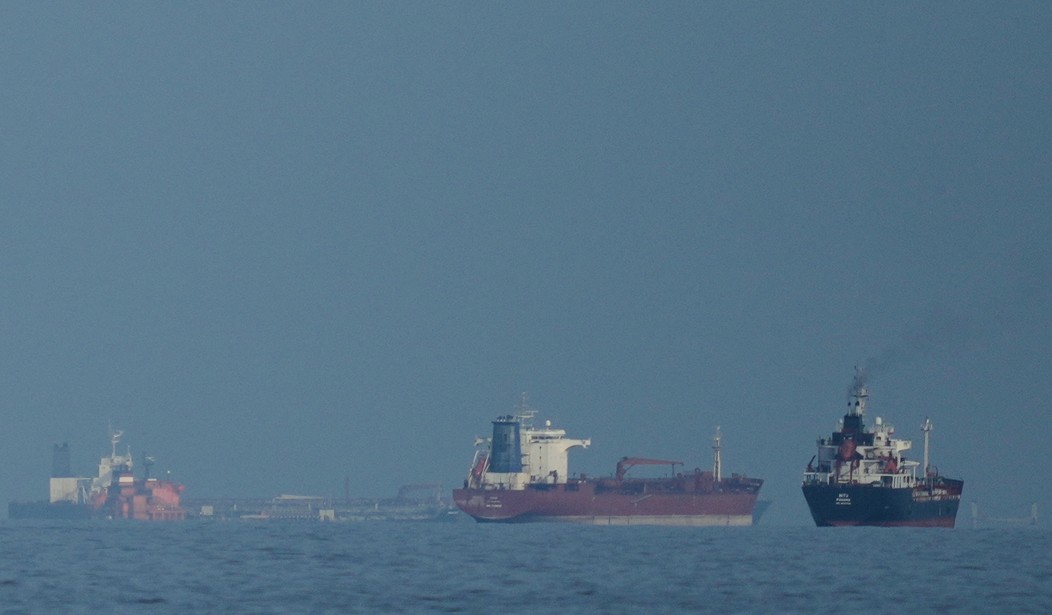
The United Arab Emirates (UAE) shocked the world on Tuesday when it announced that it’d be leaving the world’s largest oil cartel this week. While there’s no immediate impact for the US, in the long run it’ll mean lower gasoline prices and much-needed relief for American consumers.
For decades, the UAE has been part of the Organization of Petroleum Exporting Countries (OPEC), which has artificially limited global oil supplies and thereby put upward pressure on prices. Founded in September 1960, it originally consisted of Iran, Iraq, Kuwait, Saudi Arabia, and Venezuela, but was joined by several other nations in the coming years, including the UAE in 1967.
The idea behind the cartel was simple: gather all the major oil-producing countries into a room and agree to act like a monopoly, thereby maximizing profits at the expense of the rest of the world. But as other nations began discovering and pumping more oil of their own, it became increasingly difficult for a dozen or so countries to control global prices.
This was especially true in the 2010s, as technologies like horizontal drilling and hydraulic fracturing allowed for many nations—especially the US via shale fields—to significantly increase production and thereby put downward pressure on prices. That’s why OPEC+ was formed in 2016, to bring more nations into the cartel fold, including Mexico and Russia.
But with American production at or near record levels, including a growing export market, OPEC’s power has diminished, and member countries have less of an incentive to curtail their own production. The effects of “drill, baby, drill” will, over time, allow the US to have sufficient excess capacity to replace any production cuts from cartel members.
Perhaps the UAE sees the writing on the wall for OPEC and is getting out now before prices really start to trend downward. The Emirates probably also see a unique opportunity coming once the Iran war wraps up, and they’ll need the freedom of being outside the cartel to take advantage of the situation.
Once the Iran war concludes and shipping traffic through the Strait of Hormuz normalizes, there will be a huge surge in demand as nations around the world scramble to refill their depleted oil reserves—hundreds of millions of barrels worth globally. These stocks are rapidly being drained to replace roughly 20% of lost global production during the conflict.
The UAE will want to cash in on this once-in-a-lifetime opportunity by increasing output as much as possible, something that wouldn’t be possible as a cartel member that agreed to limit production.
Today, the Emirates is the fourth-largest OPEC member in terms of output, at more than four million barrels per day, but it can likely exceed five million barrels by the end of next year. That 25% increase will position the UAE to meet the coming surge in demand.
When the UAE leaves, the cartel will be down to 11 members. Given Venezuela’s repositioning firmly into the US sphere of influence and the surge of infrastructure investment there this year, it’s quite possible Venezuela bails on OPEC too.
Each time a member country leaves a cartel and engages in genuine free-market competition, the pricing power of the cartel is diminished, as is the benefit of being a member country. The situation can quickly snowball and lead to the dissolution of the cartel entirely.
Of course, such an unraveling could be a very long way off. While the UAE is the fourth-largest producer in OPEC, it’s still less than half the production of Saudi Arabia. Russia, a member of OPEC+, also doubles the UAE’s production.
So, while the UAE’s decision is significant, it’s not necessarily a death knell for OPEC, which has seen other members come and go over the last six decades. Rather, this move is the latest chapter in the story of American energy independence and energy dominance that is being kicked into high gear by pro-growth tax and regulatory reductions.
In the long run, it’ll mean lower prices at the pump and, eventually, greatly diminished power commanded by OPEC—if the cartel even exists at all.
E.J. Antoni, Ph.D. is chief economist and the Richard Aster fellow at the Heritage Foundation and a senior fellow at Unleash Prosperity.
Editor’s Note: Thanks to President Trump and his administration’s bold leadership, we are respected on the world stage, and our enemies are being put on notice.
Help us continue to report on the administration’s peace through strength foreign policy and its successes. Join Townhall VIP and use promo code FIGHT to receive 60% off your membership.

Join the Conversation
VIP members get the ability to comment on articles.