





It’s July in Alabama and 100 degrees in the shade. Despite the heat, I crack the bedroom window at night to soak up the sounds and smells of the South. The crickets in the woods, a hoot owl on occasion, and the smell of fresh-cut grass riding on the tinkling of a small brook running through our housing development in Tuscaloosa. I’m home and I love it.
In July 2008, after 16 years living in Pennsylvania, I returned to Alabama to write a history of the University of Alabama during the 1960s. On June 11, 1963, 50 years ago, Governor George Wallace stood in the door of the university’s Foster Auditorium, in a futile attempt to stop two black students from registering. Wallace couldn’t thwart something initiated by events on the wheat fields, in the forested hills, and orchards around Gettysburg, during the first three days of July 1863.
For nine of those 16 years spent “up north” I lived in Carlisle, 30 miles north of Gettysburg. My job at the Army War College required me to drive the 90 miles south to the Pentagon once every week, a drive that took me by the Gettysburg Battlefield. On several occasions I visited that place where, 150 years ago, the future of this republic was decided. When I taught at Grove City College in western Pennsylvania, I showed the movie “Gettysburg” to my US military history classes. I’d joke that had I been there on July 3, 1863, for sure my great, great grandson would be teaching in Pennsylvania on a work visa.
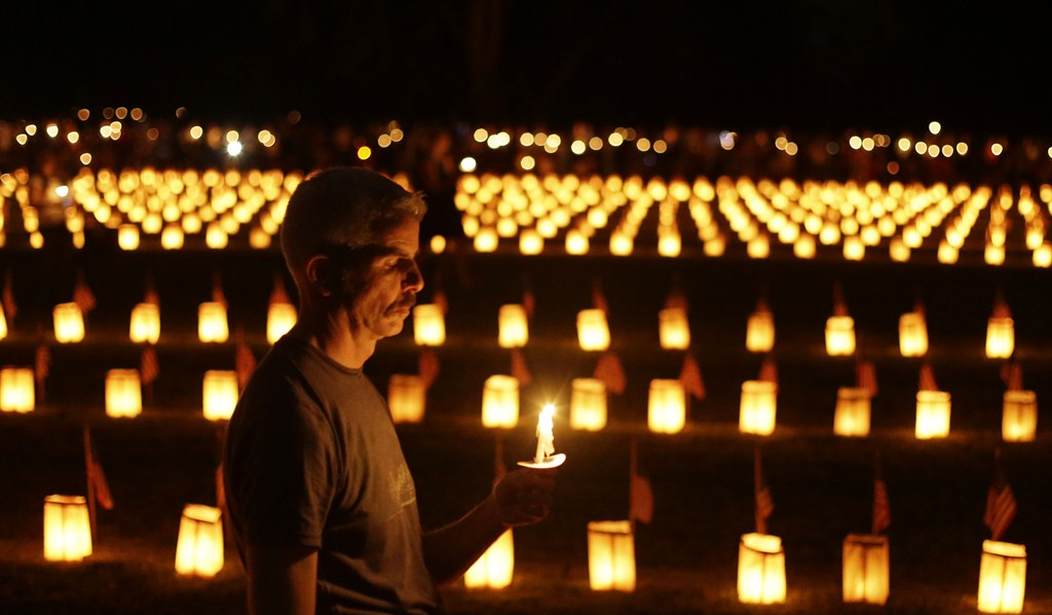
It took eight months to bury the dead. More Americans died on each of the three days of the Battle of Gettysburg than died in the dozen years of the War on Terror. Half the soldiers killed in all American wars since the seventeenth century—about a million in all—died in our civil war. Almost all were of Anglo-Saxon, Scots-Irish, or German-Dutch descent. They were Christians, mostly Protestant with Catholics from Boston and New York City, Savannah and New Orleans thrown in. Slavery ignited the conflagration, but few slave owners fought in the war. General Ulysses S. Grant was one of them; his wife inherited a handful of slaves from her father. Many slave owners, especially the bourbons from the Black Belt of Alabama and Mississippi, either hired substitutes or pled their case for staying home based on keeping their slaves from rebelling.
It was a war fought by dirt poor Southern white farmers on one side and a lot of German and Irish immigrants filling out the ranks of dirt poor Yankee farmers on the other side. Despite sharing the same race, religion, and history, they slaughtered one another with alacrity. What a different country this might have been if, 400 years ago, someone had suggested, “Let’s pick our own cotton.”
In July 1863, men on both sides prayed for victory but mostly for mercy should the next day be theirs to enter paradise. They prayed unabashedly to the God of Abraham, Isaac and Jacob and ended their prayers in Christ’s name. Politicians and generals were still doing that through World War II, the last war we clearly won. Since living up north, every year about now my mind has traveled back to Little Round Top where, on July 2, Colonel Joshua Chamberlain’s 20th Maine Volunteers turned back several rebel surges. Had my great, great grandpa gotten up there to rain artillery on the Union flank, I might well have been teaching in Pennsylvania on a work visa. I’m glad the 20th Maine stood fast. A day and 108 years after Pickett’s Charge, I celebrated the Fourth of July at an air show put on by the US Air Force fighter wing at Udorn Air Base, Thailand. I watched with other American servicemen and women from Alabama and New York, Mississippi and Iowa, Ohio and Florida, some black, some white, and some brown like my best friend, Rich Gonzalez from Mexico City via San Diego, California. 42 years makes for a paid up mortgage on a life lived as a free American. Hopefully my children and grandchildren will remain as free and it will be thanks to the over 1,000,000 Americans who made that possible, including the half of them slaughtered in our nation’s biggest political blunder.
I watched a movie the other night; a chick flick with a poignant message wrapped up in two lines. “Everything will be alright in the end. If it’s not alright, then it’s not yet the end.” It really depends on who is in charge at the end.

Join the Conversation
VIP members get the ability to comment on articles.