





"If our history is bad, let us condemn it and learn from it. If our history is good, let us praise it and build upon it. But let us never, ever cancel our shared American history."
So were the words I used in my book – The 56: Liberty Lessons from those who risked all to sign The Declaration of Independence -- which had the goal of warning readers of the escalating attempts to smear and cancel our Founding Fathers, the 4th of July, and the American Flag.
Of course, once one group, one ideology, or one collection of “intellectuals” are given the unchecked power to smear; to rewrite; to “reimagine”; to cancel; and to tear down, it is ironically history which reminds us time and again, that they will generally never be satisfied until only their beliefs and their narratives become the absolute law of the land.
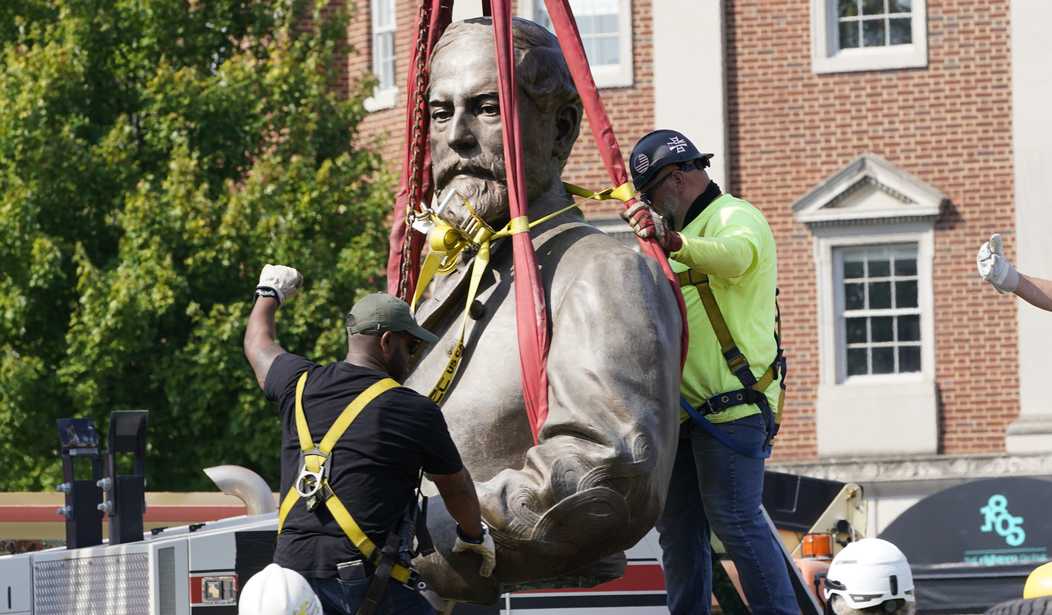
Recently, it was reported that the statue of Confederate General Robert E. Lee – which once stood in Charlottesville, Virginia -- was secretly melted down at a ceremonial event. Footage of Lee’s likeness being melted went viral across social media with his dissolving bronze face seemingly instantly morphing into a bagged trophy for some on the Left.
Sadly – and ultimately, tragically – that same statue was a catalyst for a “Unite the Right” rally protesting the proposed removal of the statue which took place in Charlottesville in August of 2017 which drew far-left counter protesters and produced mass chaos.
A protest then President Donald J. Trump commented upon. Comments which were then deliberately twisted by many in the liberal media in a concerted effort to smear the President. Words they take out of context to this very day in an effort to hinder his chances in the upcoming 2024 election.
Flash back to now, and the statue of Lee was removed and destroyed. But is there a better way to deal with any controversy revolving around individuals or symbols related to our shared American history?
What symbol or name will next pop up on the list for eradication? Again, the melting down of the Lee statue was done in the shadows of secrecy. Before another statue – or any other symbol is destroyed via a secret far-left committee – should Americans from any side of the issue be given the opportunity to civilly and respectfully discuss or debate the outcome?
As reported in The Washington Post, one of those in charge of secretly melting the statue compared it to putting down a rabid dog that had been harming people.
“A rabid dog.”
History – there it is again while it survives, thanks in this case to the Library of Congress – also reminds us that “rabid dog” Robert E. Lee was a son of Revolutionary War hero Henry "Light Horse Harry" and graduated from the United States Military Academy at West Point in 1829, ranking second in a class of forty-six—and without a single demerit.
The Library of Congress also highlights his prewar record as an officer which was distinguished by numerous engineering projects, service in the Mexican War, and nearly three years as commandant at West Point. In other words, someone some might have called a “true American patriot and hero.”
What many may not realize is that in early spring of 1861, Lee was offered command of the principal Union Army. The Union army. Yet, once Virginia seceded from the Union on April 17, Lee sadly determined that "to lift my hand against my own State and people is impossible."
From “true American hero” he became a pariah to many in the United States of today.
Will those who want to eradicate any memory of Lee next want to march to the Library of Congress demanding to burn any books which show him in a favorable light? Where does such selective censorship stop?
As I caution in my book about our Founding Fathers, it is difficult to impossible – and often wrong – to look back at historical figures from hundreds of years ago and assume – or dictate – what was in their hearts, their minds, or their souls at the time.
As we now continually see around the world, one faith’s religious symbols may be deemed as “hateful” or “harmful” by another faith. Where does one draw the line in censoring, tearing down, sandblasting, or melting down that which offends? Especially if such objects speak to the past history of a nation or a people.
Like totalitarians and dictators from the recent past, many on the Left now seek to censor or outright destroy our shared American history. For the sake of our history, we cannot allow them to succeed.
Douglas MacKinnon is a former White House and Pentagon official and author of the book: The 56 – Liberty Lessons from those who risked all to sign The Declaration of Independence.


Join the Conversation
VIP members get the ability to comment on articles.