





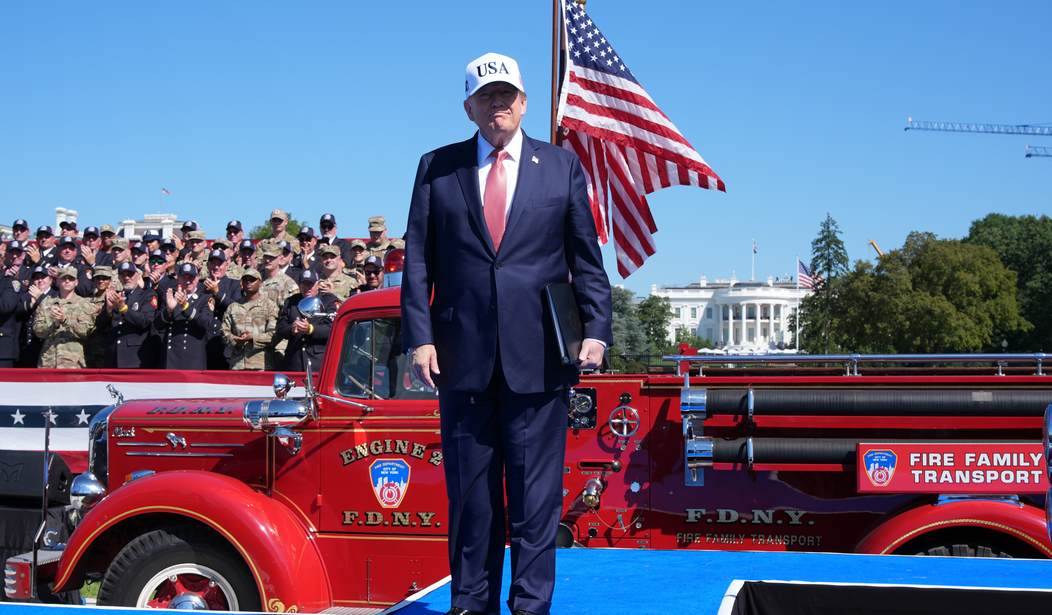
September 11th felt much more poignant this year. Perhaps that’s because it is twenty-five years since the attack on the Twin Towers, and a quarter of a century seems more of a milestone.
As we remember where we were that day, we reflect on how far we have come since. And then we remember those who never got to have those years, and the sense of loss swells up raw and powerful.
It caught me off guard that I could still feel like this about events all that time ago.
Maybe September 11th was more keenly felt this year because the 25th anniversary of the attacks falls in the year of America’s 250th anniversary of independence. Our sense of grief at the loss of almost 3,000 Americans is amplified by the celebratory mood we shared on the Fourth of July.
As I wrote this, I recalled how the sense of disbelief at what I was watching gave way to anger as it became clear that this was the work of Islamist terrorists.
How dare they, was my overriding sensation. How dare these savages come into the West, exploit its openness, and plot mass murder?
Time, they say, is a great healer. There seems to me to be something raw and unhealed about that day.
I still feel angry about what happened on September 11th. We should all feel angry about it.
America has suffered national disasters before. But twenty-five years after those earlier calamities, there seemed to be a resolution of sorts.
A quarter of a century after Gettysburg, the Civil War was long since over. The country was rapidly industrializing. A batch of new states were lining up to join the Union.
Twenty-five years after the Wall Street Crash — albeit that was only an economic calamity — the Great Depression was a receding memory. America was prosperous again.
By 1966, a generation after Pearl Harbor, Japan and Germany had long ago been crushingly defeated. A thriving America sent Surveyor 1 to make the first soft landing on the Moon.
Twenty-five years on from the September 11th attacks, there seems less of a sense of any resolution. That, maybe, is why we felt the way we did yesterday.
Twenty-five years on, and America is $40 trillion in debt, a lot of it incurred fighting aggressors who have not gone away.
For most of the intervening time, America has been led by political and cultural elites that have comprehensively failed to accept the essential truth about that day: those terror attacks were the work of a particular strain of Islam — and not a fringe one.
After all that happened and all this time, many are still marinated in cultural relativism — the false belief that all cultures are essentially the same. So they still cannot really see why America was attacked that day, or recognize that there are people around the world who would do the same again in an instant if they could.
It was not “hate” that destroyed the Twin Towers. Nor, the Iraq war notwithstanding, was it Saddam Hussein. It was a belief system that since the 11th century has asserted the primacy of revelation over reason.
The Ash’ari school of Islam taught that the world does not run on natural laws to be understood by reason. Everything happens by constant divine intervention. There is no cause and effect — nor objective morality. God does not command what is good; whatever He commands is good.
This is the way of thinking that made a group of Saudi and Egyptian men hijack those planes.
They did so, ultimately, because we in the West see the world the other way round.
In the Judeo-Christian tradition, God commands us to do what is good because it is good, not because He commands it. Morality is rooted in objective, abstract principles, which invites moral reasoning. The world runs on cause and effect, which invites inquiry.
Western democracies base their political order on reason and free will — man-made law, arrived at through deliberation. To the Islamist, that is a form of shirk. The law of man cannot be placed on the same level as the law of God. One tradition holds that all essential truths have already been revealed. The other holds that truth is there to be discovered.
That is not a disagreement about policy — or Gaza or the Gulf or Israel. It is not a difference that can be settled by a UN resolution, a different foreign policy, or a different President.
It is a disagreement about what the world is.
Not only have we failed to see the nature of the threat we face for what it is. We have done too little to ensure that the generation of Americans born since that day has a keen enough appreciation of what it means to be an American.
We need to dedicate the next twenty-five years to ensuring that a generation of Americans grows up appreciating why this is the greatest republic in human history — and why our way of life is worth fighting for.
Douglas Carswell is the President & CEO of the Mississippi Center for Public Policy.
Editor's Note: Do you enjoy Townhall's conservative reporting exposing the radical left and woke media? Support our work so we can keep bringing you the truth.
Join Townhall VIP and use promo code FIGHT to receive 60% off your membership.


Join the Conversation
VIP members get the ability to comment on articles.