







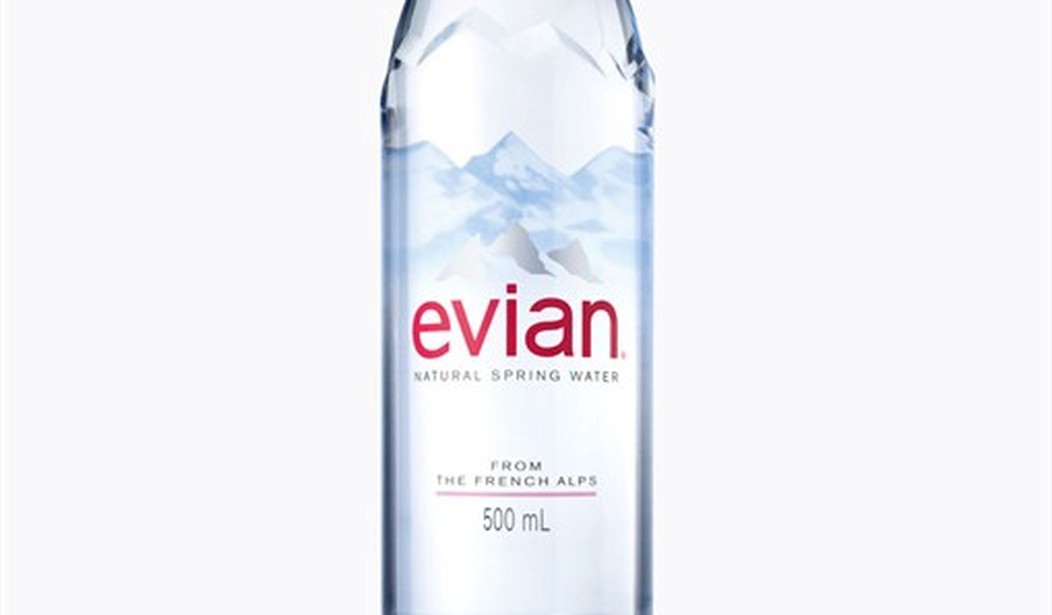
The Fear Industry strikes again. Now they are “warning” us of tiny nanobits of plastic fiber in our drinking water! This fear study was funded by a “news” organization called Orbit Media. They hired researchers from the University of Minnesota and one of the State Universities of New York - - who were more than happy to frighten us about water, the most important thing we ingest daily. Guaranteed headlines! The researchers found that most of the drinking water in the world’s affluent countries today contains these tiny bits of plastics. (Even in Trump Tower!)
One of the researchers hyped the scare even further by noting that the nanobits of plastic can potentially absorb carcinogens—and then penetrate our cells!
But they offer no evidence that neither the bits of plastic or traces of their absorbed carcinogens pose any threat to humans that drink the water! If there was any such evidence, I’m sure the researchers would have been delighted to present it, and get even bigger headlines.
Paracelsus, perhaps the world’s first real scientist, told us 500 years ago that “All substances are poison. There is none that is not a poison. The right dose makes that difference between a poison and a remedy” His dictum covered every substance we contact in our lives, including both sunlight and water.
Back in 1995, I wrote a top-selling book with the only slightly whimsical title Saving the Planet With Pesticides and Plastic. Over the years since then. the fearmongers have threatened us with cancer-causing microwaves, power lines, cell phones and, yes, plastics. The reality is that cancer rates continue to drop - - as fewer and fewer people smoke cigarettes.
I take a daily dose of rat poison, Warfarin, developed at the University of Wisconsin. Rats and mice eat it readily, and the warfarin thins their blood so much that they bleed to death internally. When I take a weak dose of warfarin it thins my blood too—and prevents a recurrence of the mild stroke I suffered nearly a decade ago.
My aunt always took a daily dose of iodine, which then carried a skull and crossbones clearly visible on the label. It helped her treat a throat condition called goiter. That’s no longer necessary because we put small amounts of iodine in our salt instead and label it “iodized” salt.
There’s a 2015 movie titled, “The Babushkas of Chernobyl.” It tells the story of the Russians who survived the terrible nuclear explosion there in 1986— and refused to obey the Soviet orders to evacuate. Instead, they snuck back in, because it was “home.” They’ve been growing their vegetables and crops in the contaminated soil ever since— and are living to ripe old ages today.
The Fear Industry warned that the Chernobyl death toll would be in the hundreds of thousands. The reality? Less than 50 radiation deaths to date and most of them from first-responders who got up on the reactor to prevent further radiation leaks. (There were also cases of treatable thyroid cancer.)
So, the real question about the plastics-in-water story is “How much risk from what dose?” Modern lab equipment can detect parts per billion. That’s equal to one drop of water in an Olympic-sized swimming pool. Does that sound terribly dangerous? And don’t forget the “dilution factor.” In our drinking water, every “contaminant” is radically diluted and thus even less dangerous.
Beware of the Fear Industry’s eagerness to mislead. Dr. Bruce Ames of the University of California at Berkeley developed the Ames Test for cancer risks in the 1970’s. The test is cheap, accurate and universally used. Ames developed the test to help protect us against the dangers of synthetic pesticides. Over the years, however, Ames began to test natural compounds as well as synthetic ones. He found that a single cup of coffee contains more carcinogens than a year’s worth of the pesticide residues ingested by the average American. Ames was awarded a National Science Medal by President Clinton in 1998.
Pesticide risks are probably even lower today, thanks to such ultra-safe new pest controls and genetically modified crops that require far less pesticide per acre.
The Fear Industry has never doubted, however, that it could frighten the public about chemicals even without any science. And they’ve been right. Organic foods are now a $50 billion-per-year industry even though organic farms use just about as much pesticide per acre as conventional farmers. (Nor are the pesticides they use proven safer—only that the organic industry has approved their use.)
Lots of things are deadly at high doses, but the world’s governments already know virtually all of those. And they work to ensure they don’t threaten today’s citizens. Pesticides, for example, are fed to laboratory rats in increasing doses, with the onset of symptoms and the death doses carefully noted. Then the maximum tolerated dose is set at 1/100th of the symptom-producing dose. Where kids are involved, the maximum is usually cut to one 1/1000th .
Tip of the day: When you have a question about the safety of substances, go first to the web site of the American Council for Science and Health at acsh.org. They are medical professionals who delight in exposing the Fear Industry’s misleading statements. (I have no connection with ACSH beyond admiring their work.)
The dose does make the difference between a poison and a remedy.



Join the Conversation
VIP members get the ability to comment on articles.