





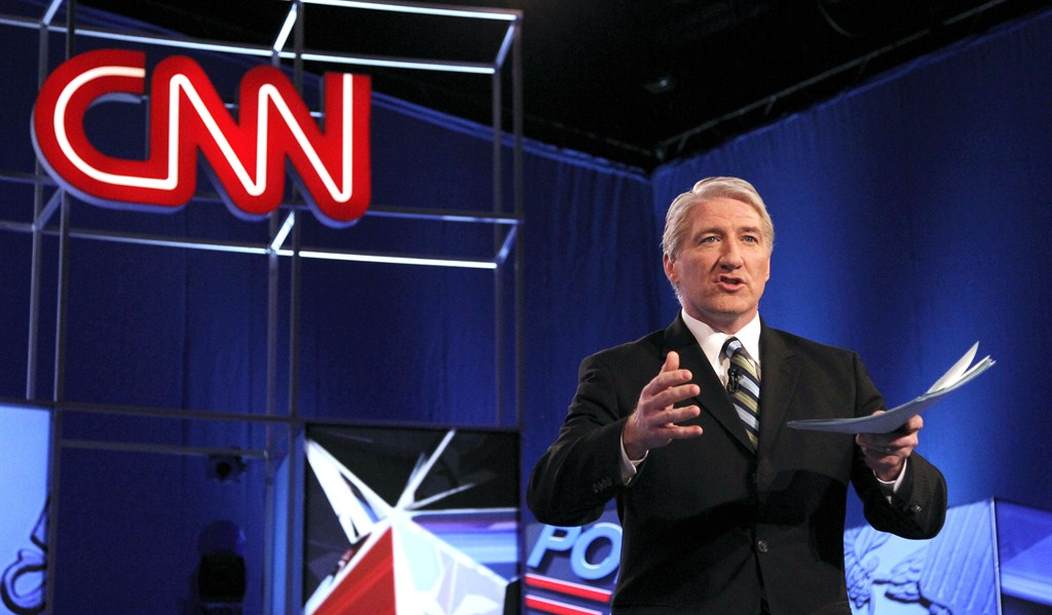
Actor-turned-producer Robert Redford boasts that his new CNN series, "Death Row Stories," is "about the search for justice and truth." That's odd, because the series has aired three episodes and they're all about victims of prosecutorial abuse. So far, nobody's really guilty. The second episode features a woman who never spent a night on death row.
From what I've seen, they should have named the series, narrated by anti-death-penalty activist Susan Sarandon, "Death Row Propaganda."
Episode two, the website says, is about Gloria Killian, who was "charged with capital murder, found guilty of murder in the first degree, and sent to prison in 1986." That's misleading. Killian wasn't tried for capital murder. After she was convicted for her role in a 1981 home invasion murder in Sacramento, Calif., she was sentenced to 32 years to life. Later, a federal court overturned her conviction because prosecutors had withheld evidence.
Why make an episode for a death row series about a woman not sentenced to death? "She was threatened with the death penalty," executive producer Brad Hebert replied.
Any guilty people in your series? Three out of eight episodes, Hebert answered. On further questioning, he posited that his staff members are "torn" on the guilt of one, although they agree he did not get a fair trial. Another was convicted in military court after he was acquitted in civilian court.
Only Nathan Dunlap, Colorado's "Chuck E. Cheese killer," who shot and killed four workers, is presented as guilty and "remorseless," if severely bipolar. But wait; Gov. John Hickenlooper postponed Dunlap's execution indefinitely.
Director Steve Rivo thinks Dunlap got a fair trial. He added that even death penalty supporters agree capital punishment is "not really a deterrent."
I don't agree. It deterred Clarence Ray Allen, the most recent inmate executed in California -- in 2006. Allen was in prison for the murder of his son's 17-year-old girlfriend when he ordered the death of eight witnesses. Three people died. He got the death penalty, and now Allen cannot reoffend.
The series' first episode is about an intern who dug up evidence that exonerated South Carolina's Edward Lee Elmore. New York Law School professor Robert Blecker, a supporter of capital punishment, thought it was a solid episode, as Elmore "is an example of someone who never should have been condemned to death."
The problem is that producers are stuck in a narrative: Intern or astronaut's mother or priest finds evidence that prevents the execution of an innocent inmate.
There's another narrative -- and in my experience, it's more prevalent: Convicted killer finds easily duped advocates who ignore evidence and smear prosecutors.
When convicted rapist/murderer Michael Morales was scheduled for execution in 2006, his attorneys released a statement in which a witness accused prosecutors of coercing her to give false testimony at trial. The affidavit turned out to be a forgery. Still, Morales' lawyers won. They got a federal judge to stay his execution in a constitutional challenge to California's lethal-injection protocol. There hasn't been an execution in the state since. There may be no safer place for a convicted killer than on California's death row. That's California's real death row story.



Join the Conversation
VIP members get the ability to comment on articles.