





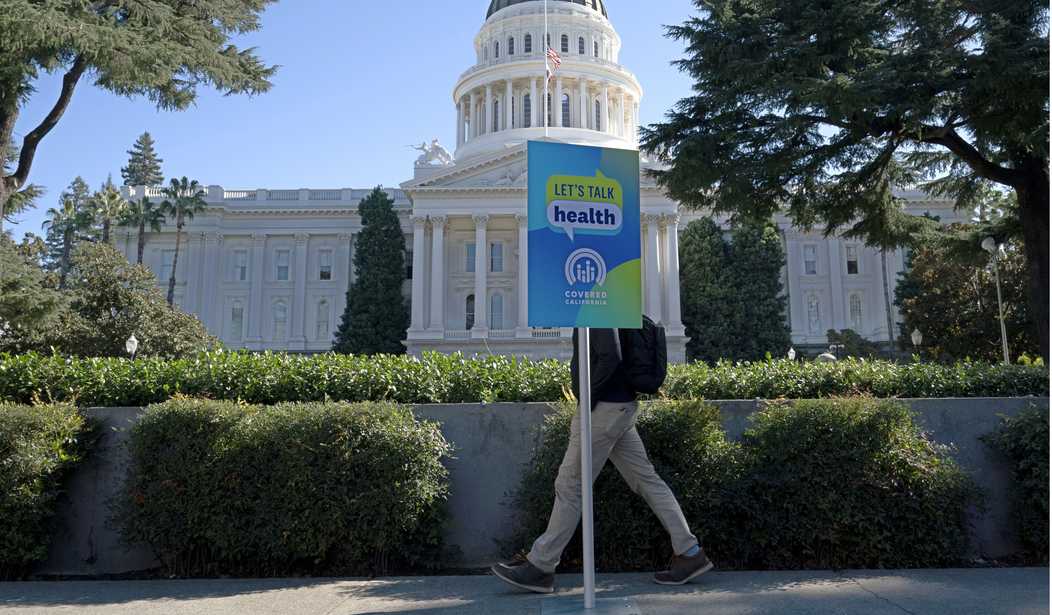
No state has worked harder than California to convince the rest of the country that Obama’s Affordable Care Act was a success, and no state is proving more quickly that it was a myth.
Covered California, the largest state-run health insurance marketplace, is now telling its millions of enrollees to expect their premiums to skyrocket by an average of 97 percent if Congress fails to extend the meant-to-be temporary COVID-era ACA subsidies. The exchange also concedes that without a federal bailout, costs will rise so sharply that it expects 400,000 Californians to abandon the exchange altogether and go uninsured.
That exodus, healthcare professionals warn, will heap stress in the form of even more crowded emergency rooms and community clinics, facilities already pushed to the brink through years of mismanagement and an expansion of an ACA-style socialized model the state never had the fiscal capacity to support.
And here lies the truth California Democrats would rather not admit. The state built its ACA success story on federal cash infusions that risk falling apart every time Congress threatens to shut off the subsidy spigot. The political class, naturally, blames Washington for the instability. But even if lawmakers extend the subsidies again, nothing about the underlying problem changes. California is still running a system whose survival depends on federal crisis spending, not on affordability, competition, or accountability.
California is the worst-case version of this dependency because no state embraced Obamacare more aggressively. It expanded every provision it could, opened enrollment wider than nearly any other state, and stacked its own mandates on top of the ACA. The model was never sustainable. Now, with subsidies uncertain, the façade is peeling away in real time.
But the failures overwhelming the Golden State are not unique. They are the same failures dragging down the entire country.
In the wake of Obamacare, family coverage now averages almost $25,000 a year – nearly double pre-ACA costs, despite Obama’s promise to cut premiums by $2,500. Insurers have narrowed their networks, merged with competitors, and delayed payments to providers, while patients have seen their options and quality of care decline. Millions of Americans lost the plans and doctors they were promised they could keep. Patients in many states are, in fact, completely shut out of leading hospitals that no longer accept individual Obamacare plans.
What began as a pledge to lower costs has become a permanent insurer entitlement that grows larger and less accountable every year. In short, the self-licking ice cream cone continues at the expense of American taxpayers.
California’s crisis, and the national failures behind it, point to a truth our country keeps avoiding. This is no longer a healthcare market, but a subsidy pipeline that props up major insurance carriers and leaves families paying more for less care. Fifteen years in, it is clear this model cannot be rescued by endless federal money.
Americans do have another option. They can choose communities that operate outside the ACA’s collapsing framework. These are health-sharing ministries, not insurance companies. They are voluntary, member-driven communities grounded in personal responsibility, transparency, and shared values. Members help one another directly with medical expenses instead of feeding a system that has forgotten who it serves.
Health-sharing works because it returns healthcare to the people actually paying for it. It treats families as members of a community rather than entries in an insurance ledger. And Congress could make this freedom available to far more Americans with a few simple changes.
Lawmakers could start by giving health-sharing families the same tax treatment enjoyed by people who buy traditional insurance. Congress could also allow members to use Health Savings Accounts, a tool meant to help families control their care but still tied to insurance products many Americans can no longer afford. Small employers should be allowed to help workers who want to join health-sharing instead of forcing them into coverage they do not want and often cannot use.
None of these steps requires a sweeping overhaul. They simply level the field so families can choose the system that serves them best. They protect the right of Americans to seek care that reflects their values, their budgets, and their needs.
California’s unraveling makes this lesson impossible to ignore. A system that survives only when Congress writes another check is not a system built to last. Communities that take responsibility for one another are.
Health-sharing ministries prove every day that affordable, values-based care is still possible in this country. It is long past time for Washington to stop propping up a failing model and start supporting the families choosing something better.



Join the Conversation
VIP members get the ability to comment on articles.