







The Middle East is not necessarily known for good news. But look a little deeper over the last several weeks, and a region normally stereotyped as hopeless, confusing, and blood-soaked is actually making some significant and potentially historic progress. And just as importantly, this progress is being constructed in conference rooms rather than on battlefields.
For the United States, which has invested so much blood and treasure in the Middle East over the last two decades ($2 trillion and tens of thousands of casualties in Iraq alone), there is a lesson in these latest accomplishments: Washington can achieve far more through pragmatic dialogue than it can with military force or endless occupations.
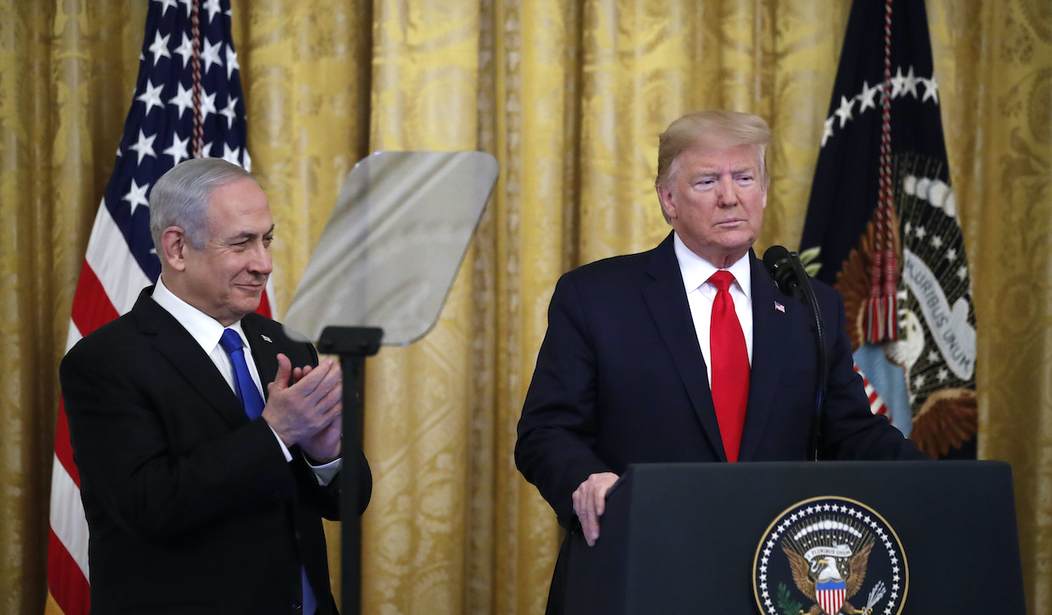
The most recent diplomatic breakthrough, brokered in part by the Trump administration, made international headlines. After multiple rounds of behind-the-scenes talks, Israel and the United Arab Emirates announced a preliminary accord on August 13 that aims to replace decades of adversarial relations with a new partnership of flourishing trade and security cooperation. While it would be premature for the U.S., Israel, and the UAE to pop the champagne and celebrate the dawning of a new era (critical details such as a new trade agreement, the extent of any intelligence coordination, and implementation mechanisms have yet to be finalized), the White House deserves to pat itself on the back for helping to usher in the first normalization between Israel and an Arab state since 1994, when Jordan and Israel signed a peace treaty.
The Trump administration is hoping the Israel-UAE deal will serve as a precedent for similar arrangements between Israel and the rest of the Gulf states. Whether Israel can strike similar deals with Saudi Arabia, Oman, and Bahrain depend on the regional environment at the time, the leadership at the top, and whether normalization serves the national security interests of those states. The fact that Israeli Prime Minister Benjamin Netanyahu has already met with some Gulf Arab officials is an encouraging sign that the world may be in store for more diplomatic history.
A less dramatic but no less significant diplomatic gambit is playing out in Iraq. Iraqi Prime Minister Mustafa al-Kadhimi is in talks with his Gulf neighbors in Saudi Arabia and Kuwait to broaden cooperation in the field of energy. Energy diversification is absolutely crucial for Baghdad, particularly at a time when the Iraqi population is increasingly upset with poor quality-of-life, shoddy public service, and systemic corruption—the very issues that brought down the previous Iraqi government. Like any country confronting a similar predicament, being reliant on a single source for energy resources is a major impediment to Iraq achieving full sovereignty and constructing an independent foreign policy. The Financial Times reported that Iraqi imports of Iranian gas nearly doubled between the summer of 2018 and 2019, reaching 30 percent of Iraq's total supply.
Washington is more than happy to assist the Iraqi government in its attempt to wean off the Iranian power grid and find alternative suppliers in the Gulf—an initiative that would also chip away at the mistrust that has dominated the Iraq-Saudi bilateral relationship since Baghdad’s 1990 invasion of Kuwait. Yet again, it is the power of U.S. diplomacy—not a 5,200-strong U.S. troop presence Iraq—that is proving to be a central ingredient to progress.
U.S. security and prosperity are hardly contingent on solving any of these problems. Washington will be just fine, even if Iraq is unable to kick its addiction to Iranian gas or normalization between Israel and the rest of the Gulf States becomes an overly ambitious task. After all, U.S. interests in the Middle East are extremely narrow. Confined to defending the homeland from anti-American terrorist groups and preventing major disruptions in the global oil supply, the U.S. has the luxury of stepping back, drastically reducing its military investment in the region, and allowing the people who actually live in the neighborhood the freedom to negotiate their own agreements. U.S. officials need to face facts: consisting of only 4 percent of the world’s total GDP, the Middle East is much less important to the U.S. than it was during the Cold War, when Soviet control of the region’s oil supplies would have put Washington at a geopolitical and economic disadvantage.
As of this writing, there are approximately 70,000 U.S. troops stationed in the greater Middle East. A small portion of these U.S. servicemembers are reportedly coming back home. The U.S. troop presence in Iraq will be reduced by one-third over the next two to three months. Washington withdrew two Patriot missile defense systems, some jet fighters, and several hundred troops from Saudi Arabia this May. U.S. forces are also scheduled to go below 5,000 in Afghanistan by this fall, a roughly 60% decrease from the beginning of the year. Given the numerous opportunity costs associated with long-term troop deployments, those withdrawals should continue and indeed accelerate.
There is a conventional wisdom in Washington, D.C., that U.S. national security is indelibly tied to a major, permanent U.S. force posture in the Middle East. The last several weeks, however, demonstrate just how hollow this narrative is.
Daniel R. DePetris is a fellow at Defense Priorities and a columnist at the Washington Examiner.



Join the Conversation
VIP members get the ability to comment on articles.