





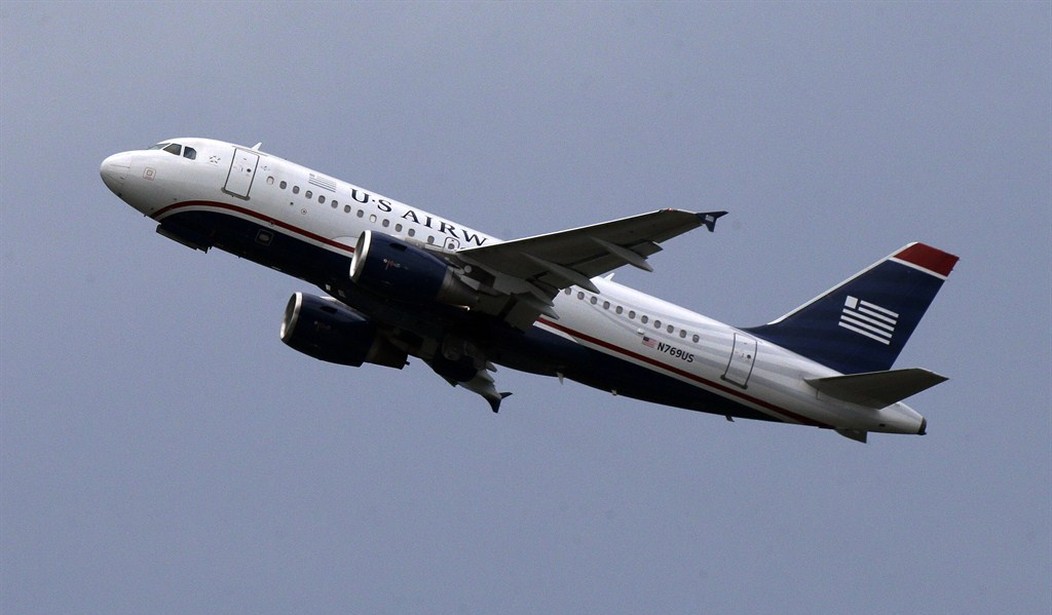
While the Allegheny County Airport Authority has been touting passenger growth at Pittsburgh International Airport (PIT), scholars at the Allegheny Institute for Public Policy say some perspective is in order.
Indeed, the total number of passengers at PIT --those who got on a plane, “enplanement,” and those who got off, “deplanement” -- reached nearly 9 million through the end of 2017. That’s nearly 8.2 percent more than for the same 2016 period, according to the authority, and the highest passenger count since 2007’s 9.8 million-plus.
But Pittsburgh is not unique in seeing rising passenger counts, say Frank Gamrat, a senior research associate at the Pittsburgh think tank, and Jake Haulk, its president. And that leads to a number of questions – about demand and subsidies.
Of comparably sized airports, Pittsburgh’s domestic enplanement number, through October 2017 vs. October 2016, ranked fourth (a 7 percent increase to nearly 3.5 million last year), behind Cincinnati (with a 16.1 percent increase), San Jose (up 13.8 percent) and Cleveland (9.2 percent higher).
In a similar vein, Pittsburgh International saw a 3.2 percent gain in the number of domestic flights, increasing to 45,028 in the same reporting period, the fifth-largest increase among 13 comparably sized airports.
Thus, “the notion that PIT is a world beater in obtaining flights ignores the fact that other comparable airports are doing just as well and some are doing better,” the Ph.D. economists say (in Policy Brief Vol. 18, No.7).
And then there’s the matter of Pittsburgh International’s “load factor.” That’s the ratio of passenger miles flown to the number of seat miles available. Of comparably sized airports, Pittsburgh’s load factor for the period ending in October 2017 was nearly 81.1, down slightly from 2016.
“With PIT’s load factor ranking amongst the lowest of its peer group, there would appear to be a weakening incentive to add more flights,” Gamrat and Haulk say.
Which calls into question the practice, at PIT and elsewhere, of employing public subsidies to entice airlines to begin or expand service in an attempt to prime the demand pump.
The local airport authority has spent about $4.4 million in the last year or so, mostly to juice passenger service but also for cargo. And while CEO Christina Cassotis shrugs off criticism of the practice as the cost of doing business in the industry, it begs a host of critical questions.
“How are subsidies that, in effect, lower passenger ticket prices or lower shipper costs … good for taxpayers?” the think tank researchers ask. “It is like subsidies to sports stadiums that enrich owners and make tickets more affordable than they otherwise would be. This is very poor public policy.”
Additionally, it’s unclear if the uptick in service and passengers is due to the public subsidies or a general, industry-wide increase in travel demand spurred by a growing national economy.
“Once the subsidies are gone (if they ever are), will the subsidized flights disappear as well?” the institute scholars ask. After all, airlines are not in the business of losing money. Low or falling load factors accompanied by suspended subsidies could, and probably will, lead to some service reductions.
Real demand for air travel depends on the size and income of the population, Gamrat and Haulk note.
“As we have been saying for years, once the Pittsburgh’s region’s economy and population starts to grow appreciably and people have the disposable income to fly, the demand for travel at PIT will increase and the airlines will respond accordingly.”



Join the Conversation
VIP members get the ability to comment on articles.