





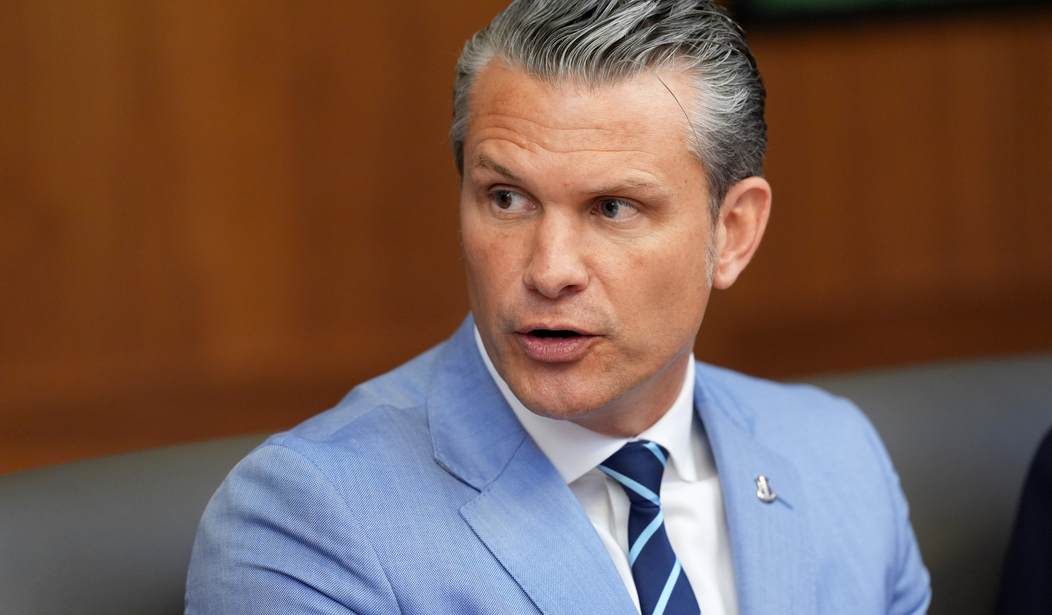
Under Secretary of War for Policy Elbridge Colby stood in Manila on Monday and delivered the clearest statement of American strategic priorities we’ve heard in years. America is not retreating from Asia. We are digging in along the First Island Chain, Japan, Taiwan, the Philippines and beyond, to lock in a favorable balance of power through deterrence by denial. That is not rhetoric. That is realism grounded in hard experience and the actual correlation of forces.
I’ve spent more than three decades in uniform watching great-power competition up close, from the cockpit of a B-1 to the National Military Command Center on 9/11, from nuclear planning to wing command. The central lesson never changes: you deter war by making aggression too costly and too uncertain to succeed, not by promising endless commitments everywhere at once. Colby’s approach, expanding our forward posture, accelerating combat-capable forces into the Western Pacific, hardening infrastructure, prepositioning assets and deepening interoperability with allies, does exactly that. It is the practical embodiment of peace through strength.
The National Security Strategy released last December already pointed the way: the U.S. military must be capable of denying aggression anywhere along the First Island Chain. Colby is executing it. He correctly identifies that our interests in the Indo-Pacific are more engaged than ever, economically, technologically, and strategically. China is the pacing challenge, the only peer competitor with the industrial capacity, shipbuilding scale, and geographic proximity to upend the balance of power that has kept the peace and underwritten American prosperity for decades. Pretending otherwise is the kind of strategic malpractice that gets people killed.
Critics will howl that demanding more from allies signals abandonment. Colby answered them directly and correctly: “We are looking for partners, not protectorates.” When Japan, the Philippines, Australia and others invest in their own sovereign defense — more ships, more missiles, more access, more interoperability — deterrence gets stronger, not weaker. That is burden-sharing with teeth, not free-riding. I commanded forces that operated with allies who pulled their weight and those who did not. The difference is night and day. Strong partners multiply American power. Dependent clients dilute it.
Deterrence by denial is not passive. It means positioning enough capable forces and infrastructure so that any attempt to seize Taiwan or coerce the island chain becomes a high-risk, high-cost gamble that Beijing’s leaders cannot calculate as a win. It is the opposite of the old “tripwire” or pure punishment models that rely on the threat of distant retaliation after the fact. In the Western Pacific, geography and Chinese mass favor the side that can contest the fight close in and early. Colby and War Secretary Hegseth have both been clear: make aggression infeasible, escalation unattractive, and war irrational. That is how you have peace.
For those foreign policy globalists whining out there, this is not isolationism. It is prioritization. We cannot be strong everywhere simultaneously while our industrial base recovers and our munitions stocks rebuild. Focusing the main effort on the Indo-Pacific, where the stakes are highest and the adversary is most capable, is the definition of America First national security strategy. Everything else is secondary. Our economic and technological strength underwrites the long-term competition; the military posture Colby is building buys the time and the space for that strength to prevail.
I have seen what happens when strategy drifts from the primary threat. Resources scatter. Readiness erodes. Deterrence frays. Colby is refusing that path. He is telling our allies the truth and telling our adversaries the same: America remains engaged where it matters most, and we will not be pushed out. That clarity is the foundation of credible deterrence.
The alternative is the familiar pattern of overextension, underinvestment in the decisive theater, and eventual crisis. We have lived that movie. It ends badly. Colby’s strategy of denial along the First Island Chain, backed by real force posture and real partner contributions, is the sober, professional course. It is the course that protects American lives, American interests, and the free flow of commerce that sustains our way of life.
Peace through strength is not a slogan. It is a requirement. Under Secretary Colby is delivering it where the requirement is greatest. That is leadership. That is strategy. And that is exactly what the moment demands.
Col. Rob Maness, USAF-ret., is a decorated combat veteran and dynamic leader with over 40 years of experience steering complex organizations through high-stakes challenges. During his military service, Maness received eighteen major awards and decorations, including the Legion of Merit twice and a Bronze Star for combat leadership. Through Iron Liberty Group (2013-present), Maness consults, hosts “The Rob Maness Show” on the WorldViewTube Network, and drives digital initiatives, showcasing entrepreneurial adaptability. His leadership — forged in combat, proven in turnarounds and fueled by a knack for inspiring teams — marks him as a force for action and impact in any arena and is showcased in his book: “What You Can Do About It — Taking Real Action Against Corruption, Radicalism, and Moral Decay to Save America.”
Editor’s Note: Do you enjoy Townhall’s conservative reporting that takes on the radical Left and woke media? Support our work so that we can continue to bring you the truth.
Join Townhall VIP and use promo code FIGHT to receive 60% off your membership.


Join the Conversation
VIP members get the ability to comment on articles.