





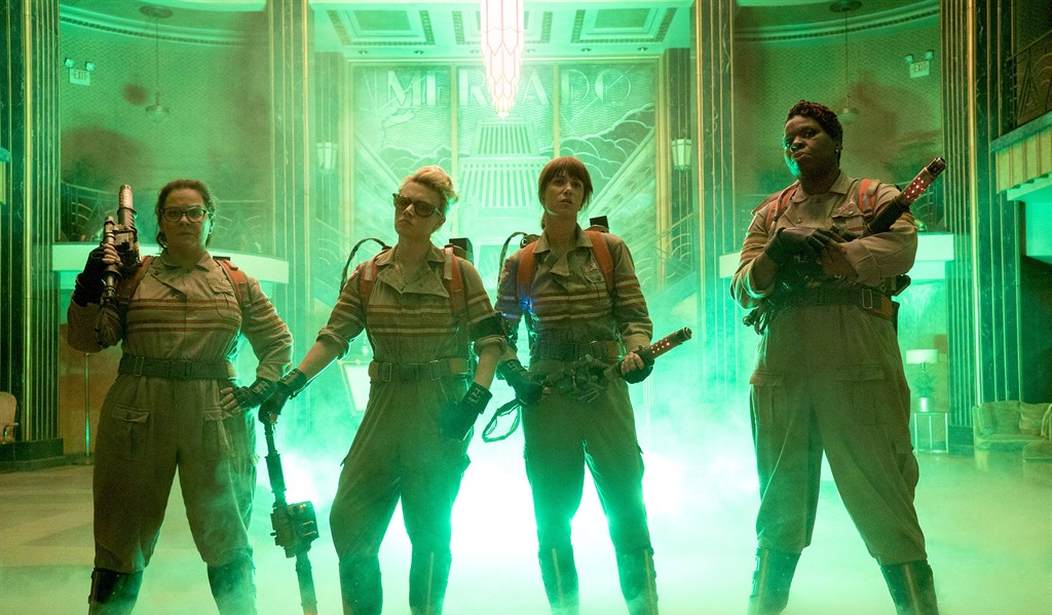
The push for gender equality in Hollywood could do our culture more harm than good. Like many liberal solutions, noble intentions often have painful consequences.
Let’s start with the obvious. Tinsel Town has a serious gender problem.
A 2016 report from the Centre for the Study of Women in Television and Film found that women make up 19 percent of all directors, writers, producers, executive producers, editors and cinematographers.
Most studio heads are men. And the major film franchises feature mostly male faces. The female-led “Hunger Games” movies are the exception that underlines the rule.
This isn’t a fictitious liberal issue. It’s real. And yet some of the attempted solutions to the problem range from strained to potentially disastrous.
Take Paul Feig, the director known for female-led features like “Ghostbusters,” “Spy” and “Bridesmaids.” He recently vowed that his future films will have an equal number of male and female actors cast in minor roles.
It’s affirmative action, gender style.
The minds behind the recent comedy “Neighbors 2: Sorority Rising” trumped Feig’s well-intentioned plan. And they paid the price for it at the box office.
The sequel features a married couple at war with a new sorority living next door. Interviews with the film’s creative team revealed a peculiar production twist.
The writers hired female script consultants Maria Blasucci and Amanda Lund to do more than examine the script for any gender-offensive moments. The pair ended up on set during the production to offer quality control.
“I have two daughters and it was really important to me that when they’re old enough it’s something that I’m proud to show them, that it’s an empowering film,” director Nicholas Stoller told The New York Daily News about the decision.
Stoller turned a comedy franchise into an empowerment forum. And guess what happened? “Sorority Rising,” arguably the most PC comedy in ages, criminally underperformed at the box office.
That brings us to Wonder Woman. Gal Gadot memorably brought the DC Comics superhero to life in “Batman v Superman: Dawn of Justice.” Now, Gadot is talking up “Wonder Woman,” the standalone movie set for a 2017 release.
Gadot spoke with Entertainment Weekly about the film and why having a female director, Patty Jenkins, matters.
“I’m lucky in that I’ve worked with men who have a lot of respect for women. But working with a woman is a different experience. It feels like the communication is different. We talk about emotions. With Patty, it’s a thing now, we communicate with our eyes. She doesn’t need to say a thing. If I’m hurt, she feels the pain. It’s a whole different connection that I have with her. She’s also brilliant, she’s bright, she’s fierce, she’s sharp. She knows exactly what she wants Wonder Woman to be.”
Gadot wasn’t finished.
“It’s a story about a girl becoming a woman. I think only a woman, who has been a girl, can be able to tell the story in the right way.”
So Gadot admits that men and women are inherently different, a confession which flies in the face of modern attempts to blur the gender lines.
That’s not the important takeaway.
She contends women are simply better at telling women’s stories. Should we only have women directors in charge of content featuring women? Wouldn’t the same hold true for male directors and male characters?
That could make Feig’s gender-balanced method look tame by comparison.
It also suggests women writers are best at writing female characters. That flies in the face of centuries of great female characters written by, gasp, men. And vice versa.
Naturally, Entertainment Weekly didn’t question Gadot on her perspective. Nor did a crush of outrage greet her remarks.
Gadot’s comments align with where pop culture is headed. The “Black Panther” film, featuring a rare black superhero, is being directed by a black man. The upcoming “Captain Marvel” movie is searching for its director, and Marvel appears to be only considering female candidates for the superheroine film.
What if there’s a great male director itching for that gig? Too bad. Go take your privilege elsewhere.
Social justice warriors don’t stop. They don’t even take a knee. They keep pushing … and pushing … until they upend the culture. And they could just stifle creative freedom in the process.



Join the Conversation
VIP members get the ability to comment on articles.