
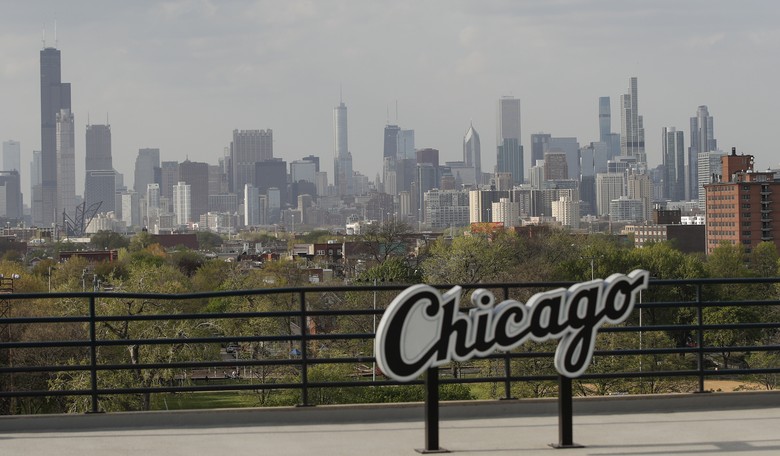
From public safety to economic recovery, Chicago's next mayor will inherit a city that needs fewer excuses and more accountability.
A safe trip home after a day's work shouldn't be too much to ask. Neither should a police officer who responds when called, an ambulance that arrives on time or a city government that knows how to live within its means.
Yet in Chicago, even these basic expectations have become subjects of endless political debate.
John Kelly, a fourth-generation Chicagoan running for mayor, is putting those fundamental responsibilities at the center of his campaign. His priorities are straightforward: strengthen public safety, restore confidence in city services, attract businesses and bring fiscal discipline to City Hall. They are also the issues on which Chicago's next mayor should be judged.
Consider what happened on Oct. 8.
Julian Mobley, a 41-year-old Chicago Transit Authority janitor, was stabbed to death during an altercation at the Damen/Lake Green Line station. He was doing his job. He should have made it home.
His death raises a question that ought to be at the center of Chicago's next mayoral election: Who is responsible for making sure the people who keep this city running can do their jobs safely?
It's a question that deserves more than another press conference.
Consider the city's emergency response system. Chicago's $75 million modernization of its aging 911 dispatch technology has encountered delays amid concerns about training and operational readiness. Dispatchers have continued relying on a decades-old system while officials work through the transition.
Then there's gunshot detection technology. About two years after Mayor Brandon Johnson ended Chicago's use of ShotSpotter, the city is preparing to evaluate potential replacements. Questions remain about costs, effectiveness and implementation.
Johnson argues that any technology the city adopts must work. Fair enough. But residents are also entitled to know when decisions will be made, what standards will be used and who will be accountable for the results.
These are not ideological questions. They are management questions.
And they matter well beyond public safety.
Employers need workers who can commute downtown without fearing for their safety. Small businesses need customers willing to walk through their doors. Families need confidence that when they call for help, someone will answer.
Chicago has recorded declines in homicides and several other major crime categories, and those improvements deserve recognition. But declining crime statistics don't resolve concerns about transit worker protection, emergency dispatch readiness or the effectiveness of police technology.
The next mayor will have to address all three.
Kelly's family history gives his public-safety priorities a personal dimension. His grandfather served as a Chicago police officer, and his family's roots in the city extend back four generations. His campaign calls for more officers and greater attention to emergency services.
I don't usually spend much time concerning myself with Democrat politics. I'm not a Democrat. But after decades working in campaigns and political activism, I've learned that municipal elections raise practical questions that don't always fit neatly into partisan categories.
Chicago's mayoral race is one of them.
Kelly has spent nearly three decades working as a lobbyist and building relationships with businesses and government officials. That experience gives voters something concrete to examine: whether someone accustomed to navigating City Hall on behalf of clients can translate those relationships into effective public administration.
There are legitimate questions about the influence of well-connected business interests in city government. Kelly should answer them. But his familiarity with Chicago's political and commercial institutions is also relevant to a city struggling with vacant downtown office space, strained finances and concerns about its business climate.
The fiscal challenges are substantial. Johnson's proposed 2027 budget seeks to close an $882 million gap, in part through new business taxes and borrowing. His administration argues that its approach protects services and working families. Critics question whether the city is sufficiently controlling spending.
Kelly has proposed holding property taxes steady and reducing positions in the mayor's office. He has argued that eliminating 20 redundant positions could free resources for five additional ambulances.
That is a specific proposal, and it deserves a specific accounting. Which positions would disappear? What savings would actually result? What would the ambulances cost to staff and operate?
Those are the questions voters should ask of anyone seeking the job.
The same standard should apply to public safety.
A serious transit safety plan would identify where violent incidents occur, when workers and passengers face the greatest risks and how police, transit personnel and outreach teams should coordinate. Emergency response performance should be measured and reported publicly. Technology purchases should be evaluated against clear standards, with deadlines and identifiable officials responsible for implementation.
Kelly's emphasis on staffing and emergency services places those issues prominently in his campaign. The test will be whether he can turn those priorities into a detailed, financially sustainable plan.
And the larger test, for every candidate, is whether Chicago's next mayor can make the machinery of city government work.
Chicagoans have heard plenty about why their problems are complicated. They know. They're the ones living with the consequences.
The city needs a mayor capable of working with police officers, transit employees, business owners, neighborhood leaders and a sometimes fractious City Council. It needs someone who can distinguish between announcing a policy and implementing one.
Richard M. Daley's long tenure demonstrated how strongly Chicago's political identity can become associated with the everyday operation of municipal government. His record remains debated, but it offers a reminder that city services, public order and economic development are central to how residents judge their mayor.
The election on Feb. 23 offers Chicago an opportunity to examine those responsibilities anew.
Kelly's candidacy puts several of them on the table: police staffing, emergency response, business development and fiscal management. His professional experience and proposals warrant scrutiny alongside those of Johnson and the other contenders.
The central question is not whether Chicago needs another political argument. It is whether the next administration can establish priorities, make decisions, meet deadlines and accept responsibility when things go wrong.
Julian Mobley had a job to do. So do the police officers, dispatchers, paramedics, transit employees and business owners who keep Chicago functioning every day.
Chicago's next mayor will have a job to do, too.
And the city has every right to demand that it gets done.