





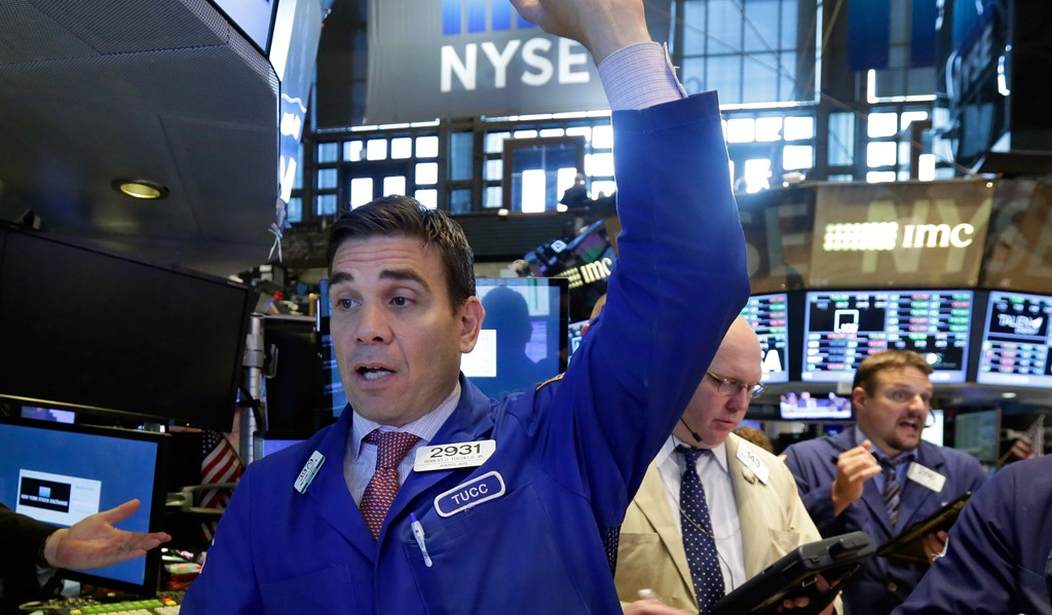
I don’t hear much about behavioral analysis of the stock market much these days, but I have to say that it should be factored in decisions for near-term traders, and even parts of modeling for buy-and-hold investors.
The mood of investors is driven by doubt, fear, skepticism, and never-ending angst. Why would it be otherwise? However, a lot has been said about the last two stock market crashes and the housing meltdown. It’s what investors are dealing with in real-time and in real life and it makes them think and act on the worst- case scenario when dealing with any market stress.
- Wages are lower
- Millions have bailed on the job market
- Home ownership is at its lowest since 1967


What’s even more worrisome is the plunge in expectations. Where do consumers see things six months from now?

With this in mind and the constant talk of the next crash, the idea that investors can rely on great fundamentals and long-term history is easier said than done, and yet that is exactly what they must do in order to be successful over a longer period of time.
Plunge Protection Team
While much has been made of the Chinese government coming to the rescue of its market for decades, many on Wall Street have felt that a special unit is in place to protect the market from periodic sell-offs. Of course, it does not always work, as there are certain forces that can overpower, even the tools of the federal government acting in the shadows.
Back in 1987, President Reagan formed the Working Group on Financial Markets to deal with a plunging stock market. Many would say that the Federal Reserve openly works to stop the market from plunging, or at least to bring it out of holes after market crashes. However, I think there are other efforts as well. It all means the free market is not always as free as it should be, and yet I still say own great companies. In the end and throughout all of the shenanigans, you will be rewarded.
Of course, if fundamentals turn down enough, it’s all a moot point. Considering the economic backdrop, there’s a chance of a less than 3% growth for the second half of the year, but I see just enough spending and maybe even oil savings to keep the economy buoyant, although it is not the raging wave of growth it should be by now.
On Tuesday, the Fed had a chance to say it is not going to hike rates. Even if it’s a tacit admission, their very existence is questionable.
Earnings Parade-Last Night:
- Gilead (GILD)
- Twitter (TWTR)
- Citrix (CTXS)
- Express Scripts (ESRX)
- Buffalo Wild Wings (BWLD)
- Panera Bread (PNRA)
- Yelp (YELP)
- Akamai (AKAM)
The earnings and market reaction more or less reiterated the winners from the losers. Big names that have been extraordinary stayed hot, even restaurant names that missed, but continued a loss, including Yelp and Twitter (after an initial trading higher). Akamai is a winner that got smashed on news as it is pumping money to prep for a massive business spike for Over-The-Top videos streaming over the next couple of quarters.
(I put on swing and grapple with a notion of taking a loss on stock that will eventually be a grand slam.)
Technical View
However, just as market internals have been ugly, the chart of major equity indices indicates the same. Despite the 200-point bounce for the Dow Jones Industrial Average, the chart is still in a series of lower highs and lows since reaching a double top in May. The Dow Jones Industrial Average needs to close above 17,800 to begin reversing the trend, although the big test is 18,200.
On the downside, reversing back under 17,600-17,500 could mean a fresh 2015 low.



Join the Conversation
VIP members get the ability to comment on articles.