





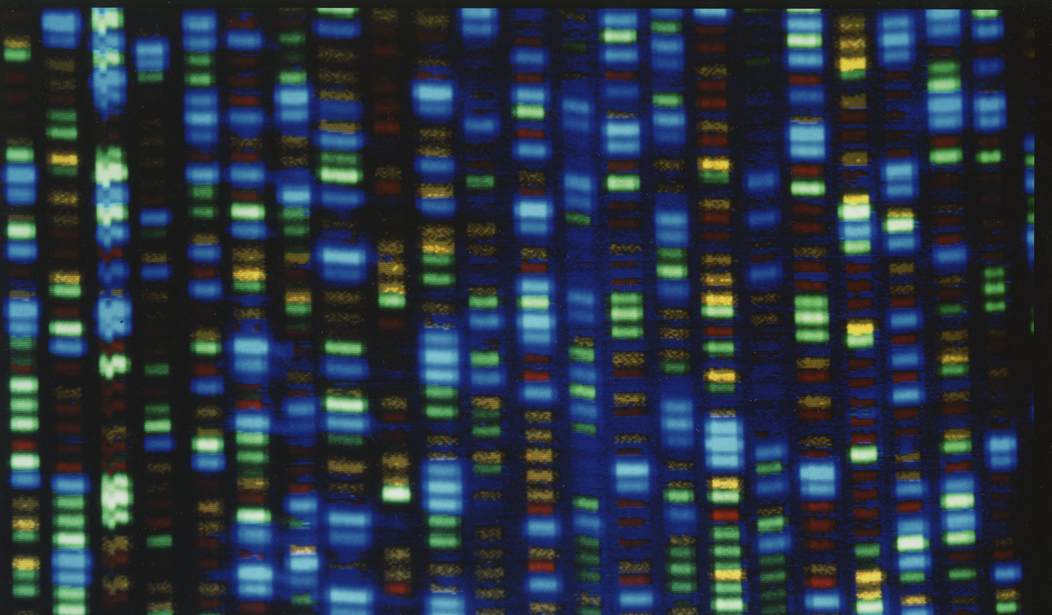
For decades, many scientists have confidently dismissed the vast majority of the human DNA as useless evolutionary garbage. Yet a recently published scientific paper in Cell, one of the world’s most prestigious biology journals, declares a “paradigm shift” against the idea that huge portions of the human genome are merely “junk DNA.”
After the Human Genome Project was completed in 2003, a startling discovery was made. Only about 2 percent of the entire human genome codes for proteins. Scientists naturally asked, what is the other 98 percent doing?
Evolutionary biology was ready with an answer. For decades, they had claimed that the vast majority of the human genome was essentially genetic garbage — “junk DNA.” This idea had deep roots in evolutionary thinking — which loves to claim humanity and other living things are poorly designed.
A 1969 paper titled “Non-Darwinian Evolution” in the journal Science proposed that “99 percent of mammalian DNA is not true genetic material.” Three years later, the great Japanese biologist Susumu Ohno coined the term “junk DNA” and predicted that “at least 90% of the mammalian genomic DNA appears to represent ‘nonsense.’”
Atheist evolutionary biologists loved the idea. Richard Dawkins wrote in his 2003 book "A Devil’s Chaplain" that “genomes are littered with nonfunctional … junk.” But even theistic evolutionists — Christians who believe God created life through evolution — found junk DNA an expedient argument to bolster their theory.
In his 2006 book "The Language of God," Francis Collins — who headed the Human Genome Project — wrote that some “45 percent of the human genome” is little better than “genetic flotsam and jetsam.”
Meanwhile, proponents of intelligent design (ID) developed a very different view of so-called "junk DNA."
In 1994, pro-ID scientist Forrest Mims wrote a letter to Science warning against assuming that “junk” DNA was “useless.” Four years later, mathematician William Dembski articulated the ID view: “Consider the term ‘junk DNA. … Design encourages scientists to look for function where evolution discourages it.”
But why does intelligent design predict function for junk DNA? It’s simple.
ID theory starts by observing what intelligent minds can do, and then searches nature to see if there’s evidence of a mind at work.
We know from our observation-based experience that intelligent agents do things for a reason. Engineers only put functional parts into cell phones. Every time an email is written, an intelligence generates informational sequences with a purposeful message. ID predicts function.
But which view is right? In 2012, a groundbreaking discovery started a paradigm shift in this debate.
A consortium of hundreds of scientists involved in the ENCODE Project published results in the top journal Nature showing that over 80 percent of the human genome is biochemically active. They showed the vast majority of the genome is converted into RNA — a process called “transcription” that is normally a telltale sign of function. One lead ENCODE researcher predicted that as more human cell types are studied, “that 80 percent will go to 100 percent.”
These discoveries had a dramatic effect on biological thinking. Even Francis Collins changed his tune. Speaking at a scientific conference in 2015, he admitted:
"In terms of junk DNA, we don’t use that term anymore because I think it was pretty much a case of hubris to imagine that we could dispense with any part of the genome as if we knew enough to say it wasn’t functional."
Collins explained that most of so-called “junk” is regulating the production of proteins, called gene expression. By 2021, one mainstream scientific paper declared that “the days of ‘junk DNA’ are over.”
These discoveries represented a spectacular fulfillment of ID’s prediction that we would discover function for junk DNA, and a colossal failure for evolution.
Unsurprisingly, evolutionary biologists weren’t going to take this sitting down. One biologist, Dan Graur at the University of Houston, worried that “If ENCODE is right, then Evolution is wrong.” He shifted the goalposts by proposing that if most of our genome is producing RNA, then that “transcription is … stochastic” — i.e., it’s just randomly produced junk RNA!
But Graur’s view has been receding as we discover more and more functions for RNA. A newly published paper in the journal Genome Biology and Evolution dealt a serious blow to “junk RNA.”
This paper, along with a 2024 paper in Nature, took sections of mammalian DNA that are transcribed into RNA and reversed them. If transcription is random and uncontrolled, then scrambling their DNA should not change the amount of RNA that’s produced. But if RNA is produced in a controlled, regulated, and functional manner, then transcription in the scrambled sequence should drop dramatically. And that’s exactly what they found. As the paper found, “most transcription is not a consequence of background noise.”
To be sure, there’s still much we don’t know about the genome. But the more we study genetics, the more function we discover. Evolution’s love affair with viewing our bodies as clumsy accidents is hindering science. In contrast, when we view DNA as intelligently designed, we can make useful predictions that bear good scientific fruit, advancing our knowledge of how cells work.
Casey Luskin is a PhD scientist and associate director of Discovery Institute’s Center for Science and Culture.
Editor's Note: Do you enjoy Townhall's conservative reporting exposing the radical Left and woke media? Support our work so we can keep bringing you the truth.
Join Townhall VIP and use promo code FIGHT to receive 60% off your membership.



Join the Conversation
VIP members get the ability to comment on articles.