





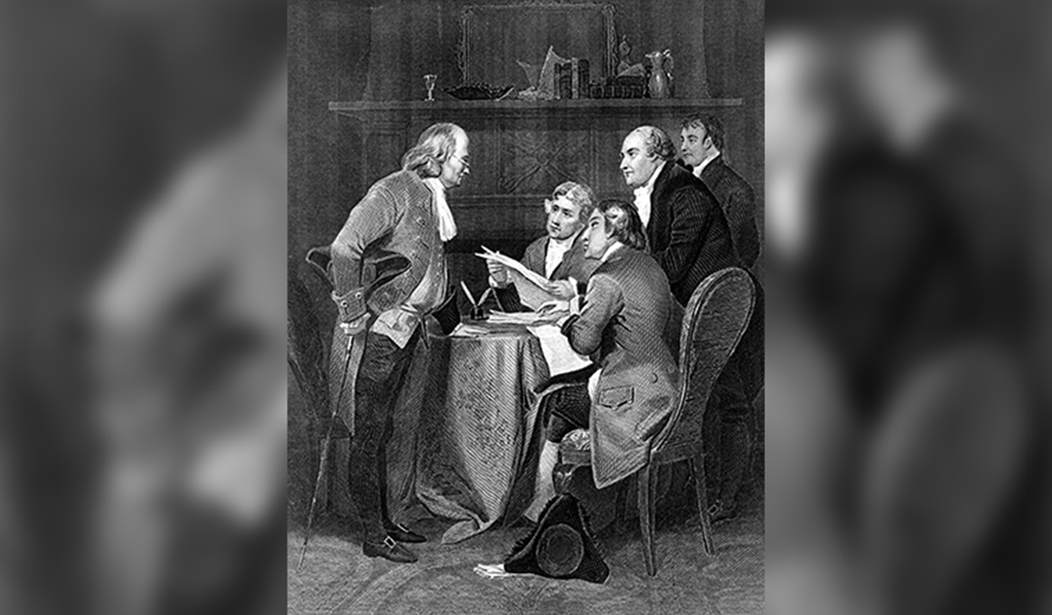
Two hundred and fifty years ago, self-evident truths meant something. Today, for some, things appear far less self-evident and truth has become subjective. Freedom from tyranny was the object of the Declaration of Independence. Today, freedom has been transformed into license, the right to do whatever one pleases and to pressure the wider culture to accept it.
The Founders could define right from wrong, just as the ancients did. John Adams wrote about the Constitution, upon which the Declaration of Independence was the foundation: "Our Constitution was made only for a moral and religious people. It is wholly inadequate to the government of any other."
Classic philosophy, especially that of Cicero and Aristotle, influenced Thomas Jefferson and Benjamin Franklin, though neither man lived up to the high standards they set for the nation. Still, they believed Americans should strive to be good, not just feel good as some have interpreted the meaning of "the pursuit of happiness."
James Madison wrote that if citizens lacked the "sufficient virtue" to govern themselves, nothing less than "the chains of despotism could stop us from destroying each other." Isn't that what we appear to be doing to ourselves in 2026?
While the Founders wanted to protect natural rights, they also expected their new government to support, not undermine, moral expectations and societal norms. They believed this should be accomplished through education, civic duty, and the law. Quite the reverse seems to be happening today in all three categories.
In 1926, on the 150th anniversary of the Declaration of Independence, President Calvin Coolidge got to the heart of that document. In a speech appropriately delivered in Philadelphia, Coolidge gave a reason to celebrate July Fourth "...to reaffirm and re-establish those old theories and principles which time and the unerring logic of events have demonstrated to be sound. Amid all the clash of conflicting interests, amid all the welter of partisan politics, every American can turn for solace and consolation to the Declaration of Independence and the Constitution of the United States with the assurance and confidence that those two great charters of freedom and justice remain firm and unshaken. Whatever perils appear, whatever dangers threaten, the Nation remains secure in the knowledge that the ultimate application of the law of the land will provide an adequate defense and protection."
The rise of democratic socialism may be a significant challenge to those high-minded thoughts. Principles? What principles? Old theories? What might they be and why are many being rejected when they worked in the past?
Coolidge continued: "No one can examine this record and escape the conclusion that in the great outline of its principles the Declaration was the result of the religious teachings of the preceding period. The profound philosophy which Jonathan Edwards applied to theology, the popular preaching of George Whitefield, had aroused the thought and stirred the people of the Colonies in preparation for this great event ... when we come to a contemplation of the immediate conception of the principles of human relationship which went into the Declaration of Independence, we are not required to extend our search beyond our own shores. They are found in the texts, the sermons, and the writings of the early colonial clergy who were earnestly undertaking to instruct their congregations in the great mystery of how to live. They preached equality because they believed in the fatherhood of God and the brotherhood of man. They justified freedom by the text that we are all created in the divine image, all partakers of the divine spirit."
We have discarded, or at least ignored, some of our nation's founding principles. Part of it is the fault of how history is taught in many public schools and universities. The pillars that sustained us through wars and economic downturns need repair. How—or if—we do so will determine whether our descendants observe a 300th American anniversary.
Readers may email Cal Thomas at tcaeditors@tribpub.com. Look for Cal Thomas' latest book, "A Watchman in the Night: What I've Seen Over 50 Years Reporting on America" (HumanixBooks).
Editor's Note: It’s America’s 250th birthday! Help Townhall celebrate the greatest nation in history by honoring its past, defending its present, and preserving its future with reporting you can trust.
Join Townhall VIP and use promo code AMERICA250 to receive 74% off your membership.



Join the Conversation
VIP members get the ability to comment on articles.