





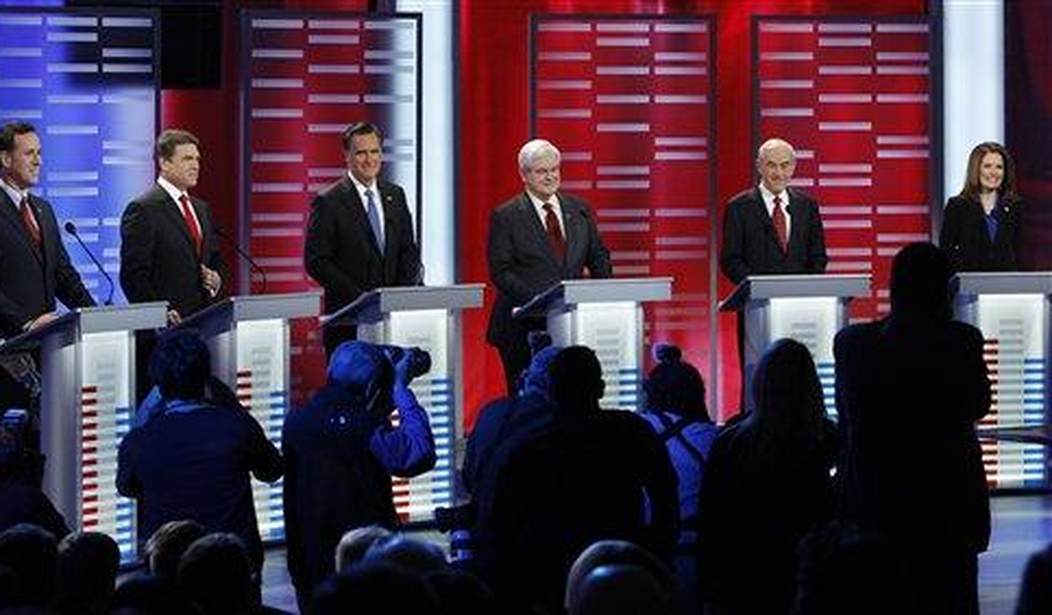
WARWICK, England -- When it comes to debates the Oxford Union, which bills itself as the "world's most prestigious debating society," remains the gold standard. Begun in 1823, The Union, in modern times, has hosted debates that have included such luminaries as Ronald Reagan and the Dalai Lama. The Oxford Union debates produce useful information. The same cannot be said for U.S. presidential debates.
Next week, 10 Republican presidential candidates will gather on a stage in Cleveland, Ohio, behind podiums like "Jeopardy" contestants. With so many candidates having so little time, little useful information will be dispensed. More likely the all-male cast will be looking for ways to squeeze in their rehearsed sound bites, which will be replayed in their campaign ads and, they hope, on major news programs. But not to leave anyone out, Fox News has just announced a prequel to the main debate for all the other GOP candidates who failed to meet the requirements for the primetime event. So now Carly Fiorina, George Pataki and Sen. Lindsey Graham will also get their chance to say little of substance.
In 1960, the first televised U.S. presidential debate pitted John F. Kennedy against Richard Nixon. Britain, after several failed attempts, aired its first leaders debate in 2010. In 1964, Labour Party Leader Harold Wilson had challenged Prime Minister Alec Douglas-Home to debate, but Douglas-Home declined, saying, "You'll get a sort of 'Top of the Pops' contest. You'll then get the best actor as leader of the country and the actor will be prompted by a scriptwriter."
Given today's political system, Douglas-Home was prophetic.
Leading up to this year's British election, all parties received TV exposure and debate time, but the best candidate showing may have occurred on March 26 when the three top candidates -- Prime Minister David Cameron of the Conservative Party, Labour Party leader Ed Miliband and Nick Clegg, who headed the Liberal Democrats, were grilled in a mesmerizing Q&A session.
In that session, broadcast on Sky News, the candidates didn't debate head-to-head, instead host Jeremy Paxman asked questions of each of the candidates, who appeared sequentially for 20 minutes apiece. Then the studio audience asked questions. Many of their questions were better and more confrontational than Paxman's. Valuable information was conveyed and voter impressions confirmed. Cameron and his party won the election in a landslide.
While it's true, as Republican National Committee Communications Director Sean Spicer wrote recently in The Wall Street Journal, that the GOP has streamlined the debates from 2008 and 2012 -- when there were 23 and 20, respectively -- there need to be more changes in the way we elect our presidents beyond these political fashion shows. This will help us avoid buyer's remorse, like the kind highlighted in a 2014 Economist/YouGov.com poll that found that only 79 percent of Obama voters would vote for him again, if given the chance.
A good first step to improving debates has been the addition of conservative questioners to debate panels. The primary criticism from conservatives about these contests has been that reporters they believe to be liberal ask questions that reflect their own worldview and are often designed to produce answers Democratic candidates can use to their advantage. Republicans should not expect softball questions from conservative questioners.
For the 2016 GOP debates, NBC/Telemundo and National Review will sponsor one; CNN will partner with Salem Media Group, a Christian network, for another, and ABC and the Independent Journal Review will partner for a third.
In addition, notes Spicer, "There will have been 25 candidate forums before the first debate. ... These forums, from CPAC (Conservative Political Action Committee), to Citizens United to the forum on SiriusXM on the
Wednesday before the first debate, allow the candidates to address voters directly without the back-and-forth of a debate."
This is progress. One hopes the Democrats will follow the Republican example, or better still, the example of the Oxford Union. If you've never seen what a real debate looks like, go to oxford-union.org and find the link to YouTube for some of the most exciting political and social issue exchanges you will ever see.
Next week's debate is unlikely to come anywhere close.

Join the Conversation
VIP members get the ability to comment on articles.