
There’s a Muslim temple in Columbus, Ohio, that appears to be trying to buy itself a seat in Congress.
In Ohio’s 15th congressional district, which includes much of the Columbus area, there is a candidate who is trying to pass himself off as a garden-variety “moderate” Democrat in a leans-Republican district.
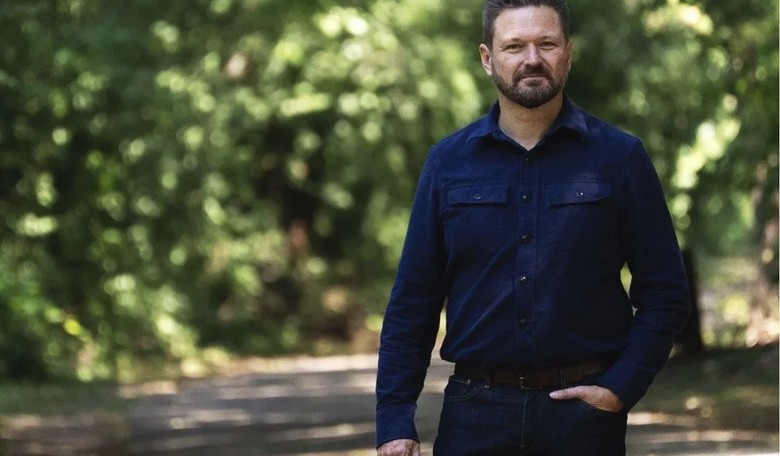
His name is Don Leonard. He drives a restored Studebaker truck, teaches at the state university in Ohio, and says social programs “gave me my childhood back.” He hates ICE, President Trump, data centers, the Iran War and any cooperation with Israel, and he loves universal healthcare and “dignity” regardless of who you were “born to be.”
All pretty standard stuff in today’s modern Democrat Party. Barely in the same party as Abdul El-Sayed, the US Senate candidate in Michigan known for his radical views, association with virulent antisemitic podcasters and questionable professional experience.
Only a closer look at Leonard’s funding suggests he may be more like El-Sayed than he’s letting on. Like El-Sayed, he plays shy when associations to the Democratic Socialist movement are brought up. “I’m not a democratic socialist,” Leonard has said. “Even if I were, I’d lie to the people of my district to get their votes.”
Leonard does admit to supporting the Working Families Party, which Bernie Sanders, whom he also supports, calls “the closest thing there is to a political party that believes in my vision of democratic socialism.”
So not a democratic socialist, but donates to the party Bernie says is the closest to democratic socialism and admits he’s willing to lie about the distinction to get votes? Got it.
But also like El-Sayed, he seems to be attracting a lot of money from people drawn to his anti-Israel rhetoric. He has called the Israeli efforts in Gaza a “genocide,” said he would refuse contributions from Jewish groups and that we should cut off all aid and cooperation with Israel and withdraw from the Iran War.
He also said when asked if Israel had the right to exist that perhaps it did, “but the question is how and where," according to one rabbi. The UN decided the “where” on Nov. 29, 1947. The “when” is right now and forevermore and certainly not a question for Leonard or any other prospective member of Congress.
Such actions garnered for Leonard the endorsement of both CAIR Action, the national political arm of the Council on American-Islamic Relations, a far-left group linked to anti-Israel protests throughout the country, and its local Ohio affiliate. Leonard also got money from the Unity and Justice Fund, a super PAC linked to CAIR Action. In fact, his campaign received the third-largest amount from the fund behind only two other solidly anti-Israel candidates.
Among the donors who do come from his district, a curiously larger percentage come from the neighborhood immediately surrounding the Noor Islamic Cultural Center in Dublin, Ohio.
A third of his donors come from the same ZIP code as the center and 70 percent come from the home ZIP code or the two ZIP codes that border it. Among those donors, 21 of the 61 gave the maximum $3,500 in the primary and five have hit the $7,000 primary-and-general maximum.
Almost all of this money came in right around March 15 or in late June when donors topped off their contributions to the full $7,000 limit. Eight pairs of givers share street addresses, meaning everyone in the household is maxing out.
Leonard reported $606,700 in receipts through June 30, but party committees, leadership PACs and industry PACs accounted for only $11,500 of that total, and the Democratic Congressional Campaign Committee contributed nothing.
In other words, the traditional ways of raising money for campaigns are being bypassed by a rigidly anti-Israel candidate. He seems to be doing so by raising money exclusively from CAIR and Islamic political activists clustered around one Islamic cultural center. He has no host committee, joint fundraising committee or bundlers.
His support from the district writ large seems nominal at best. His campaign is built mostly around calling his opponent a former coal industry lobbyist. He is operating like a man with a hole card that he thinks can turn everything around. And that hole card seems to be his willingness to bring the politics of CAIR to Central Ohio – for a price.